❌

Lese-Ansicht

HomeView Tidbits: Mirror, Sleep Timer, and Other Details

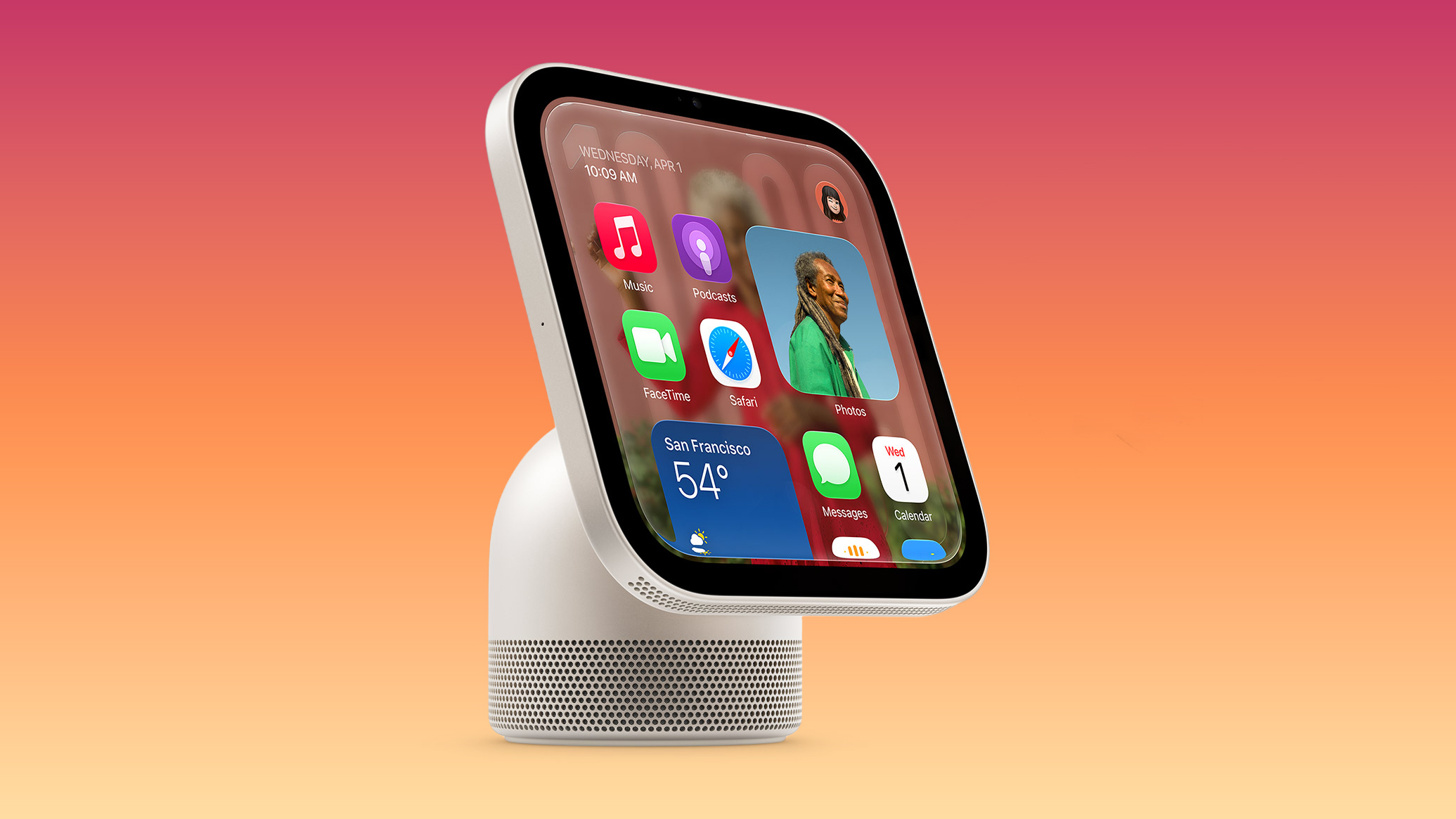
Apple's HomeView is out today, and we're finally learning all the little details about the new hub. We've rounded up a list of tidbits for those setting up a HomeView or thinking about getting one.

Sunglasses


Apple says the HomeView probably won't recognize you if you have your face covered, including when wearing sunglasses. If HomeView isn't identifying you, Apple suggests removing anything that would block the camera from seeing your face.

The HomeView's screen needs to be angled toward your face, you need to be centered in the frame and closest to the camera if other people are around, and the HomeView can't be blocked by overhanging shelves and cabinets. Apple says the HomeView needs front-facing, even light.

Mirror


There's a "Mirror" in the HomeView Control Center that lets you use the camera to see yourself. There's an option to turn on an edge light for face illumination, along with 1x and 2x zoom.

Guest Controls


The HomeView owner has multiple options for what guests can access.

  • Safari can be turned on or off, or adult websites can be blocked.

  • By default, guests can use Siri for general knowledge, writing help, and math help, but ‌Siri‌ features can be turned off.

  • Explicit content can be turned on or off.

  • There's an option to choose which Apple Music subscription supplies music for an unrecognized user.


Wi-Fi/Cellular


The HomeView authenticates people through face recognition and by making sure their iOS device is nearby, recently unlocked, and on the same Wi-Fi network as the HomeView. If there's a Wi-Fi outage, Apple says cellular can also be used to unlock personal content as long as it's in the same location and was recently on the Wi-Fi network.

Sleep Timer


You can set a sleep timer on HomeView to pause whatever media is playing when the timer goes off.

No Buttons


There is no button to turn the HomeView on or off, or restart it. It can be restarted from the Settings app or by briefly unplugging it.

Logins


You can log into websites and apps using your iPhone, similar to how the Apple TV works.

Notifications


The HomeView only has notifications for phone calls and home devices, with an option to toggle on critical notifications. There are no other notification settings or options.

Liquid Glass


The transparency of the Liquid Glass interface can be adjusted from clear to opaque like on iPhone, iPad, and Mac.

Personal Data Lockouts


If someone tries to repeatedly access personal content on HomeView that needs authentication, facial recognition via the camera is disabled and you'll need to prove identity with a registered device.
Related Roundup: Apple HomeView
Buyer's Guide: HomeView (Buy Now)

This article, "HomeView Tidbits: Mirror, Sleep Timer, and Other Details" first appeared on MacRumors.com

Discuss this article in our forums
  •  

The MacRumors Show: HomeView and Apple TV 4K First Impressions

On this week's episode of The MacRumors Show, we share first impressions of Apple's new HomeView and Apple TV 4K, including their hardware, everyday usefulness, and experiences with Siri AI.

Subscribe to The MacRumors Show YouTube channel for more videos

Following a week with the HomeView, Apple's new smart home device makes a strong impression with its build quality and sound, but leaves questions about how much it adds to a household already filled with Apple products. Its overlap with existing devices has already prompted some skepticism.

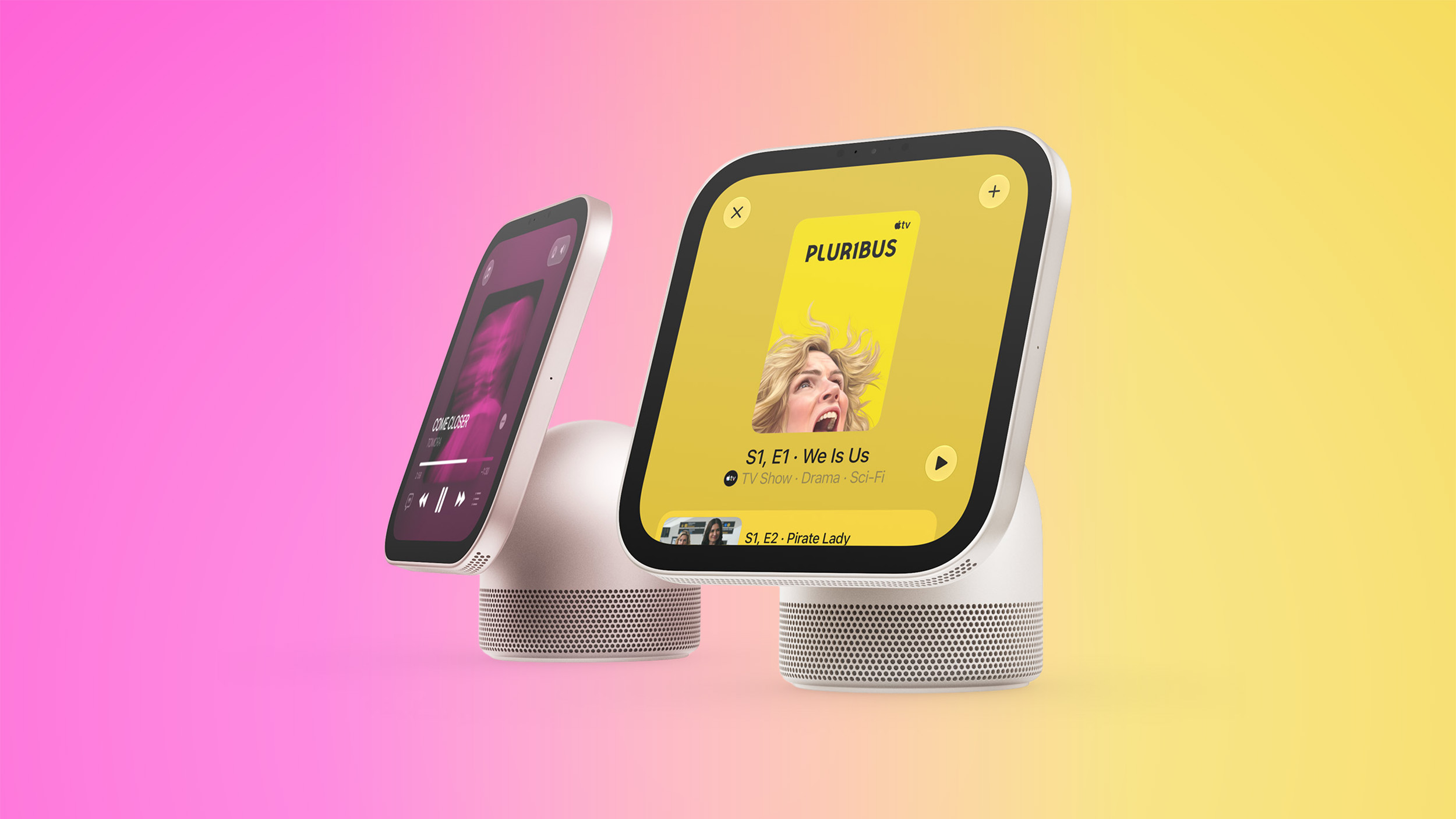
The 7-inch display may feel smaller in person, with its square aspect ratio and thick bezels contributing to an appearance reminiscent of a large Apple Watch. Sound quality from the tabletop model is a highlight, falling between the HomePod mini and full-sized ‌HomePod‌. That also raises questions about the value of the wall-mounted version, which costs the same $299 before mounting accessories but lacks the larger speaker base.

In the kitchen, setting timers, playing music, answering questions, and controlling smart home accessories provide straightforward reasons to use the HomeView. Turning web recipes into clean, step-by-step instructions with ingredient checklists is a particularly useful example of where the software is designed around its setting. Elsewhere in the home, its purpose can be less obvious, especially at a desk already surrounded by screens.


Personalization is another promising part of the experience. The HomeView's face recognition can switch quickly between household members, bringing up the correct person's apps and information even when two people are standing beside one another.

The interface combines familiar elements from Apple's other platforms, but that familiarity also invites questions about whether it feels sufficiently tailored to the home. Messaging and browsing are available, yet typing on a stationary display may be something users do only occasionally. The HomeView has no App Store, instead supporting compatible third-party audio and video apps through a connected iPhone or iPad, just like CarPlay.

Video playback offers some flexibility for watching something at a kitchen counter, bedside, or desk, although widescreen content occupies a small portion of the square display.


The fourth-generation Apple TV 4K provides noticeably faster navigation and animations thanks to the A19 chip. Its built-in microphones make hands-free ‌Siri‌ convenient when the remote is missing, including while TV audio is playing. The updated ‌Siri‌ Remote's speaker also makes finding it around the room easier.

Support for four-speaker ‌HomePod‌ surround sound provides another reason to consider the new ‌Apple TV‌, particularly for users who already own compatible speakers. We weigh up the appeal of expanding an existing ‌HomePod‌ setup against buying a dedicated home theater system, and consider whether these additions justify the ‌Apple TV‌'s new, higher starting price of $299.

‌Siri‌ AI is a major part of both new products, and its expanded capabilities come with familiar frustrations. More complex questions and requests involving personal context can work, but long waits and inconsistent results can interrupt the experience. Our discussion also touches on occasions when simple tasks, such as adding reminders, prove less reliable than expected, despite the assistant's broader abilities.

The MacRumors Show has its own YouTube channel, so make sure you're subscribed to keep up with new episodes and clips.

You can also listen to ‌The MacRumors Show‌ on Apple Podcasts, Spotify, Overcast, or other podcast apps. You can also copy our RSS feed directly into your player.


If you haven't already listened to the previous episode of The MacRumors Show, catch up to hear our discussion about Apple's first 27.3 betas, which bring expanded ‌Siri‌ AI actions, a redesigned Health app, and new Fitness+ features, alongside conversation summaries on the Apple Watch.

Subscribe to ‌The MacRumors Show‌ for new episodes every week, where we discuss some of the topical news breaking here on MacRumors, often joined by familiar guests such as Tyler Stalman, Michael Fisher, Kayci Lacob, Kevin Nether, John Gruber, Mark Gurman, Jon Prosser, Luke Miani, Matthew Cassinelli, Brian Tong, Quinn Nelson, Jared Nelson, Eli Hodapp, Mike Bell, Sara Dietschy, iJustine, Jon Rettinger, Andru Edwards, Arnold Kim, Ben Sullins, Marcus Kane, Christopher Lawley, Frank McShan, David Lewis, Sam Kohl, Federico Viticci, Thomas Frank, Jonathan Morrison, Ross Young, Ian Zelbo, and Rene Ritchie.

‌The MacRumors Show‌ is on X @MacRumorsShow, so be sure to give us a follow to keep up with the podcast. You can also email us at podcast@macrumors.com or head over to The MacRumors Show forum thread. Remember to rate and review the podcast, and let us know what subjects and guests you would like to see in the future.
Related Roundups: Apple TV, Apple HomeView

This article, "The MacRumors Show: HomeView and Apple TV 4K First Impressions" first appeared on MacRumors.com

Discuss this article in our forums
  •  

Apple Shares HomeView 27.2 Release Notes With List of Features

Apple's new HomeView smart home display launched today and the release notes for HomeView software version 27.2 are now available in a support document.


Since these are the first HomeView release notes that Apple has publicly shared, they go over a lot of the device's basic features and functionality:
HomeView software delivers powerful, personalized experiences to enjoy entertainment, stay connected, and manage your smart home. It features a conversational Siri AI that helps you find what you need and get things done. And with multiuser recognition, customizable faces, and deep Apple ecosystem integration, up to six members of your household get content and controls tailored just for them.

Siri AI

  • A more capable and conversational version of Siri that helps you find what you need and get more done

  • Personal context understanding draws on your Apple Intelligence-enabled iPhone to help you find what you're looking for, like that recipe your mother emailed you

  • Broad world knowledge lets you ask questions about virtually any topic and get a detailed answer

  • Rich content discovery makes it easy to find new music and podcasts using natural language

  • HomeView and Siri AI on HomeView are available in English, and require your paired iPhone or iPad to be set to the same English variant¹,²


Entertainment

  • Apple Music lets you enjoy your favorite songs with animated lyrics and Spatial Audio support, alongside easy search and browse capabilities

  • Podcasts lets you enjoy audio and video shows with transcripts and personalized recommendations

  • Apple TV, Apple News, and Audiobooks let you use your iPhone to enjoy your favorite shows, catch up on daily audio stories, or get lost in a good book

  • Supported third-party audio and video apps installed on your iPhone automatically appear on HomeView

  • Multiroom audio allows you to play and control music in sync across multiple HomeView, HomePod, and AirPlay speakers


Connection

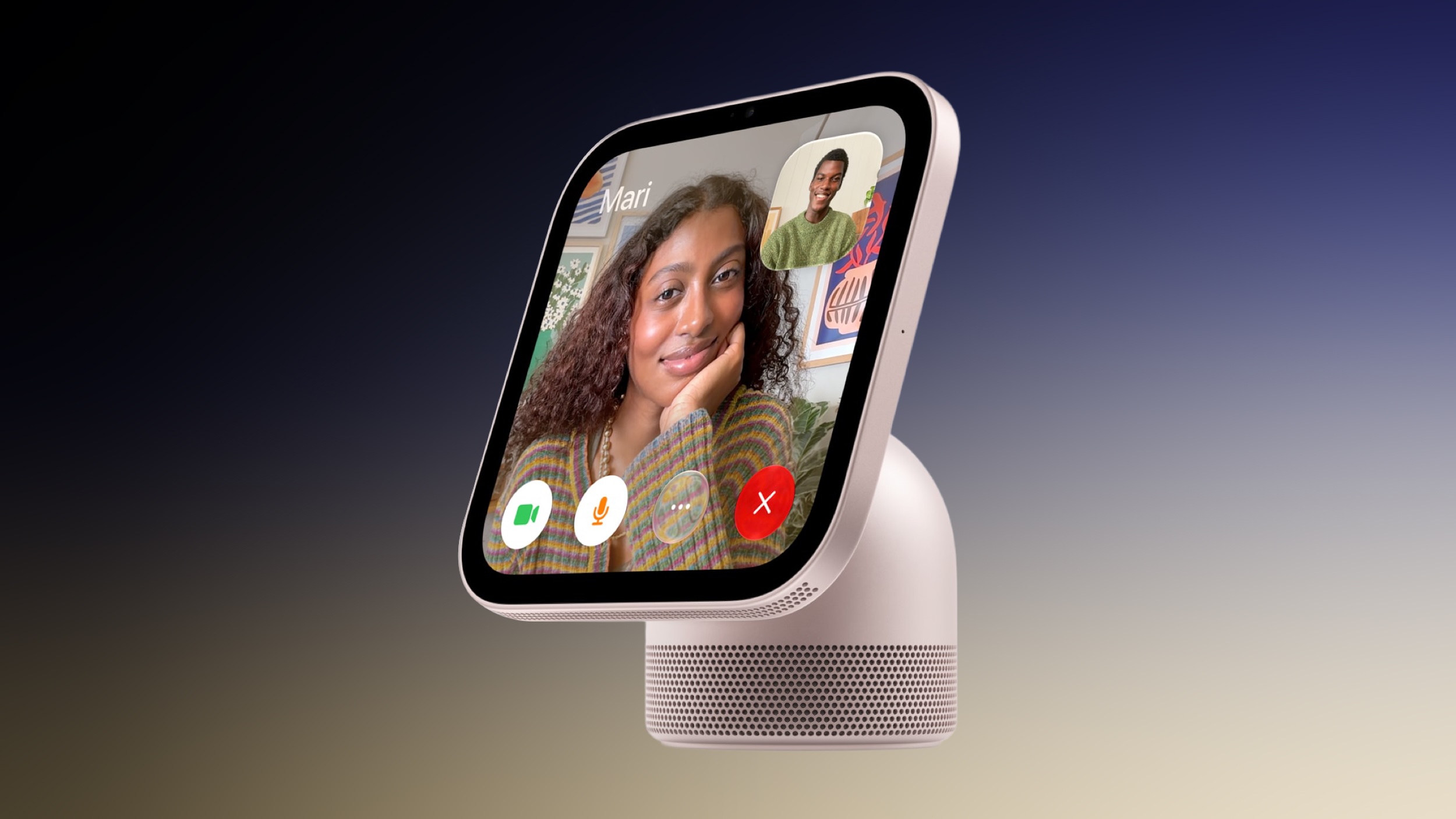
  • FaceTime makes it easy to connect with loved ones hands-free, using Center Stage to keep you perfectly framed even as you move around the room

  • Messages lets you easily read and reply to texts using Siri, the onscreen keyboard, or Tapback

  • Intercom allows you to broadcast messages across your home, to specific rooms, or to personal Apple devices

  • Safari lets you browse the web and includes a new Cooking experience that auto-detects supported recipes, reformatting them with step-by-step instructions and inline timers

  • Find My lets you view the location of friends and family, or locate misplaced Apple devices and AirTags

  • Handoff makes it easy to seamlessly move audio, video, websites, or calls directly from your iPhone to HomeView


Home Control

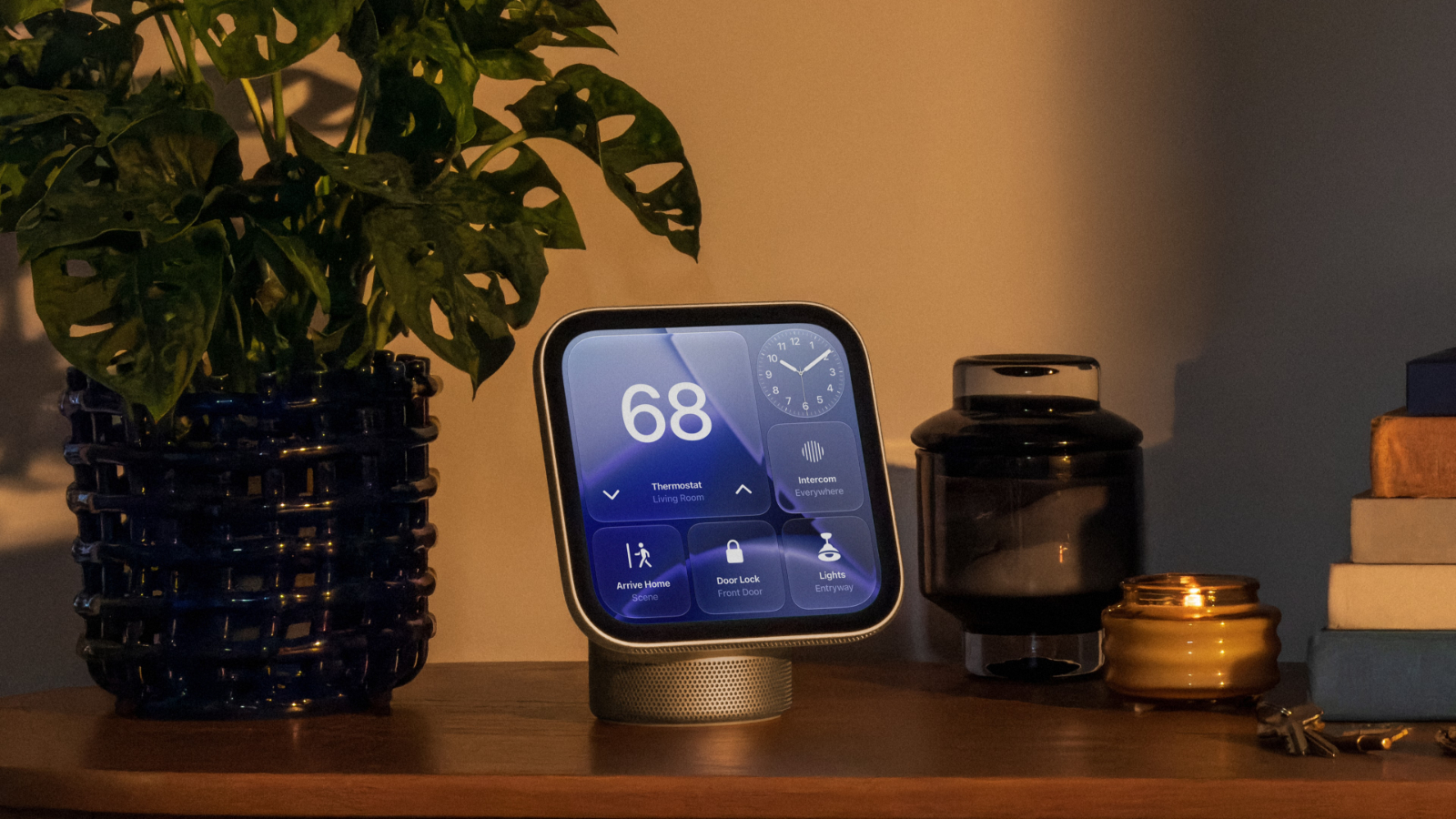
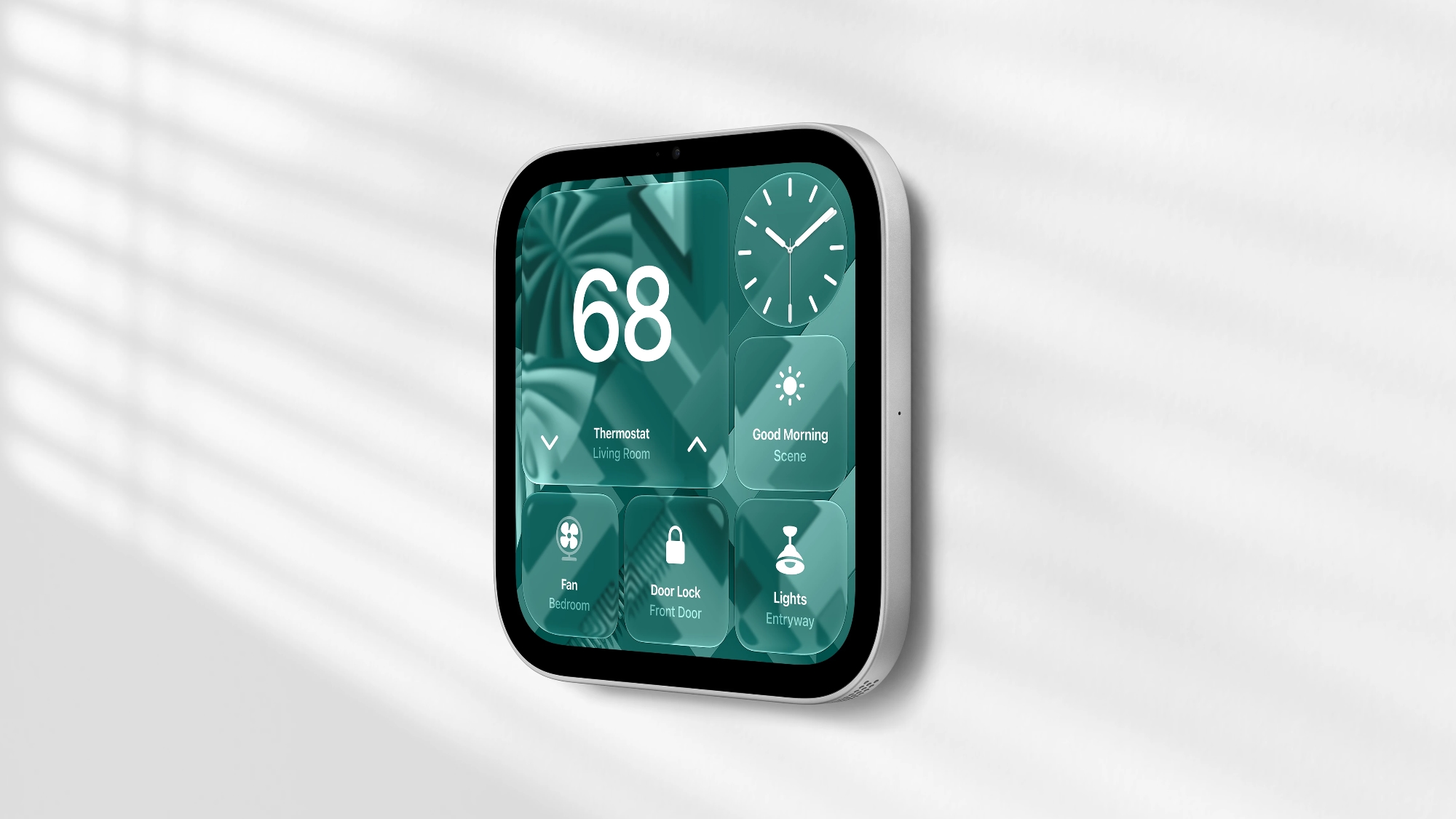
  • Home Modular face offers a concise, glanceable look at your home accessories

  • Home Camera face allows you to livestream up to nine simultaneous camera feeds

  • Home app gives you a dedicated dashboard to control accessories and activate scenes across your entire house

  • Home hub capabilities keep you connected to your HomeKit and Matter accessories, allow you to control your home while away, and enable automations

  • Sound Recognition detects the sounds of smoke and carbon monoxide alarms and alerts you on personal devices like your iPhone, iPad, or Apple Watch


Personalized Experiences

  • Customizable faces let you personalize your space with curated photos, modular home controls, and playful animations like Snoopy

  • Seamless recognition identifies up to six different users by face and voice, instantly displaying their specific Home Screen layout, widgets, and personal content

  • Personal content³ like Messages and Calendar is designed to stay private and be displayed when an enrolled user is recognized, and their recently unlocked iPhone or iPad is present and on the same network

  • Guest experience lets unrecognized people play media and control smart home accessories without accessing a user's personal content


1. Available in English. Spanish language support to come.
2. Some features may not be available in all regions or languages. Some devices may not be available in all regions. Siri AI is available in beta in HomeView software version 27.2. Personal context requests require a paired Apple Intelligence–enabled iPhone or iPad running the latest software version with Siri AI turned on and set to a supported language. Certain Apple Intelligence features that rely on server-side models are subject to daily usage limits. Expanded access to such features will be available for a fee in the future. Use of these features is subject to the Apple Intelligence Terms and Conditions. Learn more.
3. Requires the user to be recognized by their face, and the paired iPhone or iPad must be recently unlocked and connected to the same Wi-Fi network. If disconnected from Wi-Fi, the device must have an active cellular connection in the same location and have recently connected to the same network.
Related Roundup: Apple HomeView
Buyer's Guide: HomeView (Buy Now)

This article, "Apple Shares HomeView 27.2 Release Notes With List of Features" first appeared on MacRumors.com

Discuss this article in our forums

  •  

HomeView in Québec: Apple Says Canadian French Support to Arrive in Software Update

Apple's new HomeView smart home display is available starting today. If you use Canadian French, which is most widely spoken in Québec but also elsewhere, Apple today reiterated that the HomeView will be gaining support for the regional language in a future software update, but it did not provide a timeframe for the update's release.
Related Roundup: Apple HomeView
Buyer's Guide: HomeView (Buy Now)

This article, "HomeView in Québec: Apple Says Canadian French Support to Arrive in Software Update" first appeared on MacRumors.com

Discuss this article in our forums

  •  

Apple Says HomeView Sets New Record in Design-Focused Interview

TechRadar's Jacob Krol interviewed Apple's Vice President of Hardware Engineering Matthew Costello about Apple's all-new HomeView smart home display, which is available starting today. The discussion was largely focused on the HomeView's design, with Costello touching on the device achieving a display-related record for Apple products.


Specifically, the HomeView's display brightness can automatically go down to just 0.3 nits, which is a record low for any Apple product. This ultra-low brightness makes the HomeView especially ideal for a bedside table at night.

"I really love the fact that this is the lowest light performance we've ever engineered into a product, so it's down to 0.3 nits," said Costello.

"So officially, I represent the most dim product ever inside of Apple," he quipped.

For comparison, some other Apple products like the latest iPhones and iPad mini are advertised as having a minimum 1-nit display brightness.

HomeView's maximum display brightness is 500 nits.

Unsurprisingly, Costello said the HomeView is designed for the home (truly shocking) and Siri AI.

"It really was constructed around Siri," he said.

"We really custom-built this user interface for the home, so the apps and experiences that matter most in the home setting are really front and center," he added.

"There's no logging in, logging out, which is super cool. It recognizes you and your information, and when you step away, it's gone."

Read more on TechRadar: 'A really fun, hard-fought journey' — I spoke with Apple about the engineering behind HomeView and why it took so long
Related Roundup: Apple HomeView
Buyer's Guide: HomeView (Buy Now)

This article, "Apple Says HomeView Sets New Record in Design-Focused Interview" first appeared on MacRumors.com

Discuss this article in our forums

  •  

Select 'Apple Home Collection' Accessories Now Available to Order

The first three HomeView-compatible smart home accessories in the Apple Home Collection are available to order starting today, including the LG Indoor Cam ($199.95), LG Outdoor Cam ($299.95), and LG Video Doorbell ($249.95). The remaining accessories from LG and Schneider Home are expected to launch by early 2027.
Related Roundup: Apple HomeView
Buyer's Guide: HomeView (Buy Now)

This article, "Select 'Apple Home Collection' Accessories Now Available to Order" first appeared on MacRumors.com

Discuss this article in our forums

  •  

HomeView Launch Kicks Off as First Orders Reach Customers

Apple announced an all-new home product a month ago, and it's now starting to arrive to customers. It's Friday, November 13, in Australia and New Zealand, which means it's the HomeView launch day.


Customers who pre-ordered Apple's new home hub will soon be sharing pictures and first impressions on the MacRumors forums, Reddit, Instagram, and other social media networks. If you got a HomeView, let us know what you think in the comments below.

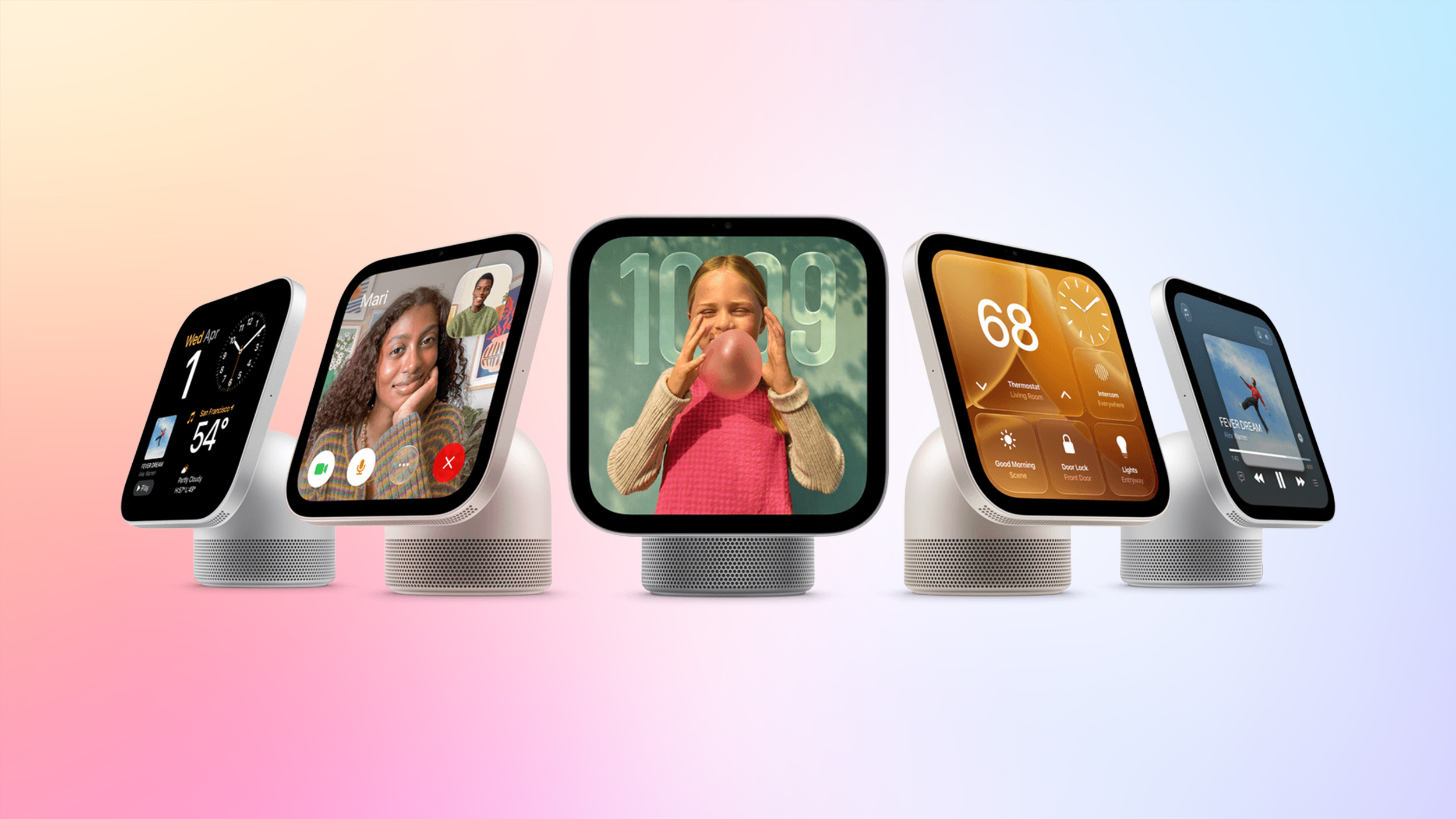
Apple sees HomeView as the center of the home, and functionally, it's a cross between a small iPad and a HomePod. It has a 7-inch square display and the tabletop model has a speaker base, though there's also a wall-mount version.

With a camera and voice recognition, it can identify up to six people in a home, showing personal information customized to each user. There is no HomeView App Store, but it has pre-installed Apple apps and can show widgets from your iPhone. It can be used for making video calls, watching videos, viewing calendar events, getting the weather, listening to music, and controlling smart home devices.

It is built around Siri AI, Apple's smarter voice assistant that debuted in iOS 27. The HomeView is priced at $299, but if you want the wall-mounted version, you need to buy extra mounting hardware.

There are no Apple Stores in New Zealand, so customers in Australia will be the first to walk into an Apple Store to purchase the new device. We are not expecting shortages.

The new Apple TV 4K is also launching on November 13, and it can be purchased for $299. The latest ‌Apple TV‌ has an A19 chip, 128GB of storage, Wi-Fi 7 support, and the option to connect four HomePods for surround sound. It also supports ‌Siri‌ AI.

HomeView is launching in Australia, Canada, India, New Zealand, Singapore, South Africa, the UK, and the United States. It is not available in the European Union because ‌Siri‌ AI is unavailable.

‌Apple TV‌ 4K is launching in the U.S. and 29 other countries and regions.
Related Roundup: Apple HomeView
Buyer's Guide: HomeView (Buy Now)

This article, "HomeView Launch Kicks Off as First Orders Reach Customers" first appeared on MacRumors.com

Discuss this article in our forums

  •  

Apple Explains How HomeView Keeps Camera Data Private

Apple today shared an in-depth look at how it's using Secure Exclaves to protect camera and microphone data on the HomeView, iPhone 18 Pro, and other products.


Apple describes Secure Exclaves as compartmentalized runtimes that process camera and microphone data while isolated from the rest of the operating system. Data processed in Secure Exclaves is not available to the rest of the OS, apps, or Apple, but processing can take advantage of the full application processor. Secure Exclaves power sensitive features involving video and audio feeds:

  • HomeView - The HomeView uses facial and voice recognition to identify up to six people in a home. The exclave also protects the LED camera indicator on the device.

  • Siri Recap and Live Rewind - Record ambient sound for conversation recaps or to caption the last 15 seconds of someone speaking.

  • iPhone 18 Pro/iPhone Duo - Protects the ‌iPhone 18 Pro‌, Pro Max, and Duo on-screen camera and microphone indicators. Also works with "Hey Siri" to protect voice data.

  • MacBook Neo - Protects the MacBook Neo camera indicator.


Apple uses the HomeView as an example of how Secure Exclaves work. The device performs passive minimal visual processing continually to detect whether a person is in its field of view. The HomeView sends a continuous stream of camera frames to a camera exclave, which works alongside a person recognition exclave with face and voice recognition models and an identity database. When a person comes into view, the camera exclave detects the person and lets the main OS know that a person may be present, but no image data leaves the Secure Exclave. An audio exclave does the same thing with audio.

The person recognition exclave matches face and voice prints against the identity database of enrolled users, giving a confidence score. The OS gets the person identifier, position, and confidence level, but not any of the actual audio or video. These simple signals are used to activate personal features like Calendar and Messages that depend on identity, with raw sensor data discarded.

Secure Exclaves came about because Apple needed a secure option for ambient video and microphone monitoring, with the groundwork laid starting in iOS 18. Apple devices use indicators for situations where the camera and microphone are actively engaged, but Apple says they weren't ideal for ambient sensing because they would be on all the time. Always-on lights wouldn't give users a way to distinguish between background sensing and active audio and video recording.

There are two modes for a Secure Exclave: ambient mode and active mode. In ambient mode with no indicator, a sensor can respond to triggers, but it only shares small amounts of metadata with the rest of the system. In active mode, full sensor data is given to the operating system, and an indicator informs the user that the system has audio and video access.

Apple has long used indicators, but they are now backed by Secure Exclaves. Secure Exclaves make sure an indicator is active before data is allowed to be transferred from the exclave to the rest of the OS.

Apple built an isolated computing environment that could handle ambient sensing, and the company says isolating memory for Secure Exclaves was a "serious engineering challenge." Full technical details on the process can be found on Apple's security website.
Related Roundup: Apple HomeView
Buyer's Guide: HomeView (Buy Now)

This article, "Apple Explains How HomeView Keeps Camera Data Private" first appeared on MacRumors.com

Discuss this article in our forums

  •  

Apple Releases Updated HomeView Software 27.2 Before Launch

With the HomeView set to start arriving to some users in just a matter of hours, Apple has released a new HomeView Software 27.2 update.


The software has a build number of 24V526, and it is the second 27.2 update Apple has released for the device.

Customers receiving the HomeView this week will need to install a software update during the setup process. The HomeView ships with HomeView Software 26.5, which is approximately six months old.

Apple planned to release the HomeView earlier than November 2026 but held back because it wanted to debut Siri AI in iOS 27 first.

Apple today said it plans to release a HomeView software update to fix a ‌Siri‌ AI issue that prevents ‌Siri‌ from controlling smart home products like locks, but that update isn't coming until next month. It's likely the ‌Siri‌ AI issue will be addressed in HomeView 27.3.

Update: Apple's security support document says the software update addresses several vulnerabilities, including issues with AirPlay, Messages, and Bluetooth.
Related Roundup: Apple HomeView
Buyer's Guide: HomeView (Buy Now)

This article, "Apple Releases Updated HomeView Software 27.2 Before Launch" first appeared on MacRumors.com

Discuss this article in our forums

  •  

Apple Says HomeView Software Update Coming Next Month With Siri Fix

In her HomeView review shared in a free edition of her New Things newsletter today, tech journalist Joanna Stern said Siri AI once told her "I don't have a camera to see you," even though the device has a camera. Apple confirmed to Stern that it plans to release a software update in December with a fix for this issue.


Siri AI also refused to open Stern's garage door or unlock her front door, even though the HomeView recognized her. Apple told her that the software update coming next month will enable this functionality. In the meantime, you can unlock door locks and garage doors by opening the Home app on the HomeView and tapping on-screen controls.


"Today users recognized by HomeView can unlock security accessories, including door locks and garage doors, directly on their HomeView screen," an Apple spokesperson told Stern. "With a software update next month, this will extend to Siri AI, giving users more ways to manage security accessories once they've been recognized."

HomeView launches this Friday, with U.S. pricing starting at $299. We also shared our own hands-on review video with our own impressions.
Related Roundup: Apple HomeView
Tags: Siri, Siri AI
Buyer's Guide: HomeView (Buy Now)

This article, "Apple Says HomeView Software Update Coming Next Month With Siri Fix" first appeared on MacRumors.com

Discuss this article in our forums

  •  

Review: Is Apple's All-New HomeView Smart Home Hub Worth $299?

On our YouTube channel today, Dan Barbera shared a review of Apple's all-new HomeView smart home hub ahead of the device launching on Friday.


Barbera spent the past week testing the HomeView and has shared his impressions, so be sure to watch our video above to hear what he thinks.

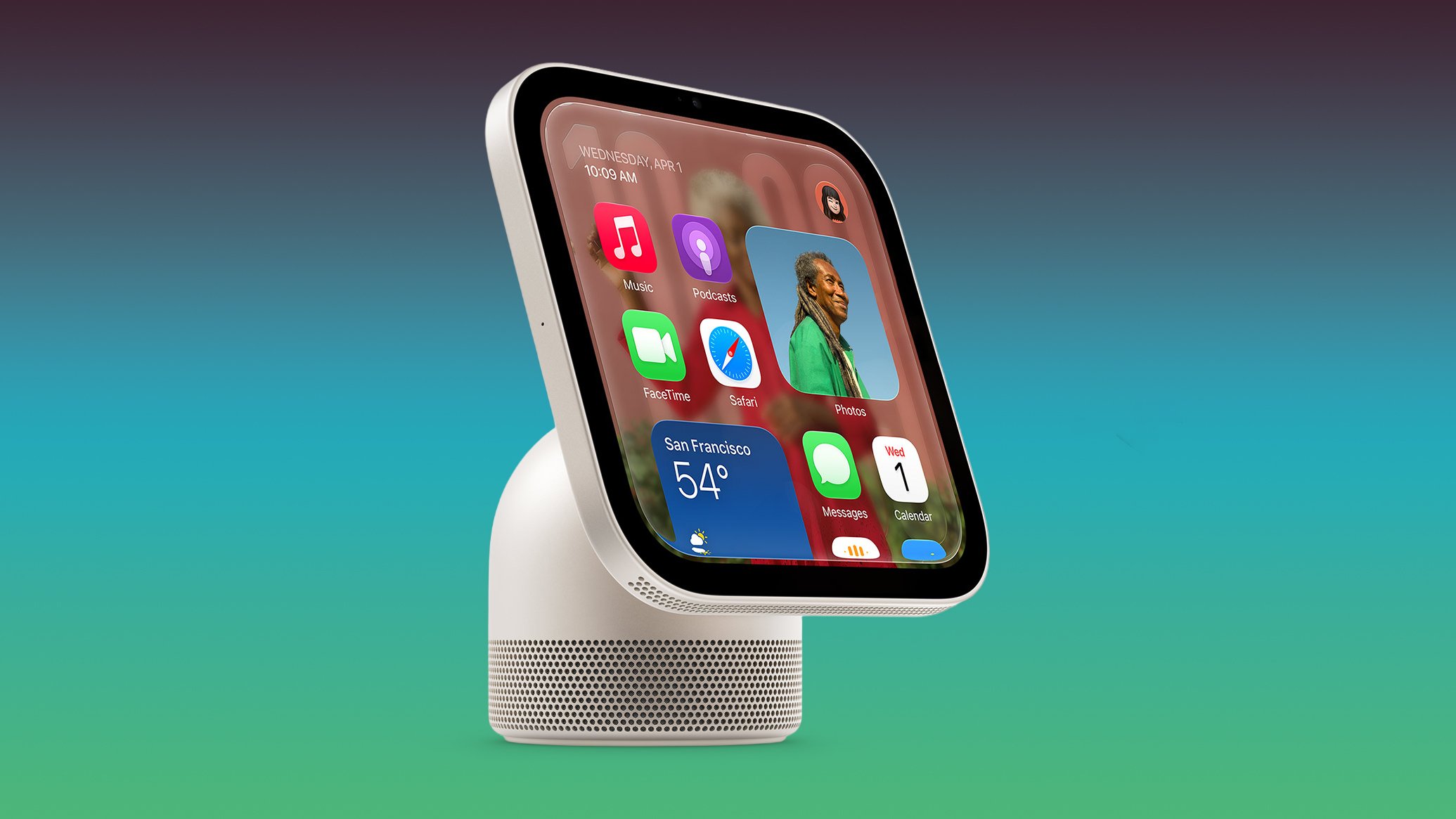
As a refresher, the HomeView features a 7-inch square display connected to an aluminum speaker base by a stainless steel tilting hinge. Apple says it is ideal for a kitchen counter, nightstand, or side table. You can use the device to interact with Siri AI, control smart home accessories, go on FaceTime video calls, listen to music, and more.

Preinstalled apps on the HomeView include Alarms, Calendar, FaceTime, Find My, Home, Intercom, Messages, Music, Podcasts, Reminders, Safari, Settings, Timers, Weather, and World Clock. The device does not have an App Store, but it does support CarPlay-enabled audio and video apps, such as Apple TV, Spotify, and Apple Music Classical.

In the U.S., both the tabletop and wall-mounted versions of the HomeView are priced at $299, but you will also need to purchase a mount if you opt for the wall-mounted version. Apple sells three mounts priced between $59.95 and $129.95.
Related Roundup: Apple HomeView
Buyer's Guide: HomeView (Buy Now)

This article, "Review: Is Apple's All-New HomeView Smart Home Hub Worth $299?" first appeared on MacRumors.com

Discuss this article in our forums

  •  

Apple Home Collection: Select Accessories Available to Order This Friday

Apple today announced that select Apple Home Collection accessories will be available to order starting Friday, November 13, with availability beginning in December. Apple did not say exactly which accessories can be ordered tomorrow, so stay tuned.


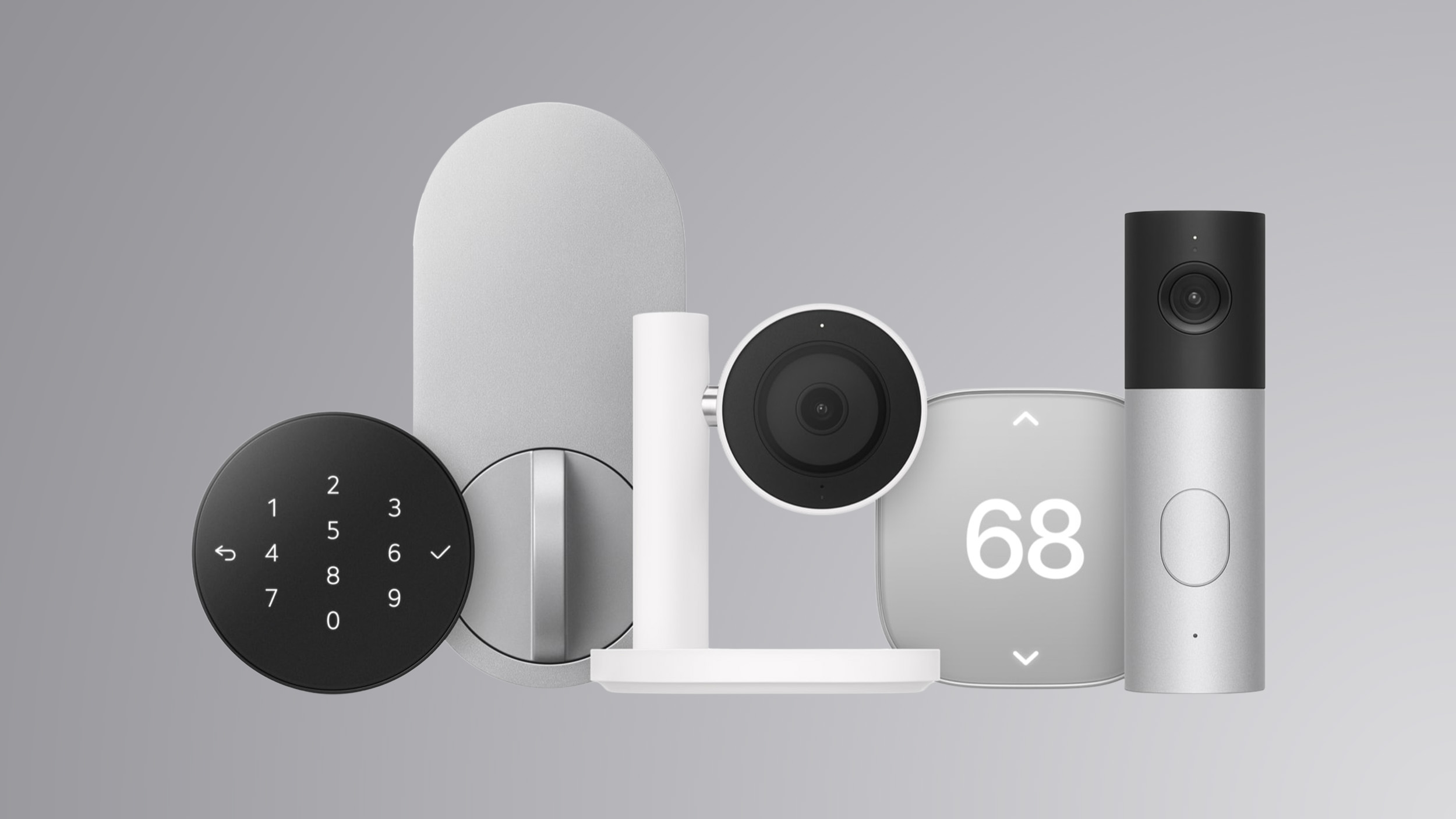
Introduced alongside Apple's new HomeView smart home hub last month, the Apple Home Collection is a new lineup of smart home accessories that LG and Schneider Electric designed in collaboration with Apple. There are indoor and outdoor cameras, thermostats, temperature sensors, a video doorbell, and a door lock.

All of the Apple Home Collection accessories work with the HomeView:

  • LG Video Doorbell ($249.95) - The Video Doorbell has dual cameras that capture views of visitors and packages. The front camera has a 2.5K resolution and the bottom camera is full HD resolution. It has a built-in spotlight and a chime that plays through HomeView, HomePod, or HomePod mini.

  • LG Outdoor Cam ($299.95) - The Outdoor Cam has low-light color night vision and can be angled in multiple positions.

  • LG Indoor Cam ($199.95) - The Indoor Cam has a privacy-preserving feature that allows it to tilt up when people are in the home so it's not recording, and down when people leave for keeping an eye on the home. The tilt function works based on geofencing, but can also be controlled in the Home app or manually.

  • LG Floodlight Cam ($399.95) - The Floodlight Cam has dual floodlights that activate when motion is detected and low-light color night vision.

  • LG Smart Deadbolt Lock ($349.95) - The lock has Ultra Wideband and can unlock automatically when the homeowner approaches, with no tap required. It also supports unlocking via PIN or a hidden backup key slot, and there is detection for whether the door is opened, closed, or has been tampered with. The doorbell and lock can work together as one, letting users see who is at the door and unlocking it if needed.

  • LG Thermostat ($199.95) - The thermostat supports Adaptive Temperature and in the U.S., heating and cooling can be activated during lower-cost periods for users with a compatible utility plan. The thermostat can read temperature and humidity across multiple rooms using separate temperature and humidity sensors. Sensors are priced at $39.95.

  • Schneider Electric Thermostat ($199.95) - Also supports Adaptive Temperature and can be used with temperature and humidity sensors. Sensors are priced at $39.95.

For more details about the accessories, read our previous coverage.

Apple previously announced that some of the accessories will not be released until early 2027, so not everything will be available to order tomorrow.
Related Roundup: Apple HomeView
Buyer's Guide: HomeView (Buy Now)

This article, "Apple Home Collection: Select Accessories Available to Order This Friday" first appeared on MacRumors.com

Discuss this article in our forums

  •  

Apple Releasing Yet Another Two New Products Next Week

Apple's massive wave of product launches will finally end next week, with its all-new HomeView smart home hub and the fourth-generation Apple TV 4K set to be released on Friday, November 13 and no other major hardware releases expected for the remainder of the year. Since late August, Apple has announced more than 25 new devices and accessories in one of its busiest stretches ever.
Related Roundups: Apple TV, Apple HomeView

This article, "Apple Releasing Yet Another Two New Products Next Week" first appeared on MacRumors.com

Discuss this article in our forums

  •  

Apple's New HomeView Smart Home Hub: Here's How Much RAM It Has

MacRumors has confirmed that the A18 chip in Apple's new HomeView smart home hub is paired with 8GB of RAM. This is not very surprising given the A18 chip also has 8GB of RAM in all iPhone 16 models and the MacBook Neo, but Apple does not list this information in the HomeView's tech specs, so it is worth documenting.
Related Roundup: Apple HomeView
Buyer's Guide: HomeView (Buy Now)

This article, "Apple's New HomeView Smart Home Hub: Here's How Much RAM It Has" first appeared on MacRumors.com

Discuss this article in our forums

  •  

HomeView Code Suggests Future Support for AI Chatbot Apps, Anti-Spoofing Protection

Code discovered in the iOS 27.3 beta suggests Apple is laying the groundwork for chatbot apps on its upcoming HomeView smart home hub, according to the code investigator known as pdfu.


The software HomeView uses to display apps from a connected iPhone or iPad is said to have gained a "Conversational Apps" category in the latest beta. The update also reportedly adds preparations for two-way audio routing, session management, and interruptions, but pdfu notes that it is "still not fully wired up."

Apple hasn't announced chatbot apps for HomeView, and the code doesn't show which apps could use the category or when it could launch, so support for ChatGPT, Claude, or other chatbots is unconfirmed. It's not the first time the possibility has been floated: pdfu suggested on Sunday that chatbot apps might follow based on an unused flag in HomeView's software.

Anti-Spoofing Protection


In a separate finding, pdfu also discovered that HomeView includes anti-spoofing protection. Apparently, after three spoof attempts for a profile, the user must authenticate with an iPhone to see personal data, and the protection is enabled in HomeView software 27.2.

Apple is also said to be working on a lockout cooldown system, similar to what happens when you enter the wrong passcode on an iPhone. A first lockout can be cleared immediately, but a second lockout brings a one-hour wait, a third a four-hour wait, and a fourth (or any further) lockout an eight-hour wait.

pdfu adds that the lockout cooldown periods are still in development, so for now any lockout can be cleared immediately by authenticating with an iPhone. Apple hasn't described either feature in its press materials.

HomeView Launches Next Week


HomeView launches on November 13 for $299, in both desktop and wall-mounted versions. Here's what Apple has announced so far:

  • 7-inch Liquid Retina display, in a tabletop model with a speaker base and a wall-mounted model.

  • Face recognition for up to six users, each with a personal Home Screen with apps and widgets.

  • Siri AI, with conversations that continue in the Siri app on other Apple devices.

  • Personal content from Messages, FaceTime, Calendar, Reminders, and Find My, shown when the enrolled user is recognized and their iPhone or iPad is nearby and recently unlocked.

  • Faces including Photos, Flow, Snoopy, Home Modular, and Home Camera.

  • Apple Music, Podcasts, News, and Apple TV, plus compatible third-party audio and video apps.

  • Handoff from iPhone, and multiroom audio with HomePod, HomePod mini, and AirPlay speakers.

  • FaceTime with Center Stage, Messages by voice or keyboard, and Intercom.

  • Step-by-step recipes from the web with hands-free timers.

  • Smart home controls, including a Home Camera face that shows up to nine live camera feeds.

  • With a supported iCloud+ subscription, recognition of people, pets, packages, and vehicles from compatible cameras.

  • Smoke and carbon monoxide alarm sound detection.

  • Support for Apple Home Collection accessories, other "Works with Apple Home" accessories, and Matter.

HomeView won't have an App Store. However, as we reported last month, it shows CarPlay-style third-party audio and video apps from a connected iPhone or iPad. HomeView isn't on sale in the European Union because Siri AI is currently unavailable in iOS there, and Apple says it is still working with the EU to find a path forward to make it available in the bloc.
Related Roundup: Apple HomeView
Tag: pdfu
Buyer's Guide: HomeView (Buy Now)

This article, "HomeView Code Suggests Future Support for AI Chatbot Apps, Anti-Spoofing Protection" first appeared on MacRumors.com

Discuss this article in our forums

  •  

„Welcome Apple HomeView“

A smart home device with a screen showing a family photo, placed on a wooden table with a glass of water and a plate with two apples nearby. The text 'Introducing Apple HomeView' appears beside the device.

Apple HomeView is not available for sale in the European Union, as Siri AI is currently unavailable in iOS in the EU. Apple is working constructively with the EU in an attempt to find a path forward.

Apple.com/Newsroom | YouTube@Apple

Erster Gedanke: Richtig so! Anstatt den Computer in seinem Funktionsumfang (stark) zusammenzustreichen, bevorzuge ich es, ihn erst gar nicht anzubieten.

Zweiter Gedanke nach dem Lesen von Fußnote 10: Ohne Apple Intelligence und Siri AI funktioniert Apples Heimzentrale gar nicht. Ergibt Sinn!

Dritter Gedanke: Das ist „by design“! Die gewählte Software-Architektur ist ein Verkaufsverbot für die eigene Hardware.

  •  
❌