❌

Lese-Ansicht

Apple Launches Spanish Version of Its U.S. Website

Starting today, Apple is making its U.S. website available in Spanish. Customers who have Spanish set as their language will be able to browse apple.com/us-es by default, and anyone will be able to choose Spanish from the country and language selector at the bottom of the website.


While most of the site will be available in Spanish, the Apple Online Store and Financial Services will be in English only. Customers who visit the Apple Online Store can shop in Spanish by contacting an Apple Specialist by phone.

There's already a U.S. Spanish version of the Apple Support site, so the change to the main website brings it in line with support options.
This article, "Apple Launches Spanish Version of Its U.S. Website" first appeared on MacRumors.com

Discuss this article in our forums

  •  

'iPhone 20 Pro' Rumored to Be Based on iPhone Air

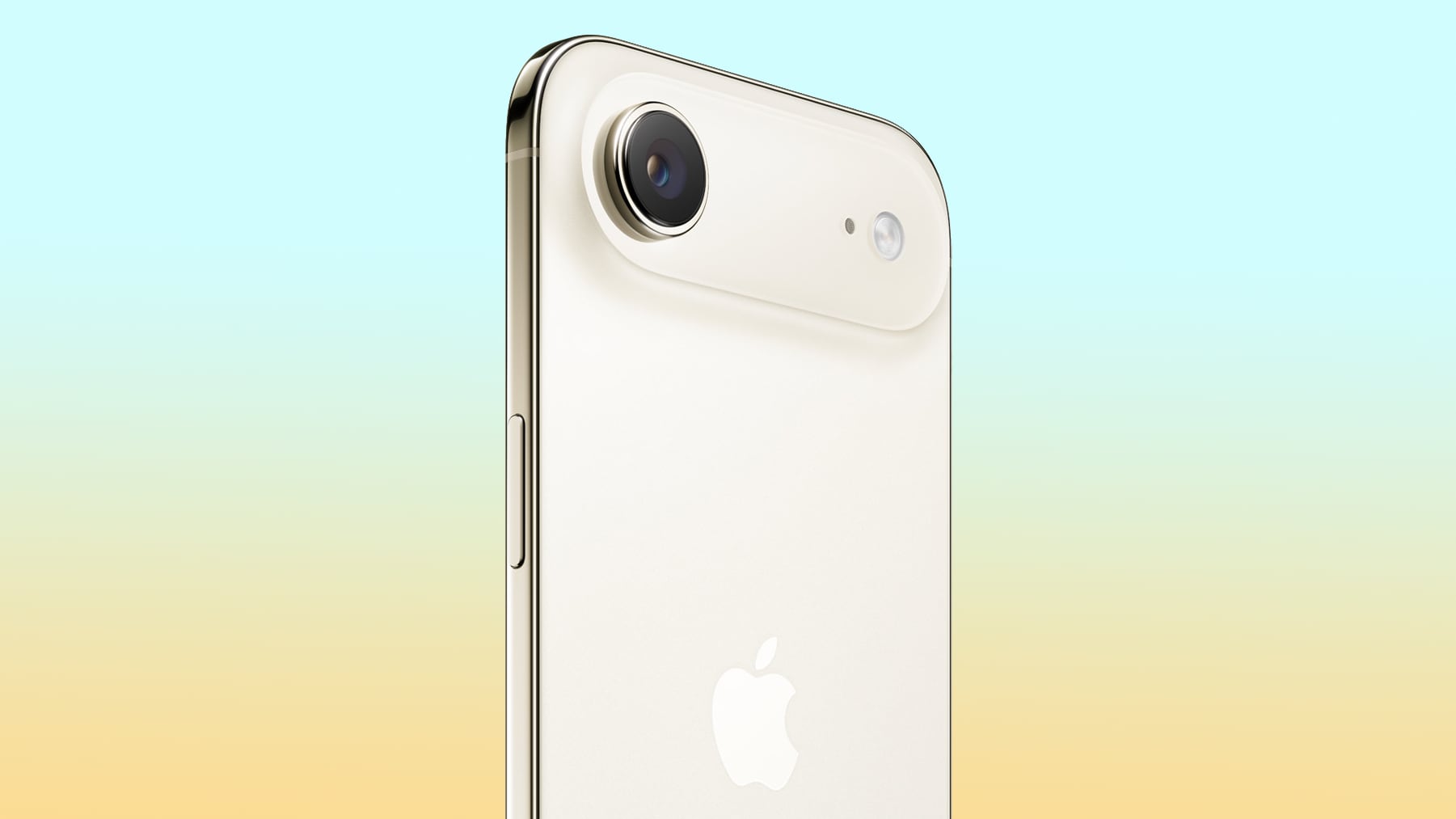
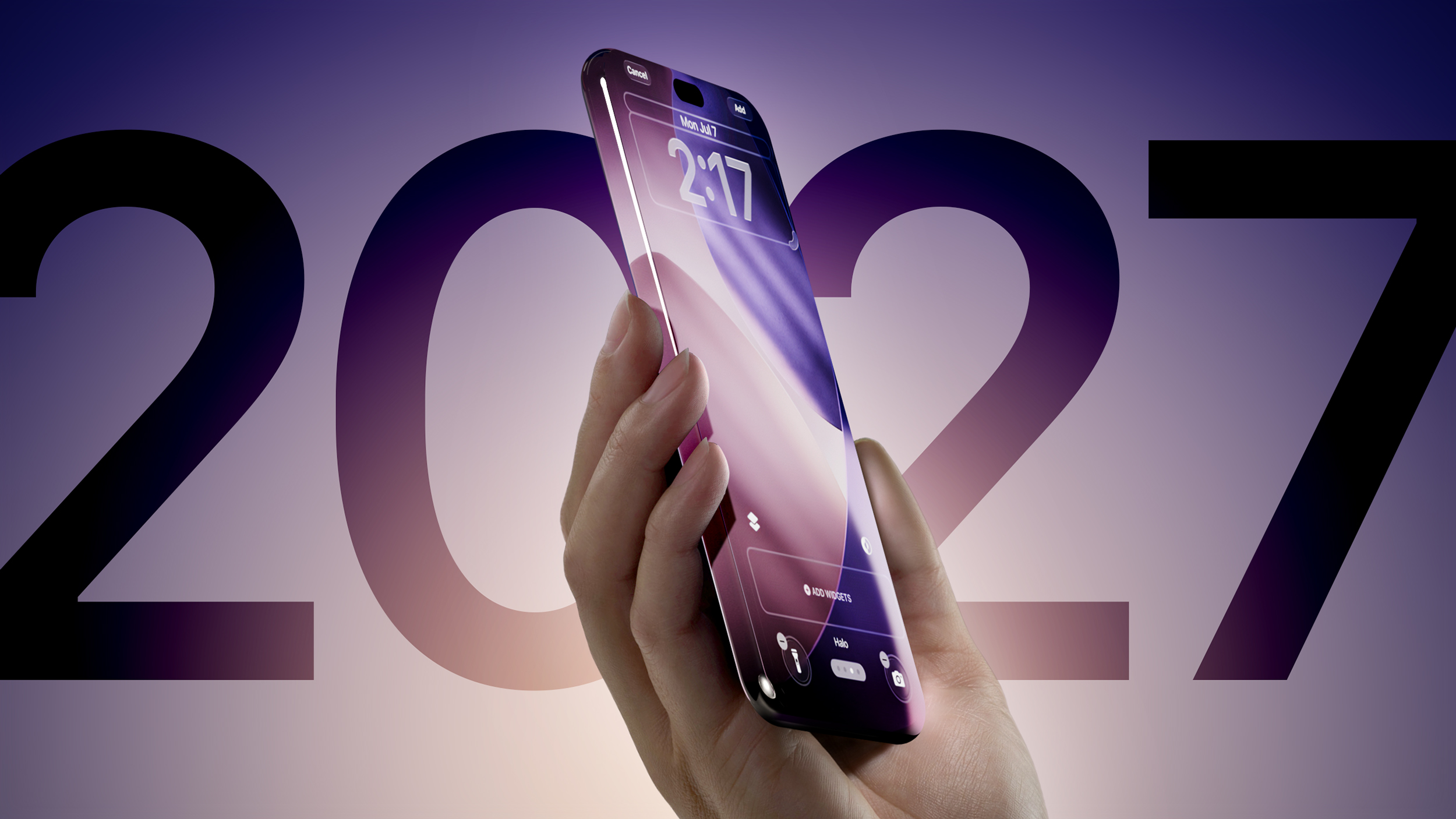
Next year's "iPhone 20 Pro" models will use the same glass design as the iPhone Air, but with more pronounced curvature along all four sides, according to the leaker known as "Fixed Focus Digital."


In a new post on Weibo, the leaker said the device would use the same glass material as the ‌iPhone Air‌, adjusted to have greater curvature and produce a four-sided curved effect. The accompanying hashtag refers specifically to an "iPhone 20 Pro" with a four-sided curved, "all-glass" design.

An illustration shared with the post depicts rounded front and rear glass meeting a narrow, polished, gold-colored metallic frame. Physical side buttons, antenna lines, and a protruding rear camera assembly remain visible.

Taken together with earlier rumors and the post's accompanying illustration, the repeated comparisons suggest a design somewhere between the iPhone X and ‌iPhone Air‌. The ‌iPhone Air‌ provides a reference for the slim profile and a more modern iPhone design, while the more pronounced glass curvature recalls the rounded edges of the iPhone X. Both feature a polished frame.

The latest claim builds on Fixed Focus Digital's previous report that Apple had modified ‌iPhone Air‌ manufacturing equipment to produce more rounded glass components for the 20th anniversary models. The leaker said the changes had helped reduce manufacturing costs, while substantially improving thinness and heat dissipation.

In a still-earlier report, the same leaker also claimed that a supply chain facility had completed renovations ahead of "iPhone 20" production, with manufacturing quality expected to be roughly comparable to the first-generation ‌iPhone Air‌. The ‌iPhone Air‌ features Ceramic Shield 2 on the front and Ceramic Shield on the back.

The broader design picture aligns with Bloomberg's Mark Gurman's reporting that Apple's anniversary Pro models will feature glass that curves into the sides from both the front and rear, with a thin metal band between the two panels. Gurman has also described thinner display bezels and curved glass around all corners and edges, in what he expects to be the biggest overhaul of the Pro line since the iPhone X.

Apple's 20th-anniversary iPhone models are expected to launch in the fall of 2027. While leakers have variably referred to the device as the "iPhone 20 Pro," Apple's naming plans remain unclear. It seems plausible that the company could skip the iPhone 19 name to emphasize the anniversary, similar to its introduction of the iPhone X in 2017.
Related Roundup: iPhone Air
Buyer's Guide: iPhone Air (Neutral)

This article, "'iPhone 20 Pro' Rumored to Be Based on iPhone Air" first appeared on MacRumors.com

Discuss this article in our forums

  •  

iPhone 20 Pro Rumored to Feature New 17nm Camera Sensor

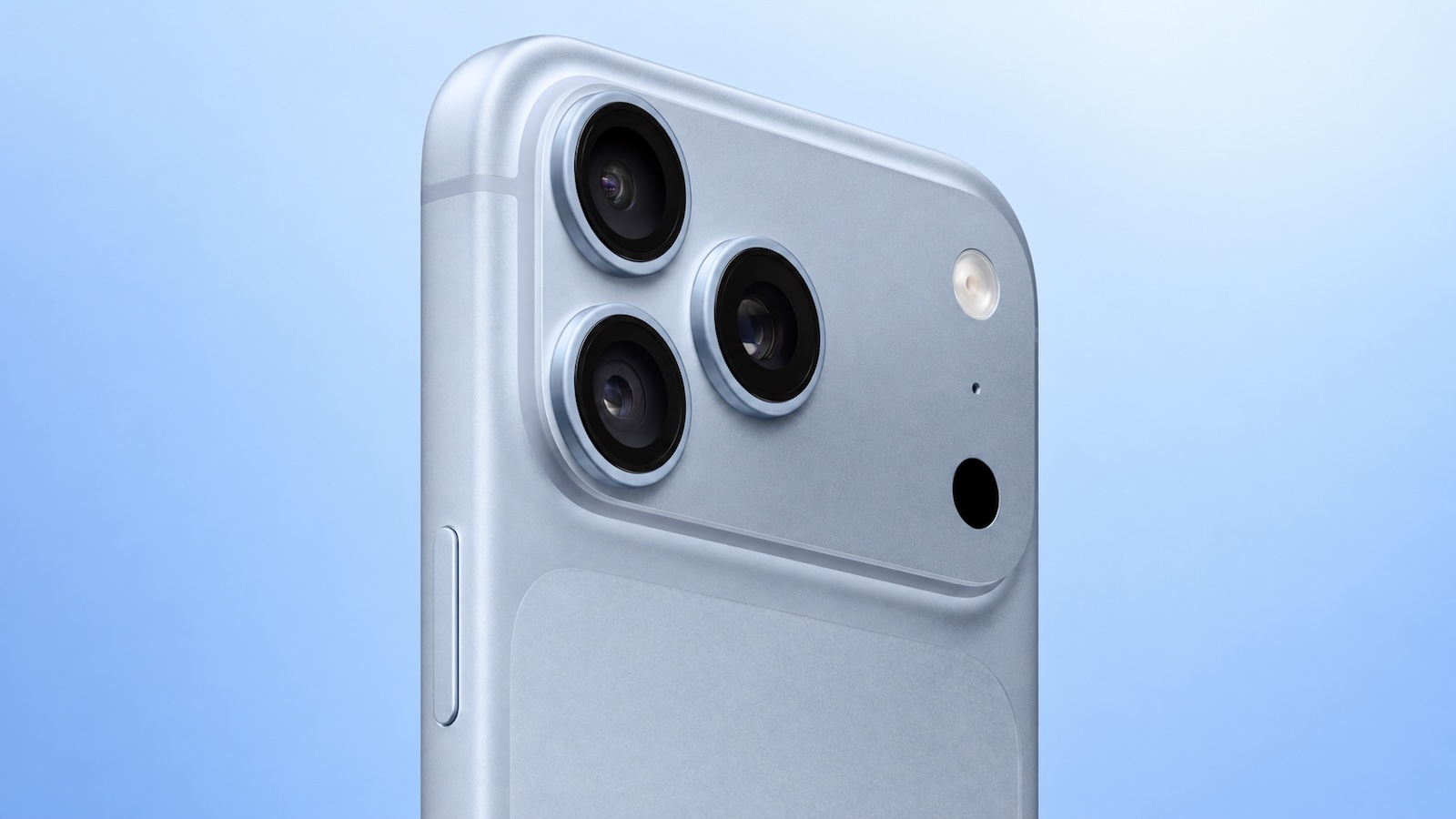
Next year's iPhone 20 Pro could feature a main camera sensor with logic circuitry manufactured using a new 17-nanometer process, according to Weibo-based leaker Ice Universe.


Modern stacked camera sensors separate their light-sensitive pixels from the logic circuitry responsible for reading out and processing image data. A more advanced manufacturing process for the logic layer could potentially enable faster readout speeds, improved power efficiency, and more sophisticated image processing.

The leaker provided no further details about the sensor, which would reportedly debut in Apple's 20th-anniversary iPhone in 2027. Apple is expected to skip the "iPhone 19" moniker next year, just like it did with the iPhone 9 prior to the release of the iPhone X in 2017 to celebrate the 10th anniversary of the original iPhone.

Interestingly, Samsung has already been developing a 17nm Low Power Value (17LPV) process specifically for CMOS image sensor signal processing circuitry, according to a 2024 Omdia report.

Apple is also working with Samsung to produce advanced image sensors at its Austin, Texas facility. Previous reports suggest the partnership involves a three-layer stacked sensor design, but there's currently no clear link between that project and the claimed 17nm component.

Separately, Apple is rumored to be developing its own image sensor incorporating LOFIC technology, which could substantially improve dynamic range and preserve more detail in highlights and shadows. Again though, it's not clear whether the latest claim relates to that sensor.

Apple is rumoured to be a developing a radical new design for its second commemorative iPhone, featuring a new quad-curved OLED display that wraps around the edges of the device, and a screen with potentially no cutouts at all. Apple is expected to debut the device in or around September 2027.
This article, "iPhone 20 Pro Rumored to Feature New 17nm Camera Sensor" first appeared on MacRumors.com

Discuss this article in our forums

  •  

Apple Seeks 200,000 People for AI Health Study

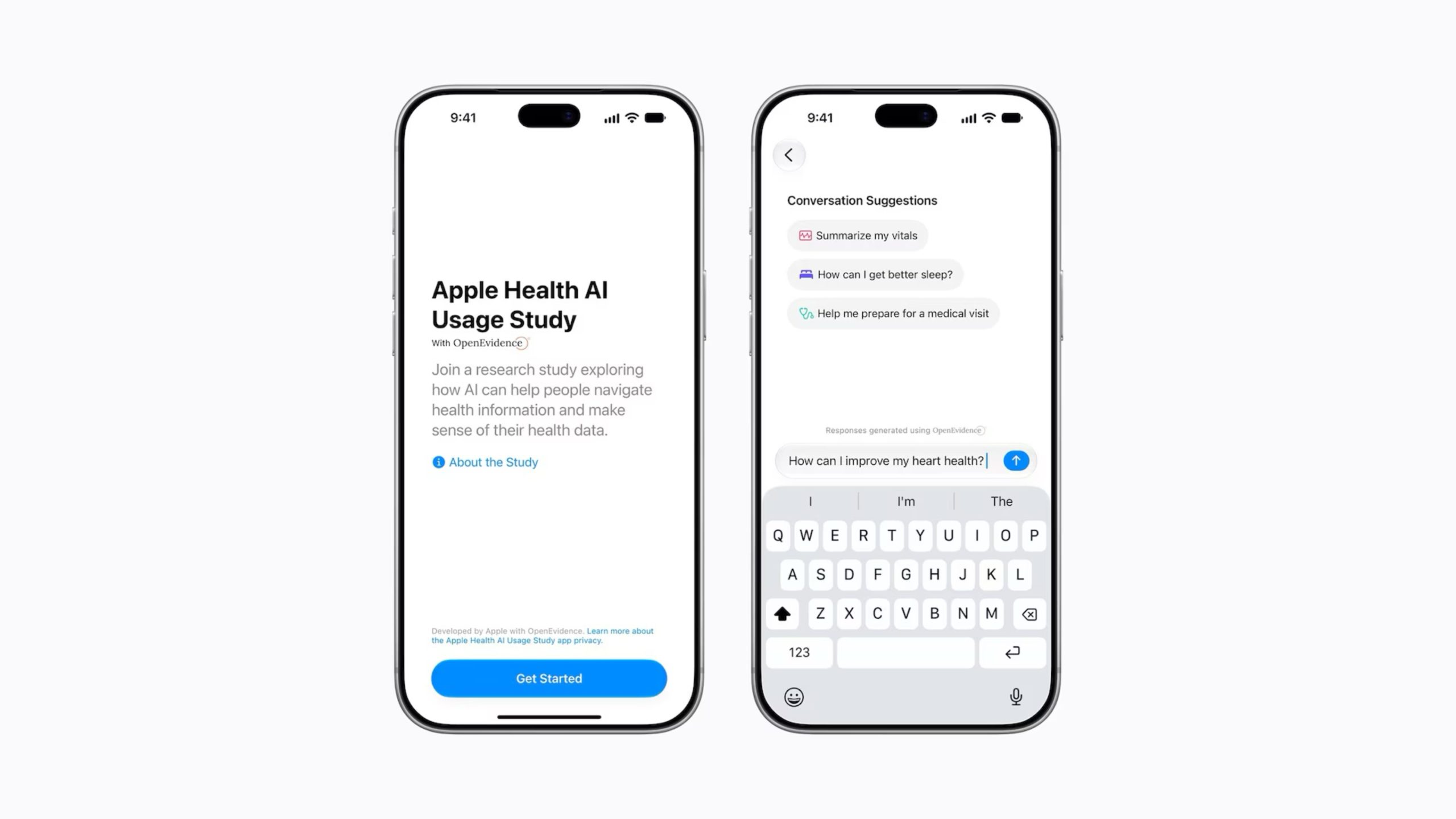
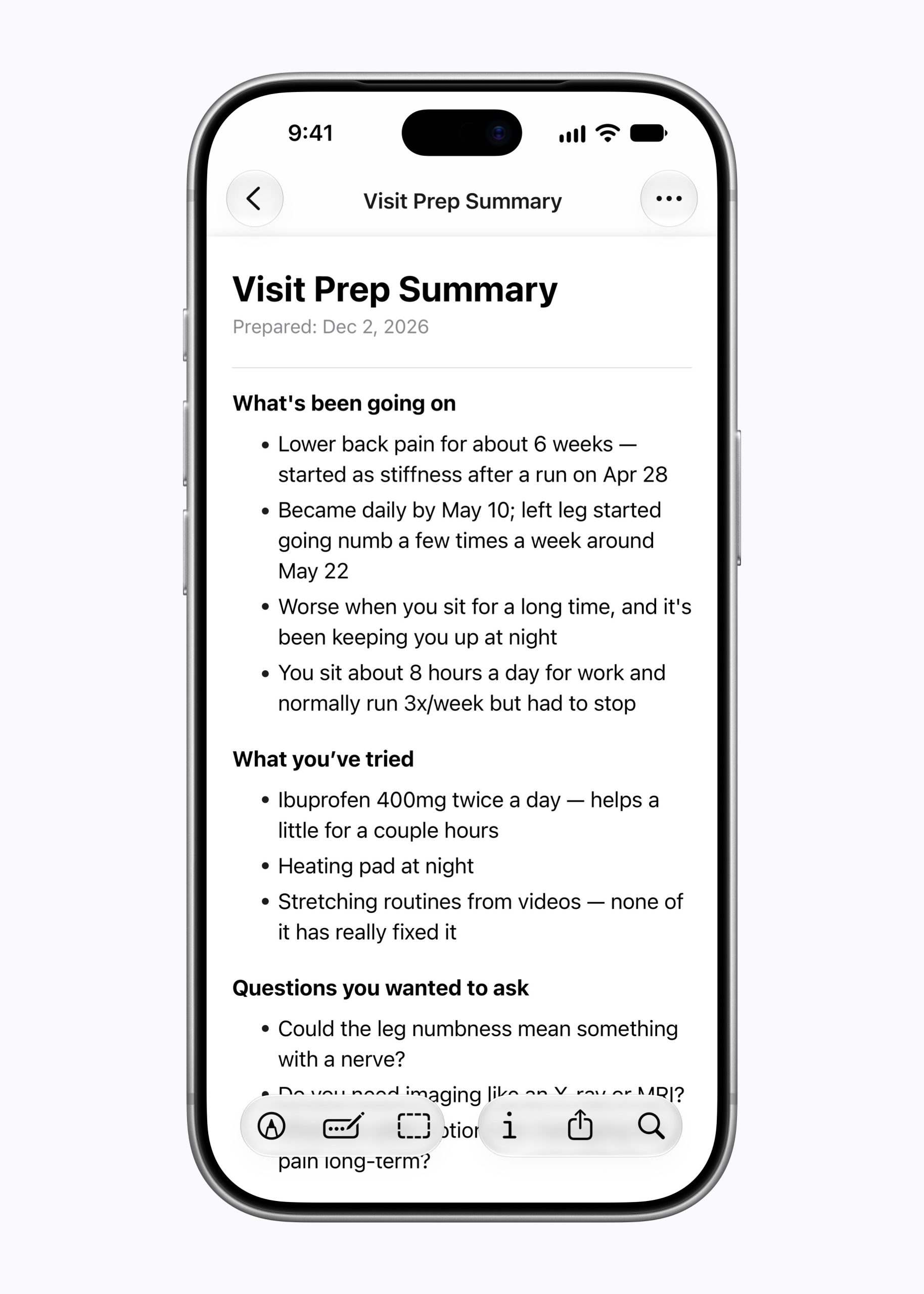
Apple on Sunday announced the launch of an Apple Health AI Usage Study that gives participants access to a dedicated iPhone app that answers everyday health questions using medical research and, optionally, their own Health app data.


Conducted in collaboration with clinical AI company OpenEvidence, the U.S.-only study will examine how people understand and evaluate AI-generated health information, what makes them trust it, and whether it can help them prepare for appointments with their doctors.
"At Apple, we believe responsible innovation starts with scientific rigor and clinical grounding. Health is deeply personal, and conducting a dedicated research study is the most thoughtful way to understand how people engage with, comprehend, and evaluate health AI in everyday life," said Sumbul Desai, M.D., Apple's vice president of Health and Fitness. "Insights from this study will help advance the broader scientific conversation and ensure that as technology evolves, we continue building trusted tools that genuinely support people wherever they are on their health journey."
The app combines OpenEvidence's technology with an Apple-designed research experience, where responses include links to peer-reviewed clinical sources, with information drawn from publications like The New England Journal of Medicine, JAMA, and Nature. Apple says the app presents complex medical information in approachable language.


Participants can choose to share data such as their resting heart rate, activity, sleep, and lab results through HealthKit. The idea is for it to allow researchers to explore whether incorporating personal health information makes answers more relevant and easier to understand. Apple says the app can also help users put Health data in context, understand symptoms or conditions, and build personalized exercise or meal plans.

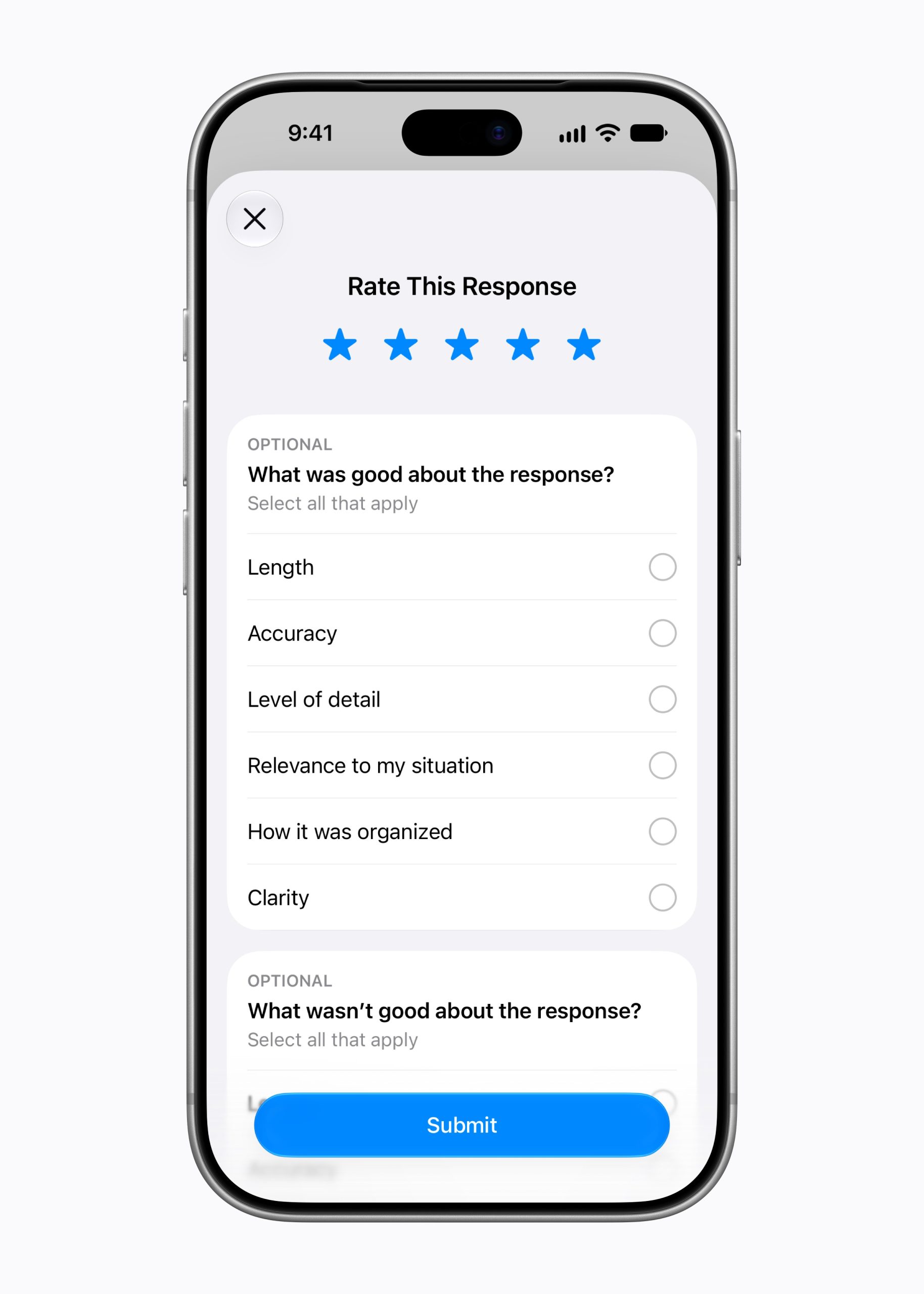
Users can rate responses and complete occasional surveys about their experience, and all questions undergo processing designed to remove identifying information before reaching OpenEvidence, which deletes question-and-response data within 24 hours. Apple says study data will not be used to train AI models, and participants control whether they share HealthKit metrics or survey responses.
"Patients and clinicians are both turning to AI, but the tools they use are being built and tested in separate worlds," said Robert M. Wachter, M.D., UCSF's professor and chair of the Department of Medicine. "When patients and doctors draw on versions of the same trustworthy tools, patients arrive prepared, conversations improve, and next steps happen seamlessly. Connecting these tools, and rigorously studying what works, is how we'll get there."
Apple is keen to stress that health tools powered by large language models can give incomplete or unclear answers, and the app includes safeguards that are meant to detect certain concerning questions and direct users toward a healthcare provider or other resources. The study isn't intended to diagnose or treat conditions, or replace advice from medical professionals.


The study is open to up to 200,000 eligible U.S. residents aged 21 and older with an Apple Intelligence-enabled iPhone running iOS 26 or later. If you're eligible and interested, download the Apple Health AI Study App from the App Store to learn more.
This article, "Apple Seeks 200,000 People for AI Health Study" first appeared on MacRumors.com

Discuss this article in our forums

  •  

„Breakfast – understand your running“

Ohne das Thema zu groß aufzuziehen, aber was ist der Preis von Software dieser Tage?

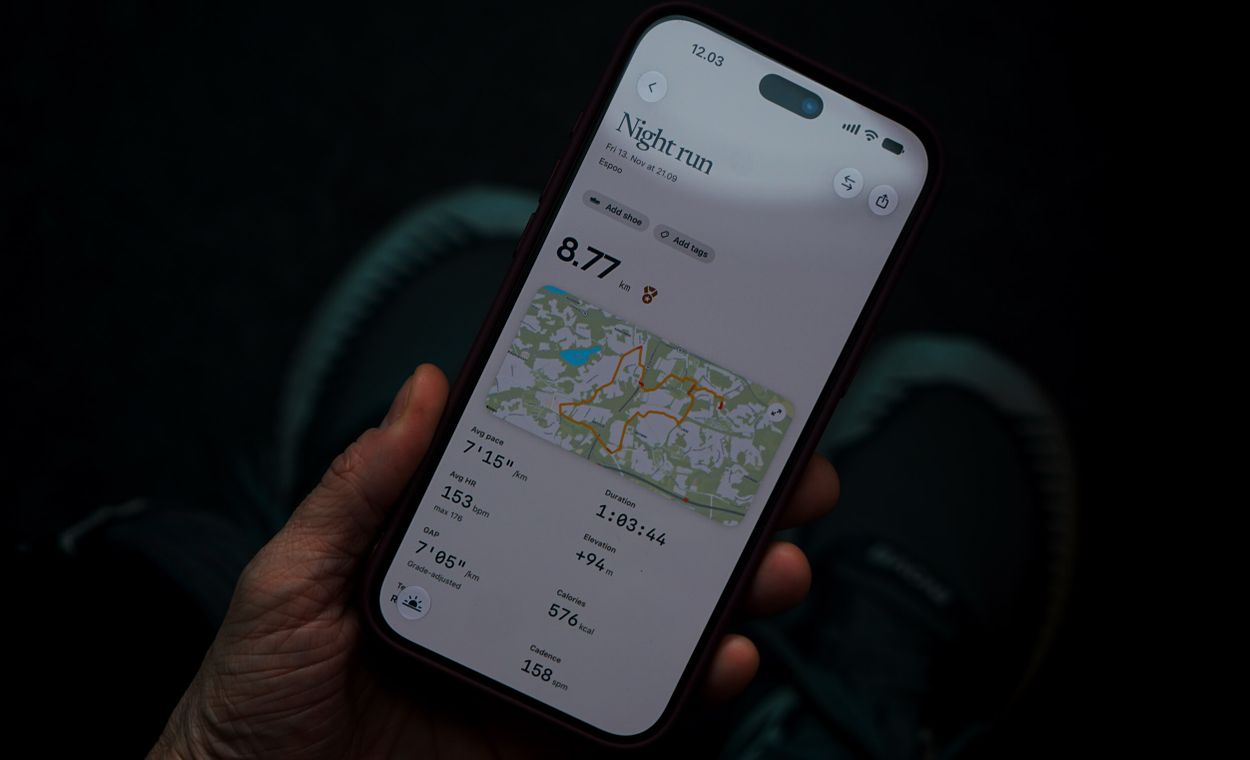
A hand is holding a smartphone displaying a running activity summary for a night run, showing distance covered as 8.77 km, pace, heart rate, duration, elevation, calories burned, and cadence, along with a mapped route of the run. The background shows a pair of running shoes.

Breakfast is made for runners who like to look at their training more closely. You can see how your pace and mileage change over time, track your gear and key metrics, and you can challenge yourself to improve.

Breakfast is developed by Matt Alexander, as part of 137 Ventures, in London.

breakfastrunning.club

Im Fall von Breakfast ist die Antwort sehr eindeutig: Null Euro – trotz exzellenter Aufbereitung der Apple-Health-Laufdaten.

Ich schätze den Fokus, den „Apps für einen selbst“ an den Tag legen. Lässt man Software für den Eigenbedarf schreiben, wovon ich hier ausgehe, bleiben Funktionen für die breiteste Zielgruppe schlicht außen vor. Kein Kaum „Share to social“, nur Features, die einem persönlich wichtig sind. Das ist nicht nur „gut genug“, sondern oft besser, weil fokussierter.

Bei Breakfast sind’s die Daten meiner Runs, die auch mir wichtig sind – von Trend-Prognosen über eine direkte Gegenüberstellung vorheriger Läufe bis zu persönlichen Bestzeiten sowie Zielen.

  •  

Apple Launches Two Products Today

Apple is releasing two new products today, Friday, November 13: the all-new Apple HomeView and the fourth-generation Apple TV 4K, both of which have been available to pre-order since mid-October.

  • Apple HomeView: Apple's new smart home display, powered by Apple Intelligence with Siri AI, for entertainment and managing the home. Available in tabletop and wall-mounted models, it can recognize up to six users by face, each with a personalized Home Screen. The HomeView is priced at $299.

  • Apple TV 4K: adds Siri AI, the A19 chip, an updated Siri Remote with Find My, and support for four-speaker surround sound with HomePod mini 2. The Apple TV 4K comes with 128GB of storage and is priced at $299.
Both products were announced on October 13 alongside the HomePod mini 2, which launched October 30.

As things stand, HomeView is not sold in the European Union because Siri AI is currently unavailable on iOS in the region due to regulatory constraints. Apple has said it is "working constructively with the EU in an attempt to find a path forward," but has provided no timeline for EU availability.
This article, "Apple Launches Two Products Today" first appeared on MacRumors.com

Discuss this article in our forums

  •  

Apple Support Community Deserved a Proper Goodbye

Apple on Tuesday abruptly placed the Apple Support Community into a read-only state and announced that the forums will be permanently closing on Friday, November 20. Those who contributed to the site — some for more than two decades — were blindsided by this decision and had no chance to post farewell messages.

Even if you felt the Apple Support Community contained too many generic or unhelpful answers from users trying to boost their post counts and earn points, the people volunteering their time to the site still deserved a proper goodbye.

Below, we have highlighted some of those people and their experiences.

Jeff Donald from Florida was a member of the Apple Support Community since November 2000, when the forums were still known as Apple Discussions. This past year, Apple recognized his efforts by inviting him to the Apple Community+ program, which launched in 2022 and provided members with a few extra perks and experiences.

Leroy Douglas was a member since July 2009. He said he was a bit shocked to see Apple's sudden announcement, but he saw the writing on the wall.

Here is a fun fact that you might not have known: In addition to English, Tobias Steen in Germany said there were also Apple Support Communities in Chinese, French, German, Japanese, Korean, Portuguese, and Spanish. For some reason, the French and German versions do not have closure notices, but we are told they will meet the same fate.

The forums brought together people of all ages, from 16-year-old Evan Bato Rousseau in France to 83-year-old Nobel Prize winner Sir Tim Hunt in England, who told us he found it to be a helpful resource, even if some of the answers were wonky.

John Daniel, the Canadian developer of macOS diagnostic tool EtreCheck, said he was active in the Apple Support Community for more than two decades. Users like him who reached "Level 6" or higher based on their contributions received access to The Lounge, a private category of forums where Apple employees sometimes participated.

Prior to 2020, John said Apple occasionally hosted in-person meetups for Support Community members, including a special visit to Apple Park.

"I don't agree with comments that so many are making about the Apple Support Community right now," he said, in response to those who described it as useless. "We regularly solved problems, identified significant issues with Apple projects, traced the cause of bugs and fixed them, and always learned new things. That's what I'm going to miss."

Elías Rojano Núñez of Chile participated in the Spanish forums. He told us that he found it deeply satisfying when he was able to help others, and he was saddened that the Spanish forums were shuttered without any advanced notice, but he is grateful for the opportunity that he had and will always value the interactions he had with fellow contributors.

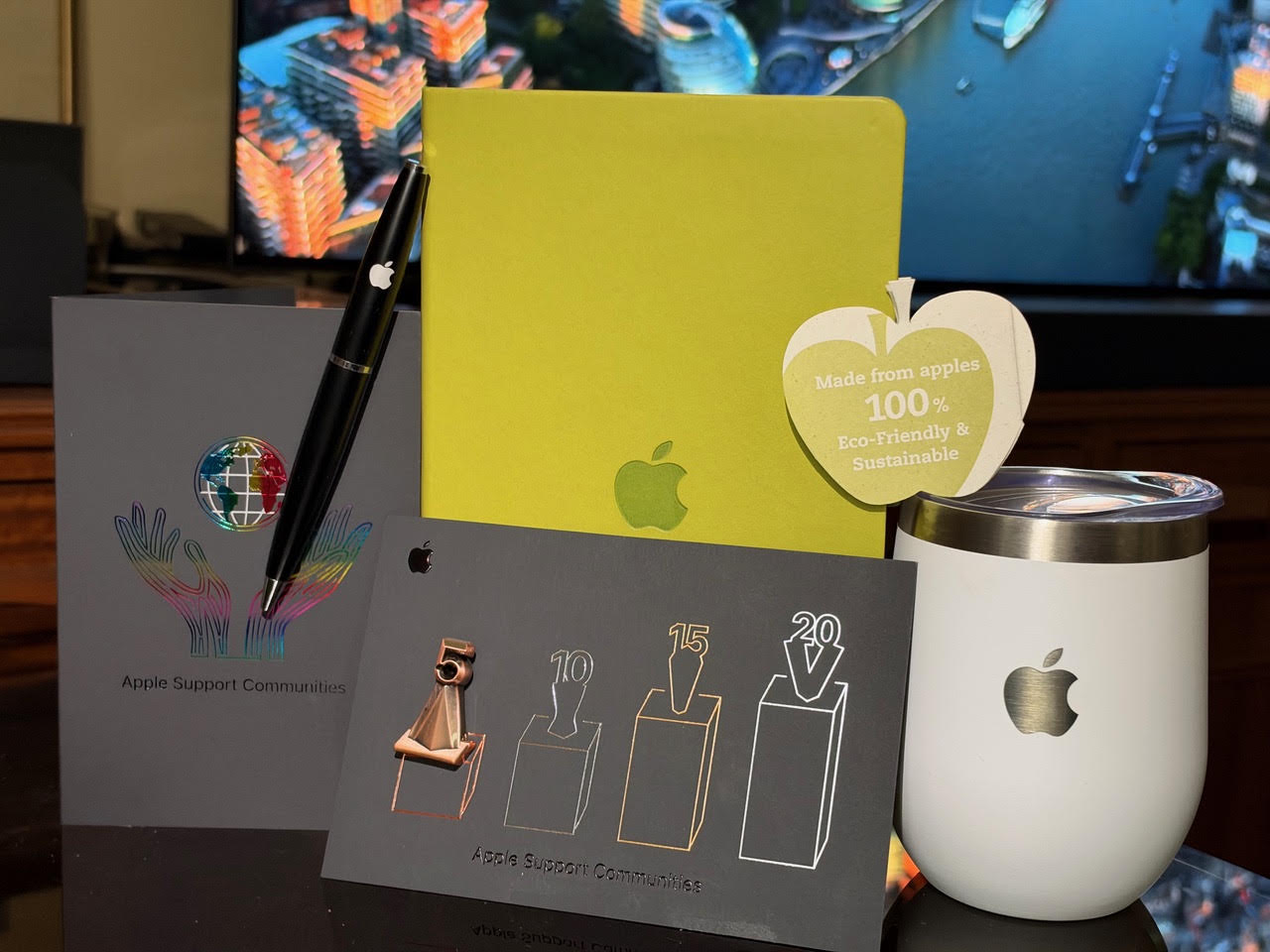
Rojano Núñez shared a photo of some of the items he received from Apple over the years, including a 5-year Apple Support Community anniversary pin. There were also 10-year, 15-year, and 20-year pins. Over the years, merchandise given out included Apple-branded hats, shirts, tote bags, and even umbrellas once.

Whatever its shortcomings, the Apple Support Community was more than just a place to ask questions. For some, it was a place to belong.

To that, we say goodbye and thank you, not good riddance.
This article, "Apple Support Community Deserved a Proper Goodbye" first appeared on MacRumors.com

Discuss this article in our forums

  •  

Apple's Claris Testing 'Harbor' App for Local AI on Macs

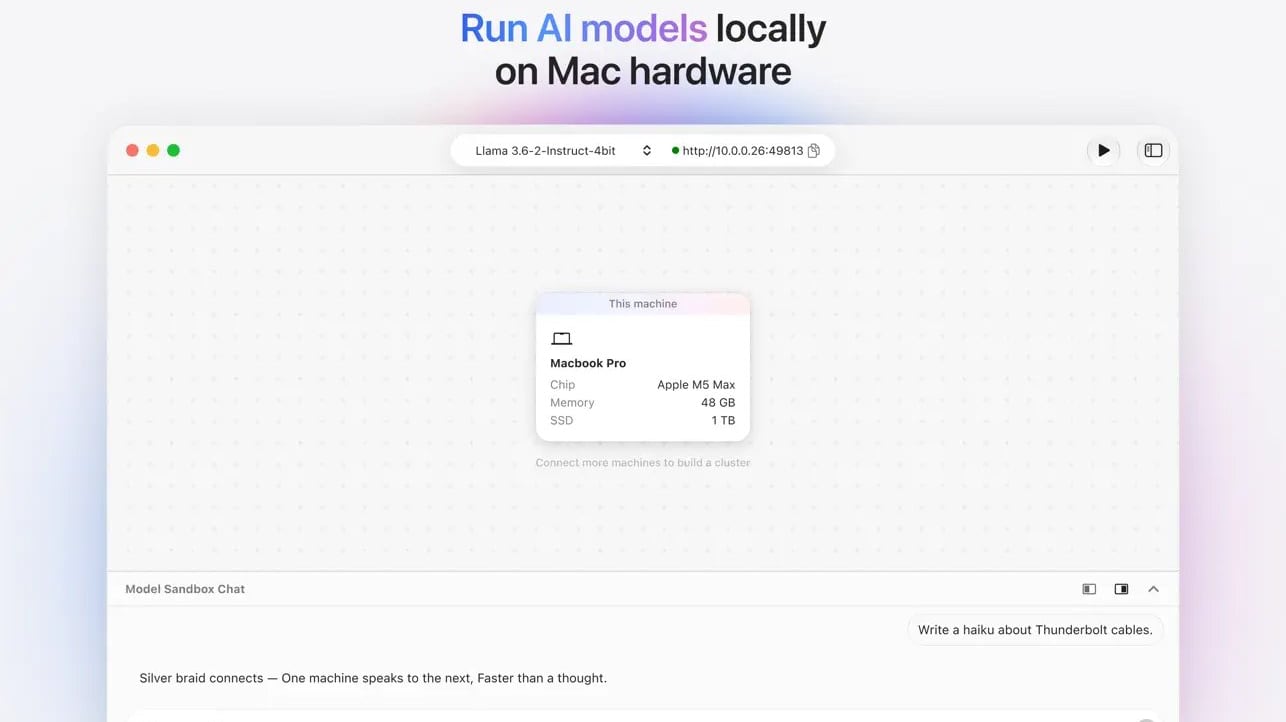
Apple's Claris subsidiary is testing an app called Harbor, which turns Apple silicon Macs into a private AI server.


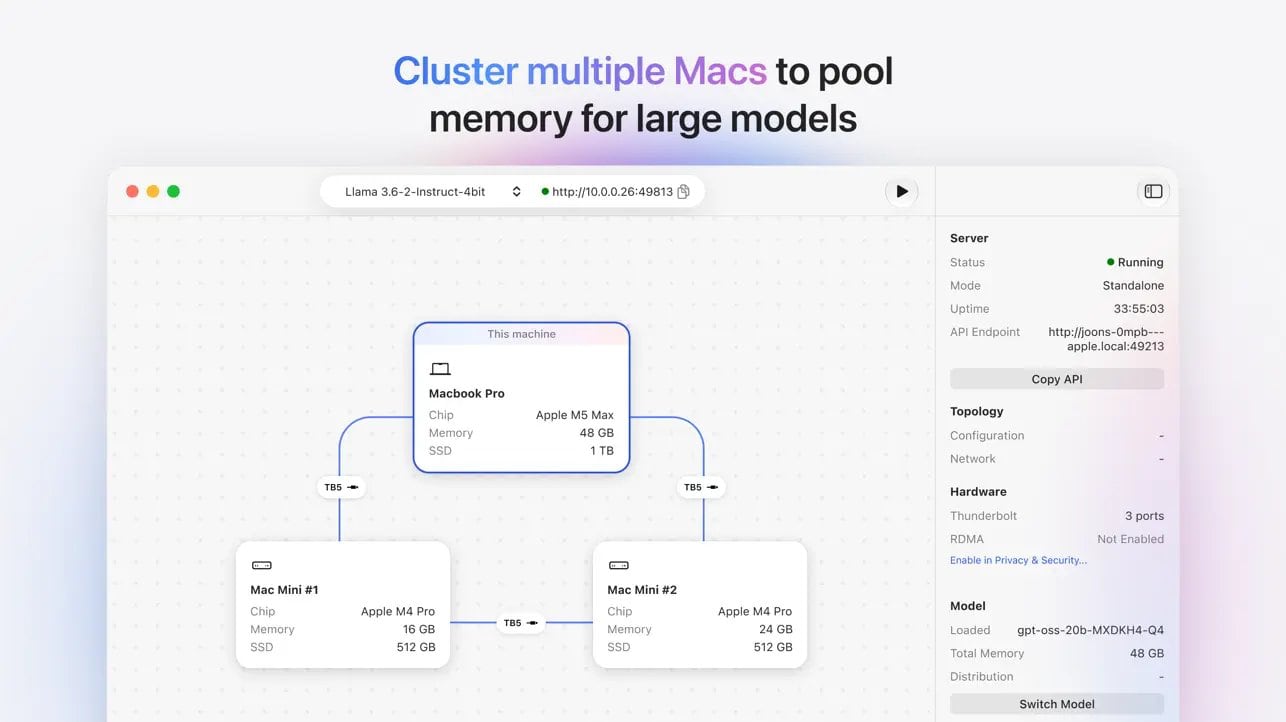
Harbor works with a single Apple silicon Mac, but it also supports connecting multiple Mac computers over Thunderbolt 5 to pool unified memory for larger models. Apple added RDMA over Thunderbolt 5 with macOS Tahoe 26.2, making clustering faster.

Harbor detects devices connected over Thunderbolt 5 and lets users browse for, download, and load open-weight models. It's described as an easy-to-use app with no manual configuration required.
Harbor turns your Mac into a private AI inference server. Run open-weight models locally on Apple silicon—your data never leaves your hardware, and nothing reaches the cloud. Connect multiple Mac computers over Thunderbolt 5 to pool unified memory, enabling large models and higher concurrency than a single computer can handle alone.

Set up in minutes, not hours. Harbor automatically detects your devices over Thunderbolt 5 to form a cluster. Plug in, start, and you're running—no manual configuration, no command line, no infrastructure expertise required.


Download and run models directly. Browse, download, and load open-weight models from within the app. Harbor handles model management so you can focus on the work, not the setup.

Cluster for scale. Connect two or more Thunderbolt 5-capable Mac computers and Harbor pools their unified memory into a single inference resource. Run models that exceed any single computer's capacity, or serve more concurrent requests across your cluster.

Harbor is in early access and is not publicly available. There was an App Store listing, but it has now been removed.

Claris is known for its database platform FileMaker, which is aimed at businesses, so it isn't clear how Apple will market the Harbor app or whether it will be free. The sign-up page for Harbor asks for a company name, which suggests more of a business focus.

There are already well-known, free alternatives for Mac users who want to run a local AI server. Exo is an open-source tool for clustering Macs, and LM Studio is available for single-Mac use, but Apple's Harbor app appears to combine LM Studio's simple interface with clustering.
This article, "Apple's Claris Testing 'Harbor' App for Local AI on Macs" first appeared on MacRumors.com

Discuss this article in our forums

  •  

iPhone 20 Pro: Ten Big Changes That Could Redefine Apple's Flagship

In 2017, Apple celebrated the iPhone's 10th birthday with the iPhone X, the biggest redesign in the product's history. For the device's 20th anniversary, all the rumors indicate that the company is preparing another landmark redesign.


The commemorative "iPhone 20" model isn't expected until September 2027, but leaks have been piling up for months. According to Bloomberg's Mark Gurman, Apple is already deep into its development, and the picture forming across multiple reports is of an iPhone that looks like a single, uninterrupted slab of glass. Here's what we're expecting:

  • A quad-curved, all-glass design: The display glass reportedly curves away on all four sides, concealing the metal frame during normal use. Apple is said to be working with Samsung on an "equal-depth quad-curved" display to achieve the effect.

  • Advanced OLED technology: Apple was reportedly planning a brighter, thinner Samsung OLED panel using Color Filter on Encapsulation (COE) for the anniversary iPhone, but a more recent report suggests the technology has slipped: UBI Research does not expect COE on Apple's Pro iPhones until 2029, casting doubt on its inclusion in the 2027 model.

  • Under-display Face ID and camera: Apple is reportedly continuing to test hardware that would eliminate the final visible cutout from the front of the device. Apple already debuted an under-display camera on the iPhone Duo's inner screen, but reviewers criticized its image quality. Whether an improved version will be ready for the iPhone 20's rumored fall 2027 launch remains uncertain.

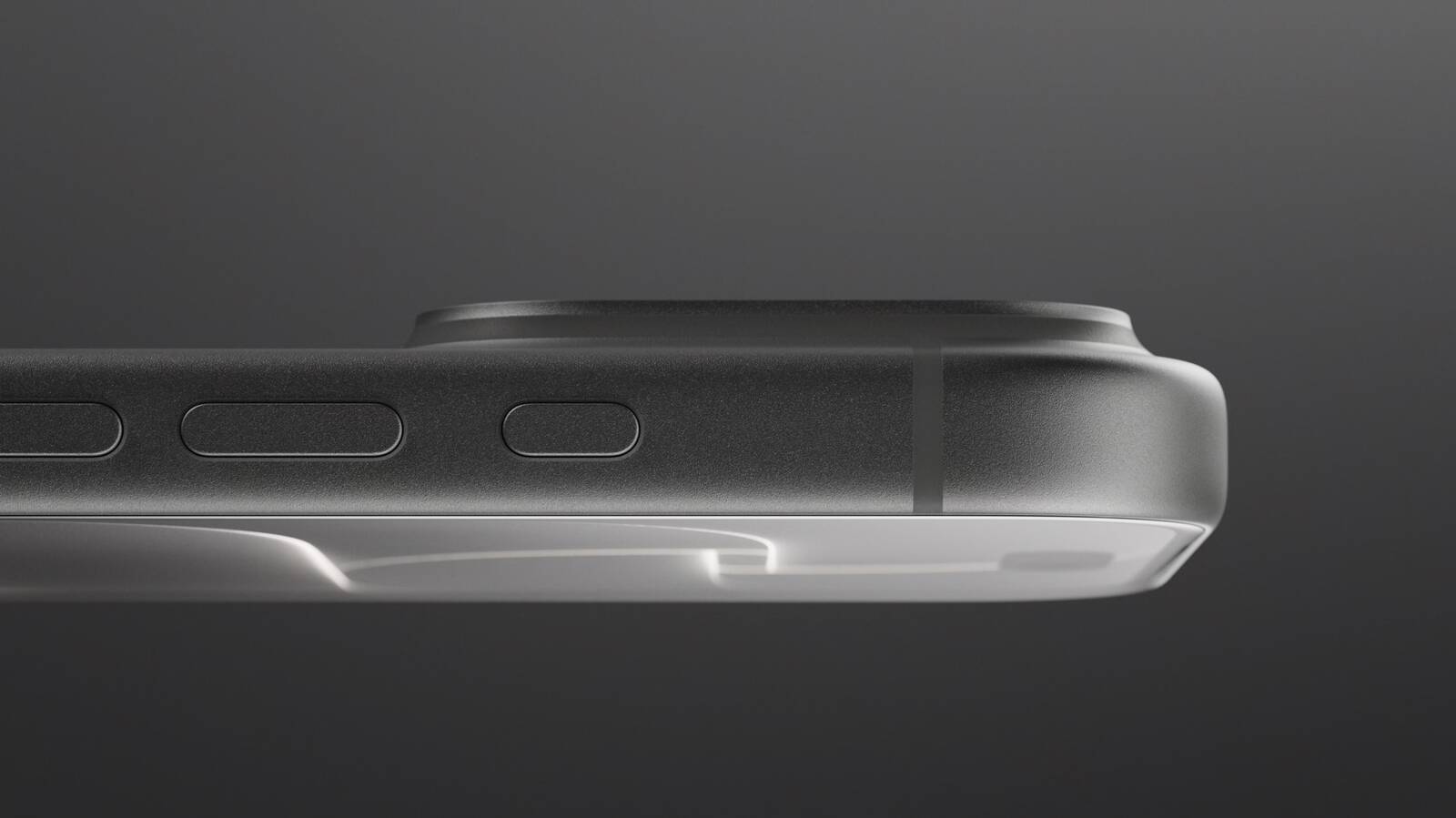
  • Solid-state buttons: Apple is said to be testing haptic replacements for the Side, Volume, Action, and Camera Control buttons. The buttons could be integrated directly into the device's frame, with no actual physical movement when pressed, yet retaining a tactile responsiveness.

  • Apple modem in the United States: Apple is developing modems that it hopes will outperform Qualcomm's on speed and AI functionality; its third-generation modem, due in 2027, is the one expected to finally exceed Qualcomm's. The C1 and C1X are used in the iPhone 16e and iPhone Air, and the C2 now powers the iPhone 18 Pro and iPhone Duo. Only the U.S. iPhone 18 Pro Max still uses a Qualcomm modem.

  • Custom Apple image sensor: Apple is said to be developing its own stacked image sensor to replace the Sony sensors it has traditionally used for the iPhone. Apple has reportedly already developed a working prototype. The sensor is said to use LOFIC technology, which would let each pixel store varying amounts of light and potentially reach up to 20 stops of dynamic range.

  • A 2-nanometer A21 chip: The 20th anniversary models are expected to feature a second-generation 2-nanometer chip. Following the A20 Pro in this year's iPhone 18 Pro models, the anniversary models would likely be powered by the A21 Pro.

  • Silicon anode battery: Apple is reportedly exploring a new battery technology that uses a silicon anode capable of storing more lithium ions per gram, potentially delivering longer battery life without increasing the physical size of the battery.

  • Mobile high bandwidth memory: Apple is rumored to be evaluating vertically stacked DRAM technology to improve memory bandwidth and boost on-device AI performance.

  • Two sizes: The two anniversary models are expected to be slightly larger than the iPhone 18 Pro and iPhone 18 Pro Max, with Digital Chat Station claiming 6.41-inch and 6.96-inch displays, the larger of which would likely be marketed as a 7-inch panel.

With all that said, we're still ahead of a rumored fall 2027 launch, and Apple's plans shift constantly behind closed doors, plus features this ambitious have a habit of slipping a year or two. Under-display Face ID in particular has been "two years away" for about five years now.

Still, taken together, the leaks describe the most dramatic iPhone rethink since 2017. If even half of the features make it to the shipped device, the iPhone 20 should be worth holding out for. For everything we know so far, check out our dedicated guide.

This article, "iPhone 20 Pro: Ten Big Changes That Could Redefine Apple's Flagship" first appeared on MacRumors.com

Discuss this article in our forums

  •  

Leaker Envisions a Shorter iPhone With a New iOS Layout

A future iPhone could keep its current width while becoming shorter, with iOS preserving room for content by moving some controls into the status bar, in a theory shared by the Weibo leaker known as "Instant Digital."


Instant Digital imagines Apple shortening a non-folding iPhone once its display has only a single camera cutout or the front-facing camera moves entirely beneath the screen. Taking roughly a status bar's worth of height off the display would bring its aspect ratio from around 19.5:9 to closer to 18:9, apparently making the phone easier to hold and use with one hand.

Controls that currently sit below the status bar could share a row with the time and system indicators. Instant Digital's idea is that combining the two rows would let the shorter display show the same amount of information. The leaker described the layout and proportions as personal speculation.

Apple has already changed how iOS uses the space at the top of the screen with the iPhone 18 Pro and iPhone Duo. The ‌iPhone 18 Pro‌'s smaller Dynamic Island supports up to three simultaneous Live Activities, up from two on earlier models. On the ‌iPhone Duo‌, iOS fits a compact status bar into the corner and positions the Dynamic Island vertically along the side of the outer display.

The timing of a cutout-free display on the iPhone remains uncertain. The leaker "Digital Chat Station" has said Apple is testing under-display camera technology and has described an intermediate design with a visible hole for the front-facing camera, similar to the ‌iPhone Duo‌.

In a follow-up post on Weibo, another user said they expect iPhones to retain a camera cutout and a 19.5:9 aspect ratio in both 2027 and 2028. Instant Digital replied that some sources say the cutout could disappear in 2028. Display analyst Ross Young has separately said he expects the 2028 iPhone Pro models to retain a centered camera cutout.

In a separate post, Instant Digital said they had a growing hunch that iOS would change substantially after the 20th-anniversary iPhone launches in 2027. They expect changes to how users interact with the software as well as how it looks.

Bloomberg's Mark Gurman reported that the anniversary iPhone will have curved glass and thinner bezels in the biggest overhaul to the Pro line since the iPhone X. Digital Chat Station has also said Apple was testing a roughly 7-inch display for the largest anniversary model with the same aspect ratio as the iPhone 17 Pro Max.

The iPhone X offers a precedent for a hardware redesign changing how people use iOS. When Apple removed the Home button in 2017, iOS 11 introduced swipe-up navigation on the iPhone X.
This article, "Leaker Envisions a Shorter iPhone With a New iOS Layout" first appeared on MacRumors.com

Discuss this article in our forums

  •  

Apple Launching Two More New Products This Friday

The Apple launches keep coming! The company is set to release two new products on Friday, November 13: the all-new Apple HomeView and the fourth-generation Apple TV 4K, both of which have been available to pre-order since mid-October.

  • Apple HomeView: Apple's new smart home display, powered by Apple Intelligence with Siri AI, for entertainment and managing the home. Available in tabletop and wall-mounted models, it can recognize up to six users by face, each with a personalized Home Screen. The HomeView is priced at $299.

  • Apple TV 4K: adds Siri AI, the A19 chip, an updated Siri Remote with Find My, and support for four-speaker surround sound with HomePod mini 2. The Apple TV 4K comes with 128GB of storage and is priced at $299.
Both products were announced on October 13 alongside the HomePod mini 2, which launched October 30.

As things stand, HomeView will not be sold in the European Union because Siri AI is currently unavailable on iOS in the region due to regulatory constraints. Apple has said it is "working constructively with the EU in an attempt to find a path forward," but has provided no timeline for EU availability.
This article, "Apple Launching Two More New Products This Friday" first appeared on MacRumors.com

Discuss this article in our forums

  •  

Apple Rumored to Drop the iPhone's Action Button Next Year

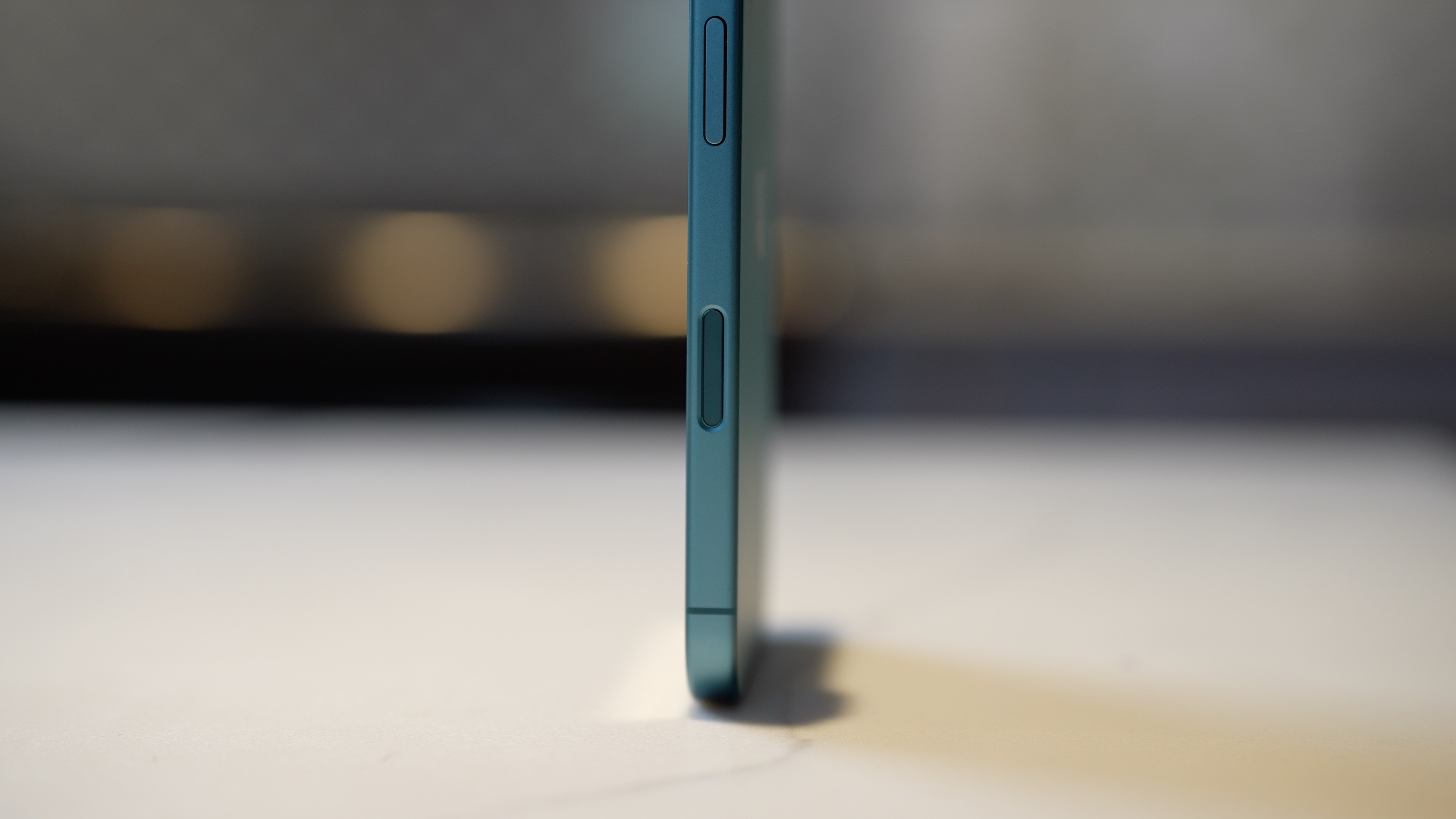
Apple plans to merge the iPhone's Action button with the Camera Control starting next year, according to the leaker known as "Instant Digital."


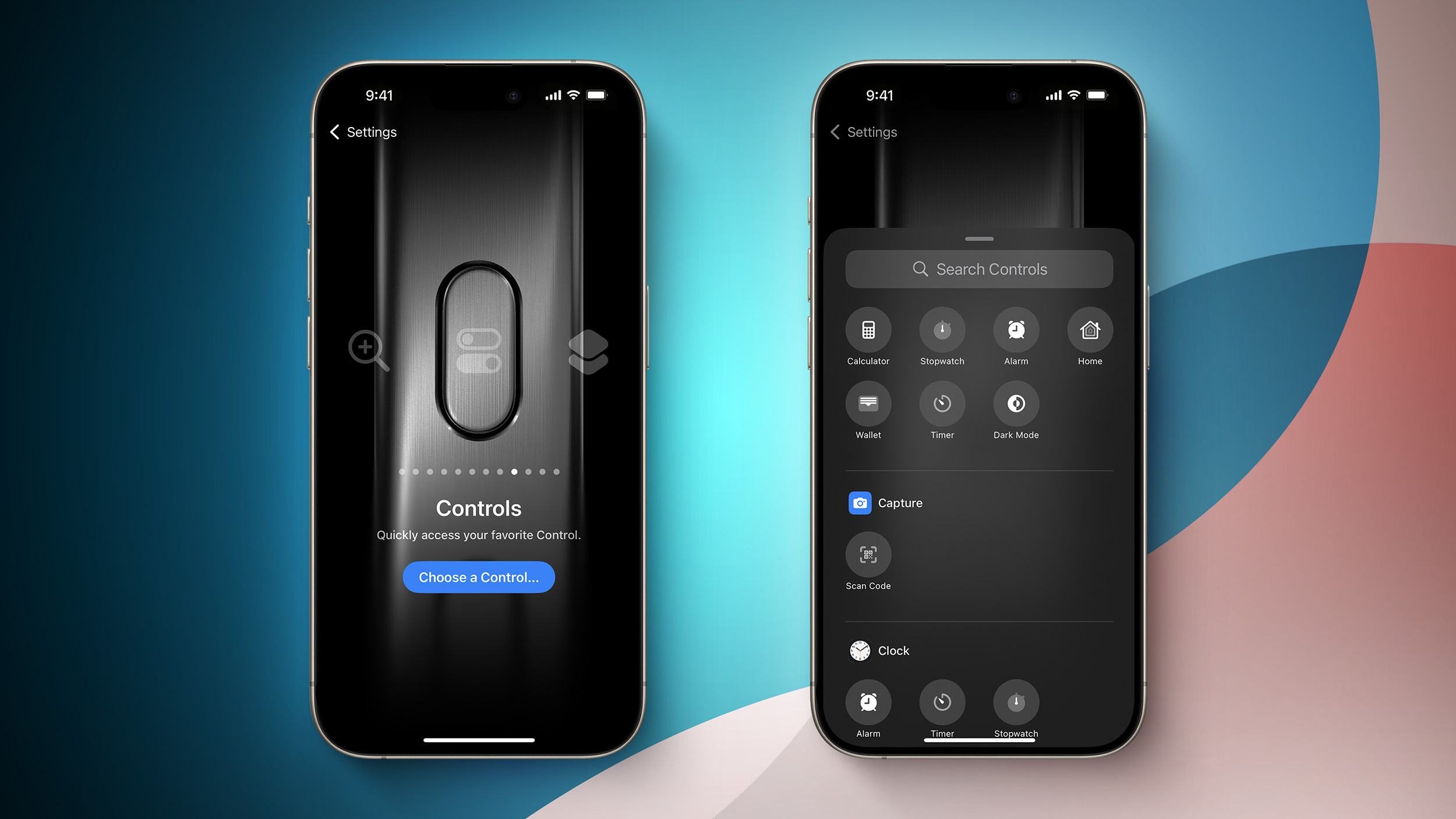
In a new post on Weibo, the leaker claimed that a single press of the combined button would open the camera, while a long press would trigger the function assigned to the Action button. They explicitly clarified that the dedicated Action button would disappear, while the Camera Control button would remain.

The proposed arrangement seems plausible given how the two features already work. The Action button predates the Camera Control and requires a long press to activate its assigned function, while a single press of the Camera Control opens the camera. Combining them in the way described would therefore preserve both familiar interactions, with the customizable action simply moving to a different location on the device.

A long press of Camera Control currently opens Visual Intelligence, but that feature has since been integrated directly into the Camera app as Siri mode in iOS 27. That integration could give Apple room to reassign the gesture while keeping Visual Intelligence accessible through the Camera app.


It is notable that the iPhone Duo also lacks an Action button, despite retaining Camera Control. Its omission provides a precedent for an iPhone without the separate control and could hint at a broader change in the future.

The Camera Control received a mixed reception when it debuted on the iPhone 16, with some reviewers criticizing its usefulness, complexity, and ergonomics, making further refinement seem plausible. Combining it with the Action button could give the control a clearer sense of purpose. Removing a separate button could also simplify manufacturing and reduce the potential for users to confuse the Action button with the adjacent volume buttons.

Apple was previously rumored to be working on a simplified Camera Control design for the iPhone 18 lineup, but that change did not materialize. Instant Digital claimed Apple would remove the capacitive sensing layer and rely on pressure sensing to reduce costs while retaining its functions.

The ‌iPhone 16‌'s Camera Control button.


The latest rumor raises the possibility that a redesign is still in development, potentially as part of a broader rethink that incorporates the Action button's functionality, although it remains unclear whether the two claims describe related plans.

Apple introduced the Action button on the iPhone 15 Pro in 2023 as a replacement for the longstanding Ring/Silent switch. It can be assigned to functions such as Silent mode, Focus, the flashlight, Shortcuts, and more. The rumored combined control would retain a dedicated way to trigger those actions while reducing the number of physical buttons.

Instant Digital said that the change will take place starting with new iPhone models released in the second half of 2027. The claimed timing would presumably coincide with the launch of Apple's 20th-anniversary iPhone models in the fall of next year. Apple's naming plans remain unclear, so the devices could be called the "iPhone 19 Pro," "iPhone 20 Pro," or something else.
This article, "Apple Rumored to Drop the iPhone's Action Button Next Year" first appeared on MacRumors.com

Discuss this article in our forums

  •  

Zuverlässiger Fernzugriff: Jump Desktop in Version 10

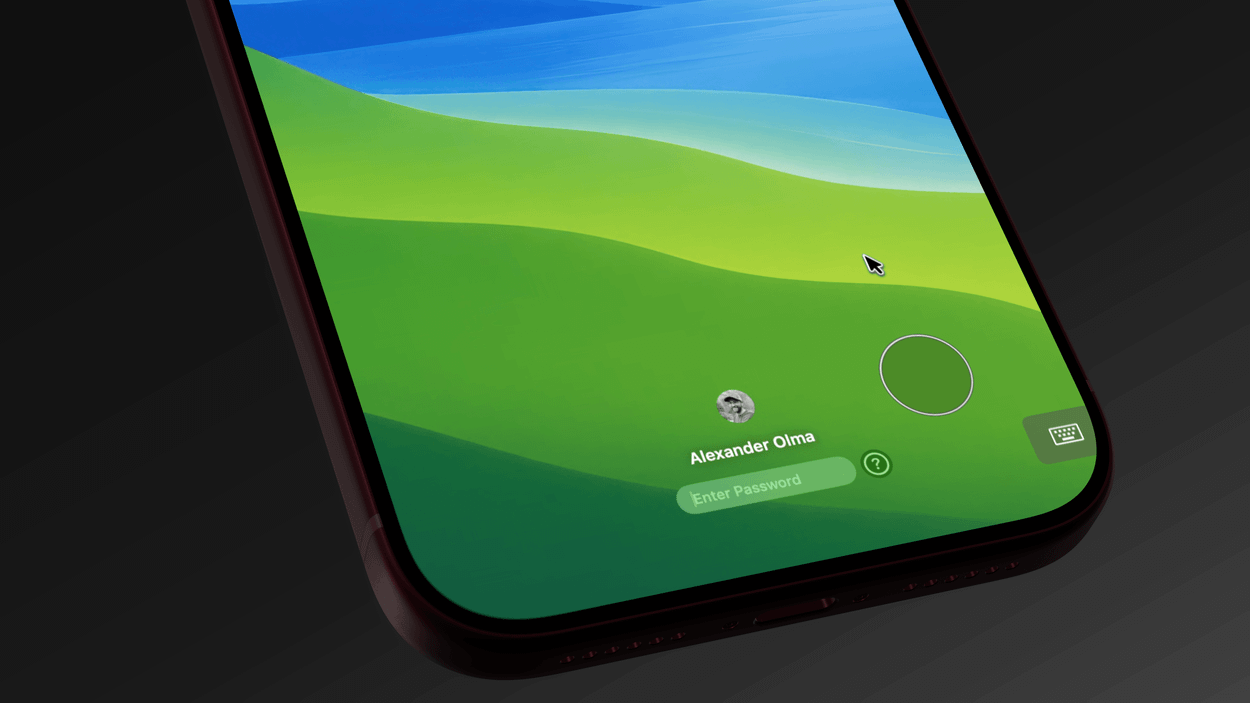
Close-up of a smartphone displaying a login screen with abstract green and blue background. The login prompt shows a user icon and the name Alexander Olma, along with a password entry field and icons for help and keyboard.

The best remote session is the one you forget is remote. Jump Desktop Version 10 is like sitting down at the machine itself and bringing the devices on your desk with you. It also goes where it couldn’t before. We’re releasing a native app for Android phones and tablets, Linux computers can be hosts, and with Jump CLI your scripts and AI agents can connect too. Here’s what’s new:

Jump Desktop Documentation

Seit Sommer bin ich täglicher Fan – und verschlief trotzdem den offiziellen Release von Version 10 vor einem Monat, weil ich auf der TestFlight-Beta rumhing.

  •  

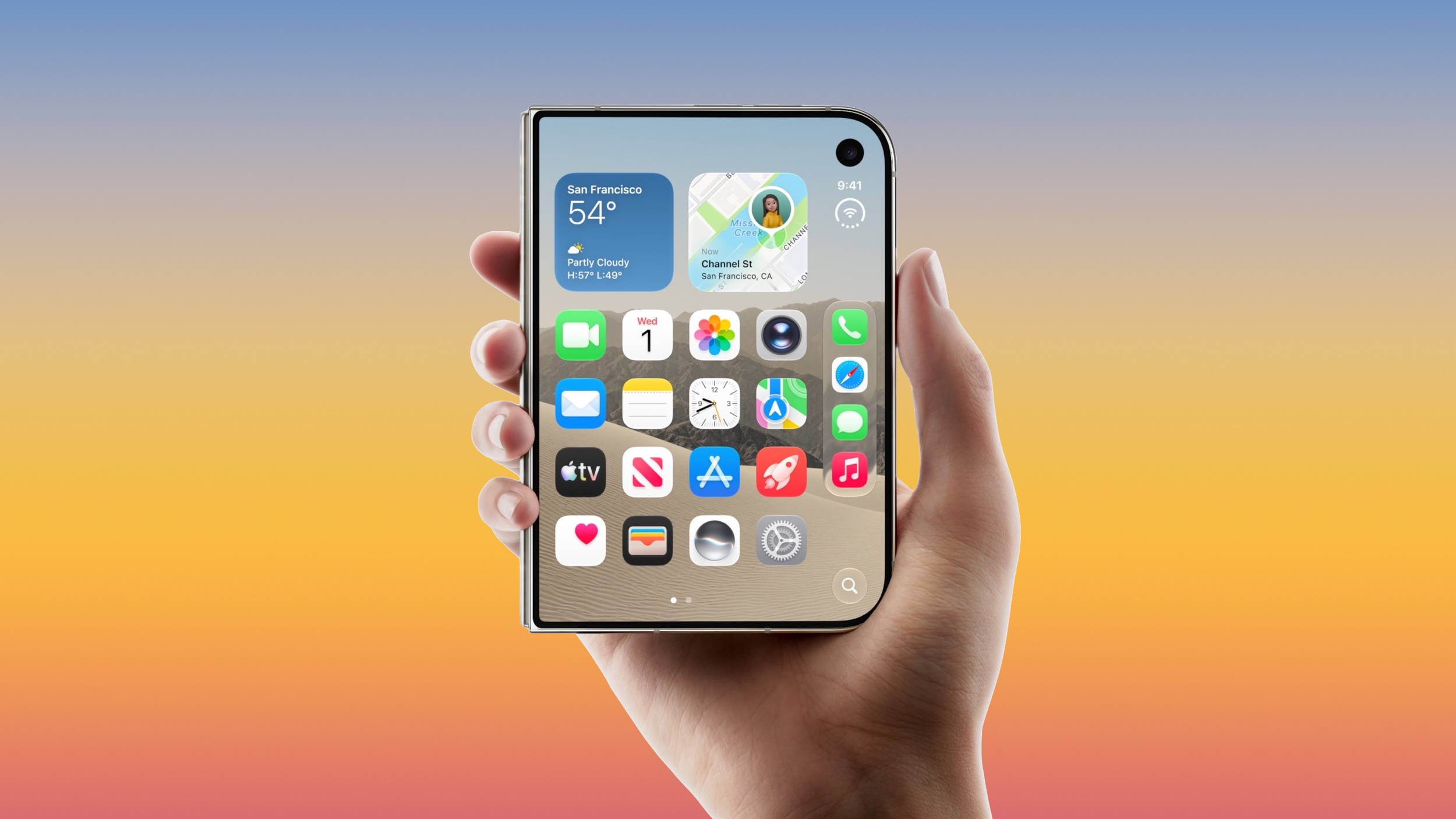
iPhone Duo – „nothing short of extraordinary“ – ab 2027

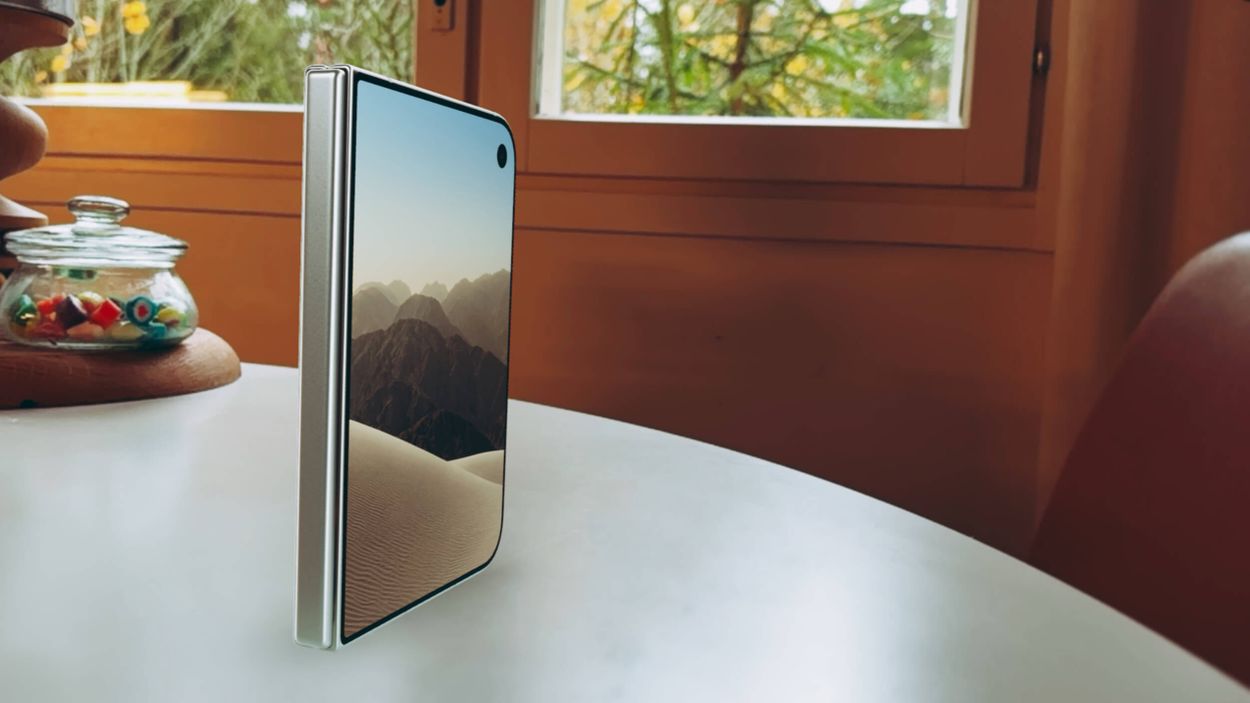
A modern foldable smartphone in a partially folded state standing upright on a round white table. The screen displays a desert landscape with mountains and a clear sky.

„Versand in 2027“ – für Apple zumindest ein verstolperter Start.

Natürlich machen sie viel gute Miene, während hinter der Bühne sicherlich Himmel und Hölle in Bewegung sind. Und klar, diese Vorbestellungen sind im besten Fall nur aufgeschoben.

Bei einer Lieferzeit von mittlerweile drei Monaten werden viele solcher Kaufabsichten aber nicht nur aufgeschoben, sondern gänzlich aufgehoben. In den Stückzahlen, in denen Apple Produkte verkauft, schlagen einige Tage und wenige Wochen bereits signifikant in den Umsatzbüchern auf – oder halt nicht.

Schuldzuweisungen von außen bleiben kaum möglich; niemand weiß, wie hoch die Bestände sind und über welche Nachfrage wir spekulieren. In komplett eigener Hand hatten sie jedoch den Starttermin sowie die Entscheidung über eine länderspezifische Verfügbarkeit.

Beides lief jedoch genau so ab, wie in normalen iPhone-Jahren zuvor.

Natürlich musste das Duo getrennt vom iPhone 18 Pro starten – medial wäre das wirklich exzellente Telefon sonst komplett untergegangen. Länger als einen Monat wollte Apple aber scheinbar nicht warten …

Auch regional zog Apple keine Grenzen: Das Duo startet zeitgleich selbst in meinem Finnland, wohlgemerkt ein Land ohne offiziellen Apple Store …

Ladengeschäfte und Online Stores gelten bei Apple als zwei getrennte Firmen. Gefühlt genießt Retail oft eine höhere Priorität für die Verfügbarkeit von neuen Produkten. Absolut nachvollziehbar: Kund:innen vor Ort will man nicht mit leeren Händen wegschicken; online muss man (psychologisch) ohnehin warten.

Dass es scheinbar aber auch in den Ladengeschäften schwierig werden könnte zeitnah ein Duo mitzunehmen, unterstreicht die eingeschränkte Verfügbarkeit bei einer nicht bekannten Nachfrage. Diese Nachfrage, gepaart mit dem Produktionsanlauf, spielen sicherlich beide eine Rolle bei der Verzögerung.

Insbesondere im US-Markt gilt: Wer bis zu 1.500 US-Dollar für sein nächstes Telefon eingeplant hat, sieht die 2.000 US-Dollar-Marke zumindest in greifbarer Nähe. Und wenn man beim Mobilfunker auf Raten zahlt, ist der höhere Monatspreis oft nur eine Fußnote.

Man könnte argumentieren: Wenn Apple wusste, dass sie nur eine sehr überschaubare Stückzahl anbieten können, nimmt man schlicht den Hype mit.

So funktioniert das aber nicht. Apple will Geräte verkaufen und das Duo braucht nun wirklich keinen Hype.

Für mich riecht’s deshalb nach einer Fehleinschätzung – keine Katastrophe, aber mindestens ein vermeidbarer Stolperer – auch wenn wir nicht die Produktionskapazitäten der nächsten Monate kennen und abwarten müssen, was ab Freitag tatsächlich in den Stores verfügbar ist.

  •  

PoseKit – 3D-Modelle für Screenshots aus neuen Perspektiven

Wie viele Mockup–Apps für gerahmte Screenshots kann man besitzen? Die Antwort lautet wie immer: „Ja.“

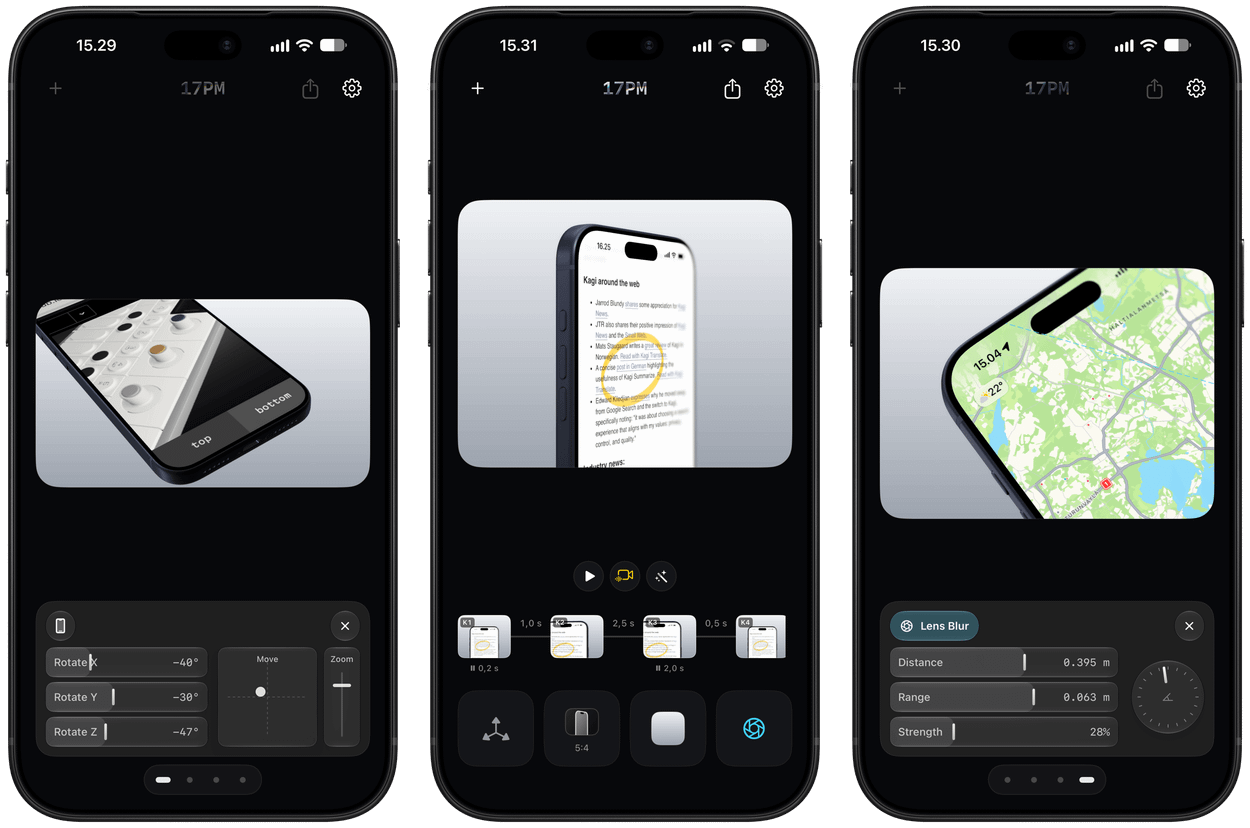
Three iPhone screens displaying video editing software with different preview windows: the left shows a rotated perspective of coffee cups on a tray, the center shows a phone screen with highlighted text, and the right shows a map application on a phone.

PoseKit ist eine Geschwister-App von ByePhotos und befreit eure Bildschirmfotos aus ihrer immer gleichen Frontalperspektive. Sogar kurze Kamerafahrten sind im 15-Euro-Einmalpreis inbegriffen.

Eine optionale Objektivunschärfe rückt Details in den Fokus, die man explizit, aber unaufdringlich hervorheben will.

Ich bin ein großer Fan der Positionssteuerung. Anstatt das 3D-Modell lediglich ungenau mit den Patschehändchen innerhalb des Frames zu verschieben, nutzt man präzise Schieberegler. Andere Apps schauen sich diese Idee bitte ab!

Die Grafiken, die mit nur wenigen Gesten entstehen, sind nicht komplett neu. Diese Posen jedoch mit lediglich zwei Handgriffen direkt am Telefon zu erstellen, ist für alle, die Software zeigen oder präsentieren, ein echtes Geschenk.

  •  

Apples Handgelenk Band

Ignorieren wir den „Hand strap“ für die QuickTake 200, dann sind der iPod touch Loop sowie die Remote Loop die einzigen Bänder fürs Handgelenk aus Apples 50-jähriger Geschichte – zumindest bis letzte Woche.

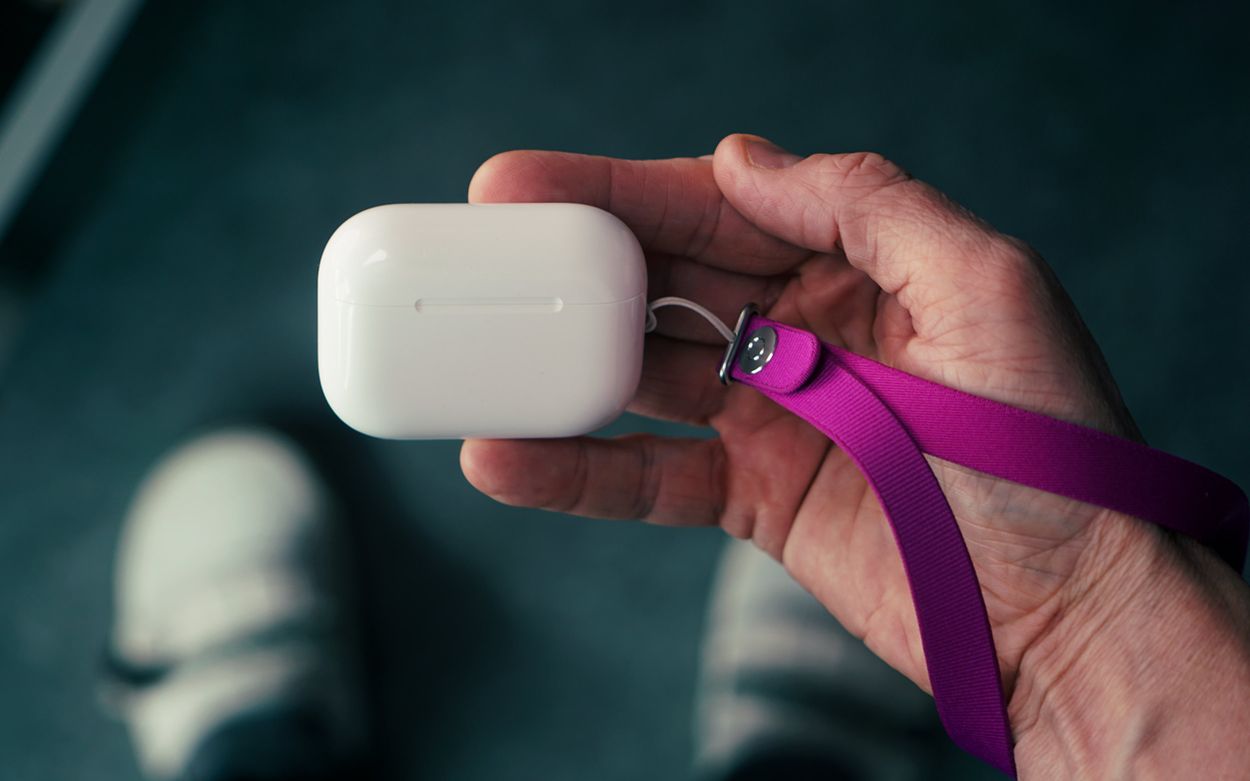
A person's hand holding a white earbud charging case attached to a purple lanyard.

Apples neues Handgelenk Band befestigt man an einer separaten iPhone-Hülle oder etwa direkt am AirPods-Case1. Es orientiert sich am Design des Crossbody Straps aus dem letzten Jahr.

Ich wette, Apples Marge für das 30-Euro-Bändchen stimmt. Trotzdem bleibt der flache Knopf am eng gewebten Garn mit integrierten Magneten erstaunlich nett.

Meine einzige Kritik: Es ist eine relativ dauerhafte Befestigung. Die Handschlaufe lässt sich einfach lösen, die Befestigungsschlaufen fummelt man aber nur mit etwas Aufwand wieder raus.

  1. Als Apple im Jahr 2022 die Öse am Kopfhörer-Case einführte, überließ der Konzern den Zubehörverkauf anderen Herstellern so wie Incase. ↩
  •  

#523 – mehr Kleinigkeiten aus iOS 27

Vier Monate später trugen sich mehr Kleinigkeiten zusammen; iOS 27 ist ein Trog mit vielen kleinen „Quality of Life“-Verbesserungen.

Die Zusammenstellung dieser unscheinbaren Änderungen in jedem Sommer führt regelmäßig zu meinen absoluten Lieblingsvideos.

Hier das Intro der Episode:

Weiterlesen

💾

  •  

„Swipe Down for Search or Ask“

Ohne Spracheingabe bestand am iPhone nie die Möglichkeit, Spotlight außerhalb des Home- und Sperrbildschirms aufzurufen. Mit Siri AI geht das jetzt – nur nicht bei uns.

Wenn wir über fehlende Funktionen für iOS 27 in der EU sprechen, fehlt mir insbesondere diese Interaktion.

Spotlight, as you know it, is gone in iOS 27. Swiping down from the middle of the Home Screen now opens Search or Ask, where you can type or speak to Siri. Apple rebuilt the underlying search index at the same time, so returned results are more current.

via MacRumors

Für iPadOS existiert ein solcher Hack; fürs iPhone nicht. Apples Telefon benutzt sich signifikant besser, wenn man Spotlight auch aus geöffneten Apps heraus aufrufen kann.

  •  

Es zählt, weil es ein iPhone ist, nicht weil es neu ist.

Tim Cook legte charmant für Ternus auf, der dann aber auch direkt verwandelte. Er platzierte das iPhone direkt zum Anpfiff im absoluten Mittelpunkt – von Apple selbst, aber auch als „intelligente und persönliche Zentrale“. Die Aussage war klar: Du brauchst keine anderen KI-Computer!

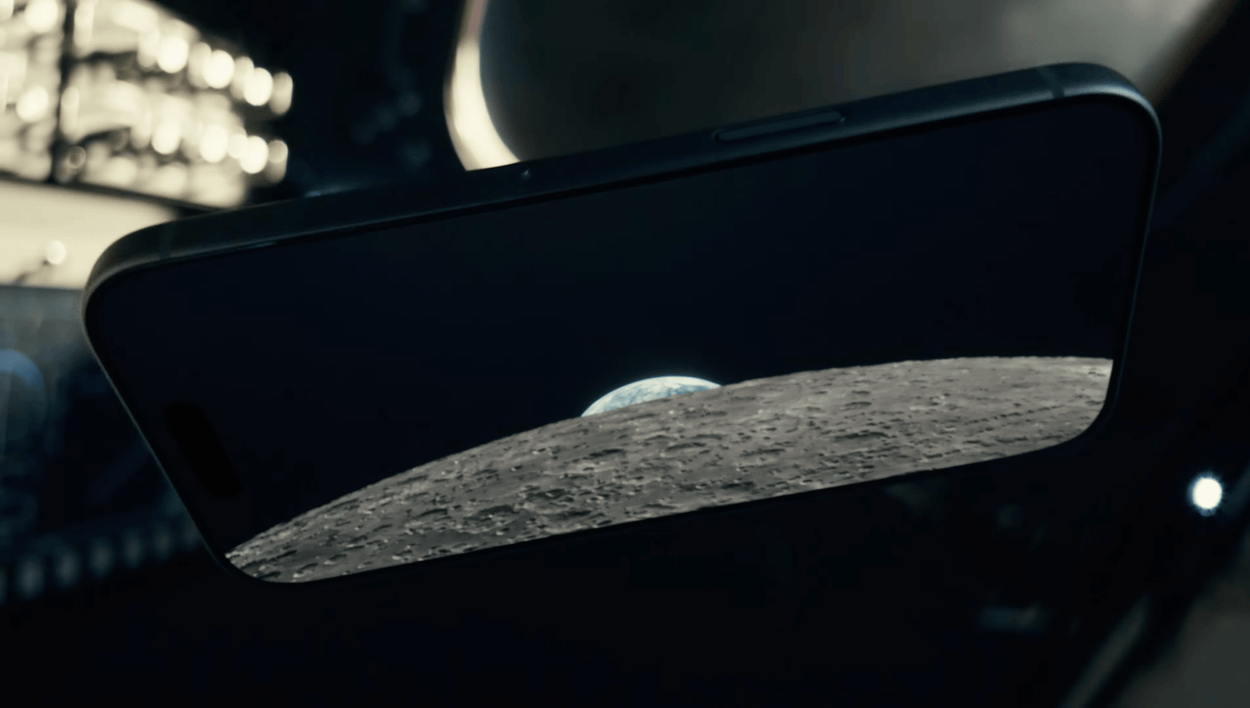
A close-up photograph of a smartphone screen displaying an image of the moon's surface rising against a dark sky.

„When you have been to the moon. Where do you go next?“

Das Duo zeigt der Industrie den korrekten Fold-Formfaktor – nicht nur mit seiner Reisepassgröße, sondern auch durch die Gleichberechtigung beider Displays. Apples Foldable stellt erstmals die wirklich schwierige Frage: „Warum zwei Bildschirme?“

Das iPhone Air diente mit seiner Hardware im letzten Jahr als vorgeschaltetes Experiment; die Software ist jedoch das Alleinstellungsmerkmal für die neue Form.

Ohne Vorlauf, mit nur wenigen frühzeitig eingeweihten Entwicklerpartnern sowie einer Preismarke, die jeder rechtfertigen muss, wird es zweifellos ein holpriger Anlauf. Wir wissen nicht einmal, ob Apple alle seine eigenen Apps zum Start im Oktober vorbereitet hat.

Und der Preis ist der Preis. Dieses Telefon wird mit seiner zweiten Generation und einem möglicherweise überstandenen RAMageddon nicht günstiger. Der Preis bleibt der Preis.

Deshalb ist die Software so wichtig; sie entscheidet darüber, ob man damit mehr macht als mit Apples wohl bestem iPhone ever™ – dem 18 Pro (Max).

Diese Animation … „I can’t.“

Die Kompromisse fallen überraschend überschaubar aus. Wer die Pro-Video- und Fotofunktionen vermisst, ist hier nicht die Zielgruppe. Kein Action Button, kein Face ID und das insgesamt reduzierte Kamerasystem werfen trotzdem die Frage auf: Warum mehr bezahlen für weniger?

Plus, Mini und Air hatten nie eine Chance, sich besser zu verkaufen als Apples Standard- und Pro-Modelle. Zugegeben: Das war auch nie ihre Aufgabe.

Aber welche Aufgabe hat das Duo? Es ist zu anders, um nur ein weiteres Modell in der Aufstellung zu sein. Es ist nicht nur eine andere Verpackung der gleichen Idee.

„Like other iPhones, it packs the power of a computer. But it can take the shape of a computer…“

Das ist derzeit nur Marketing; aber ist das auch ein ausgerufenes Ziel? Bleibt es mehr als zwei Generationen im Line-up, um dafür auch nur annähernd eine Chance zu bekommen? Mit dem Duo lebt etwa das Standby-Feature wieder auf, das nach seiner ersten Vorstellung vor drei Jahren quasi vergessen wurde.

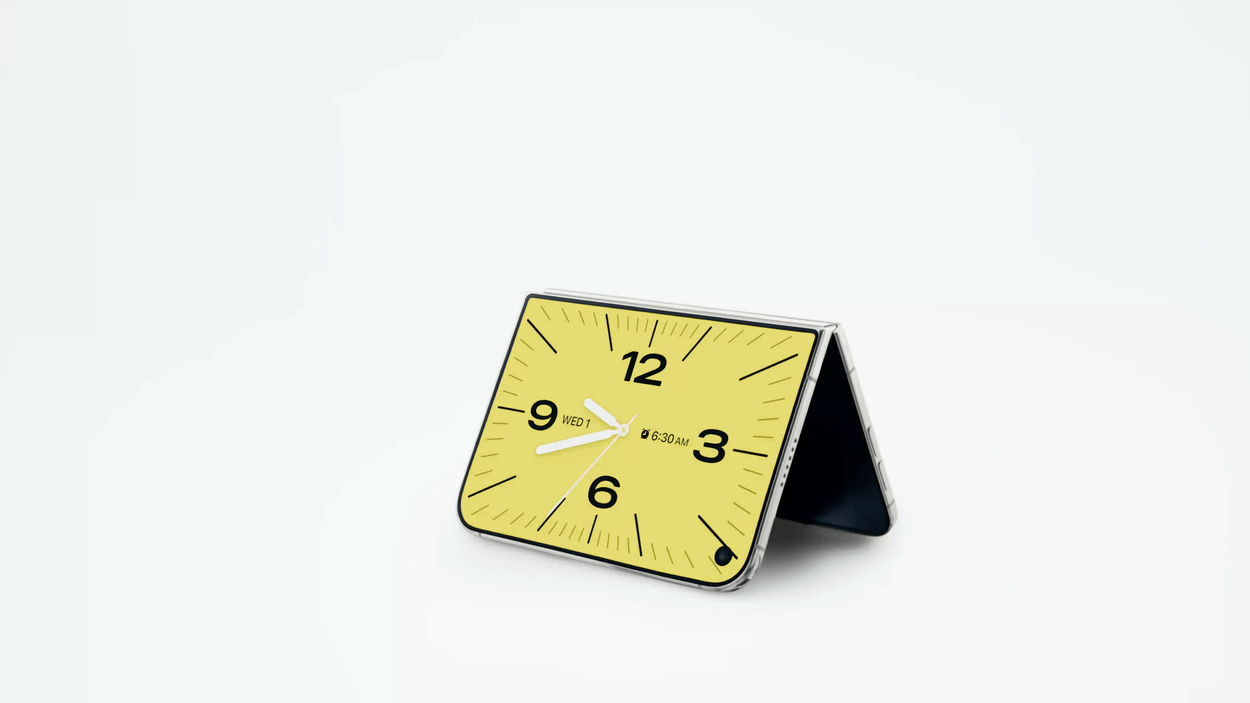
A foldable smartphone resting in a stand position displaying an analog clock face.

Das Duo ist Apples Chance, eigene Produkte zu kannibalisieren – von kleinen iPads bis zu großen Telefonen. Es bietet die Möglichkeit, sich breiter aufzustellen und die Abhängigkeit vom klassischen iPhone-Geschäft auf mehr Schultern zu verteilen.

Deshalb die Frage: Neues iPhone oder tatsächlich neuer Computer?

  •  
❌