❌

Lese-Ansicht

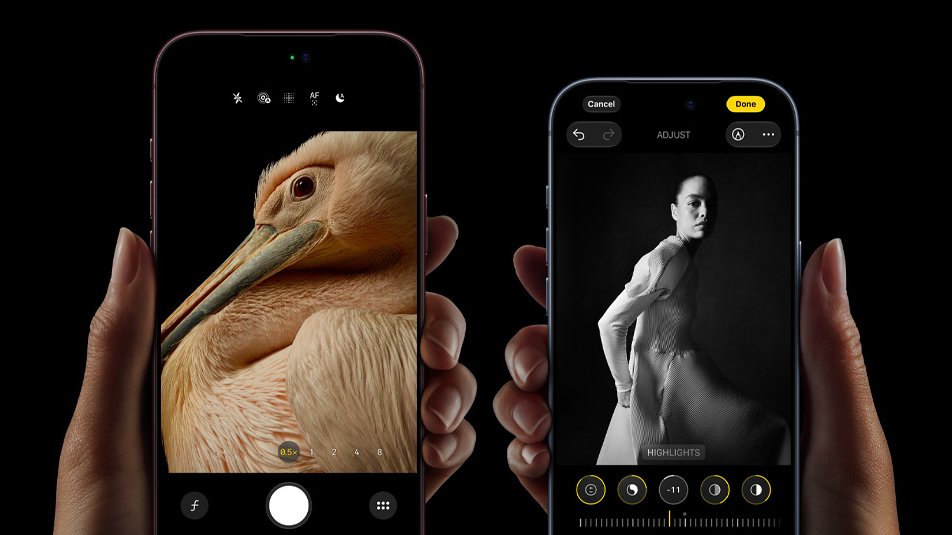
Apple Executive in Charge of iPhone's Camera App Reportedly Retires

Apple's vice president of camera and photo software engineering Jon McCormack retired at the end of October after more than eight years at the company, according to Bloomberg's Mark Gurman. The report said he oversaw the iPhone's Camera and Photos apps and their underlying technologies, so his departure is notable.
This article, "Apple Executive in Charge of iPhone's Camera App Reportedly Retires" first appeared on MacRumors.com

Discuss this article in our forums

  •  

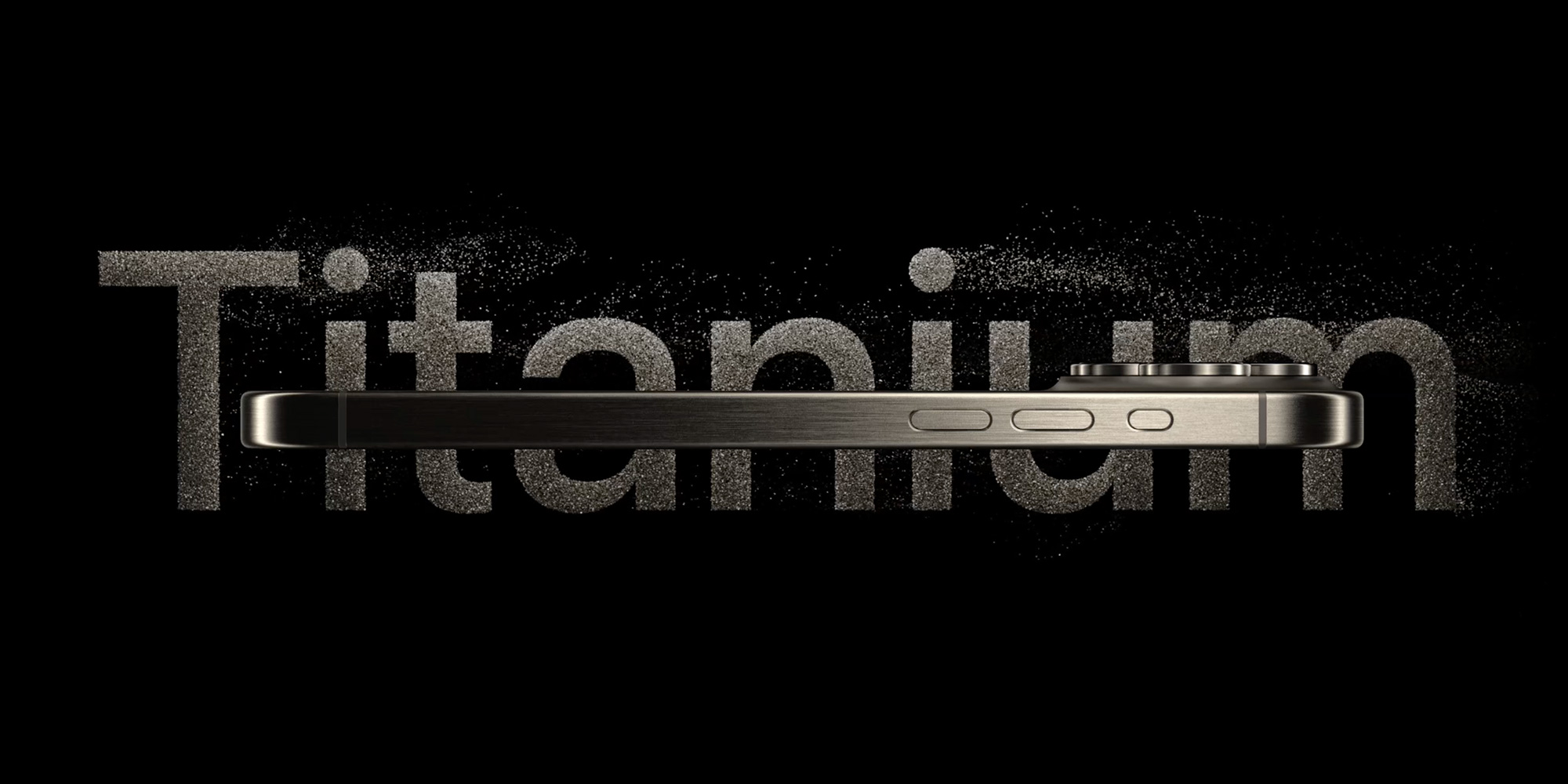
iPhone 20 Pro Rumored to Return to Titanium

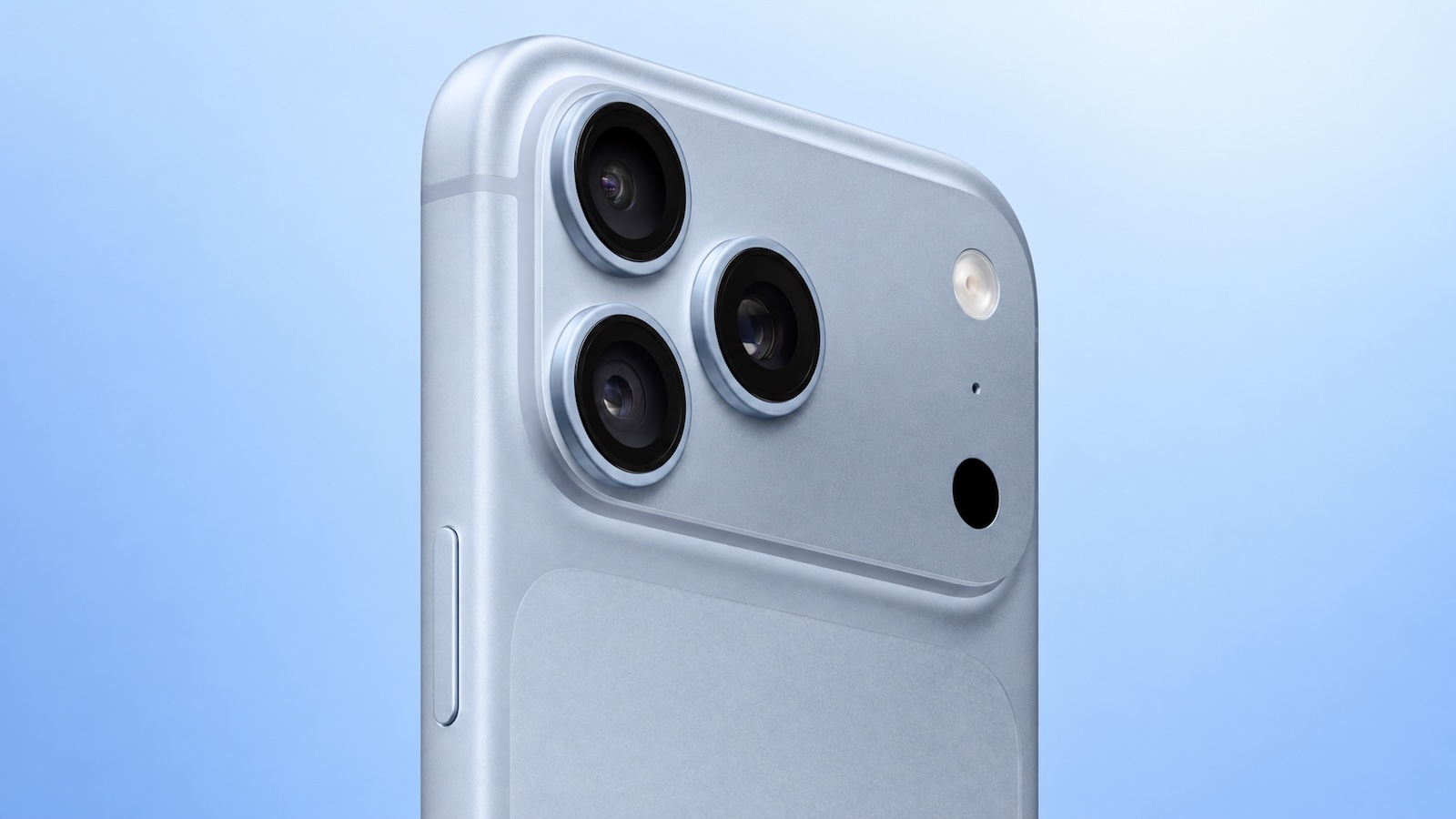
Apple's rumored "iPhone 20 Pro" could return to titanium as part of a more rounded design, according to the leaker known as "Fixed Focus Digital."


In a new post on Weibo, the leaker said the iPhone 20 Pro will adopt a titanium frame with a more rounded design. A frame made of titanium is reportedly currently in use on prototype devices during early engineering work. They described the design as somewhat similar to the iPhone Air, but substantially more rounded.

If the claim proves accurate, it would mark a return to titanium for the Pro lineup. Apple used titanium frames for the iPhone 15 Pro and iPhone 16 Pro, before switching to an aluminum unibody design with the iPhone 17 Pro in 2025. Apple highlighted aluminum's thermal conductivity as part of that redesign, which also introduced a vapor chamber to improve sustained performance.

While the change was praised for its improved thermals, light weight, and distinctive design, some users missed the more premium look and feel of titanium, along with its superior resistance to damage. The latest report regards development hardware, so it is still open whether titanium will be used in the finished product, but it seems plausible. The ‌iPhone Air‌ and iPhone Duo continue to use titanium frames.

The leaker's comparison with the ‌iPhone Air‌ builds on earlier claims about how Apple is developing the anniversary models. Earlier this week, Fixed Focus Digital said the devices would use the same glass material as the ‌iPhone Air‌, reshaped with greater curvature along all four sides.

An illustration accompanying that post depicted curved front and rear glass meeting a narrow, polished metal frame. In August, Fixed Focus Digital claimed that Apple had modified iPhone Air manufacturing equipment to produce the more rounded glass components.

That combination of curved glass and a narrow metal frame is consistent with Bloomberg's Mark Gurman's reporting that Apple is planning front and rear glass panels that curve into the sides around a thin metal band. Gurman said an earlier, more ambitious version that replaced even more metal with glass had been abandoned during development.

The latest claim suggests titanium could form that remaining band. Gurman described the planned changes as the biggest overhaul of the Pro line since the iPhone X.

The extent of the curvature may still be under consideration. The leaker "Ice Universe" today claimed that Apple is developing four models with two different designs, including two with flat glass and two with glass that curves along all four edges. Apple has reportedly explored the curved design for three years, reducing the more pronounced curvature of earlier versions.

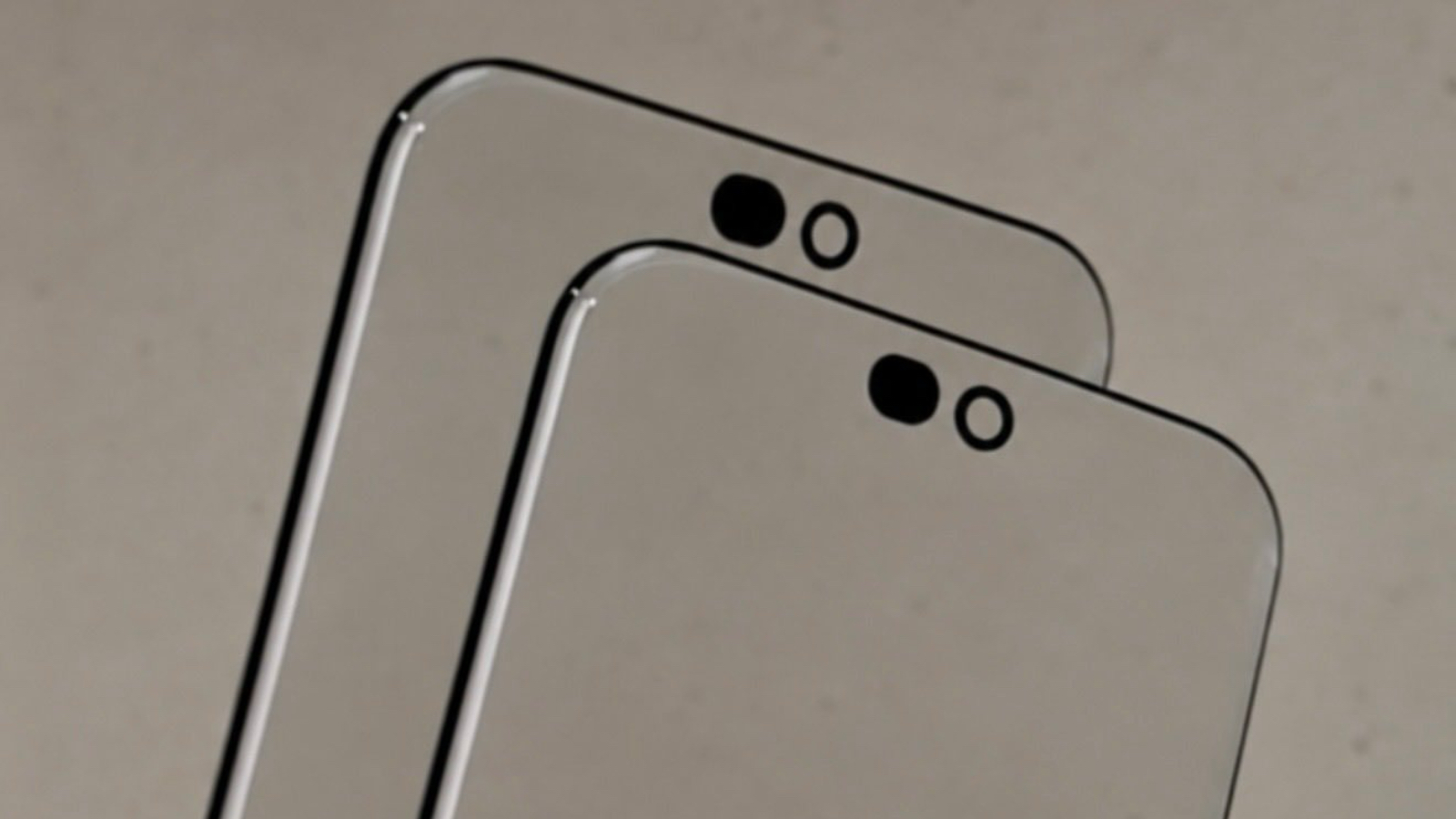
The curved models are said to have borders measuring around 1mm, with the surrounding glass making them appear almost invisible when viewed head-on. Screen protector samples circulating online offer a physical illustration of that approach, showing rounded corners, shallow curves along all four edges, and very narrow borders.

Alongside the changes to the glass and frame, the displays could grow slightly. The leaker "Digital Chat Station" has claimed that the Pro and Pro Max models will feature 6.41-inch and 6.96-inch screens, respectively, while also describing a four-sided curved design intended to appear borderless.

Separately, Ice Universe suggested that the main camera could gain a sensor with logic circuitry manufactured using a 17-nanometer process, potentially enabling faster readout speeds and improved power efficiency. The device could also lose the Action button and feature the "A21 Pro" chip based on TSMC's enhanced 2nm process (N2P).

Apple's 20th-anniversary iPhone models are expected to launch in the fall of 2027. Leakers have referred to the devices as the "iPhone 20 Pro," but Apple's actual naming plans are unknown.
This article, "iPhone 20 Pro Rumored to Return to Titanium" first appeared on MacRumors.com

Discuss this article in our forums

  •  

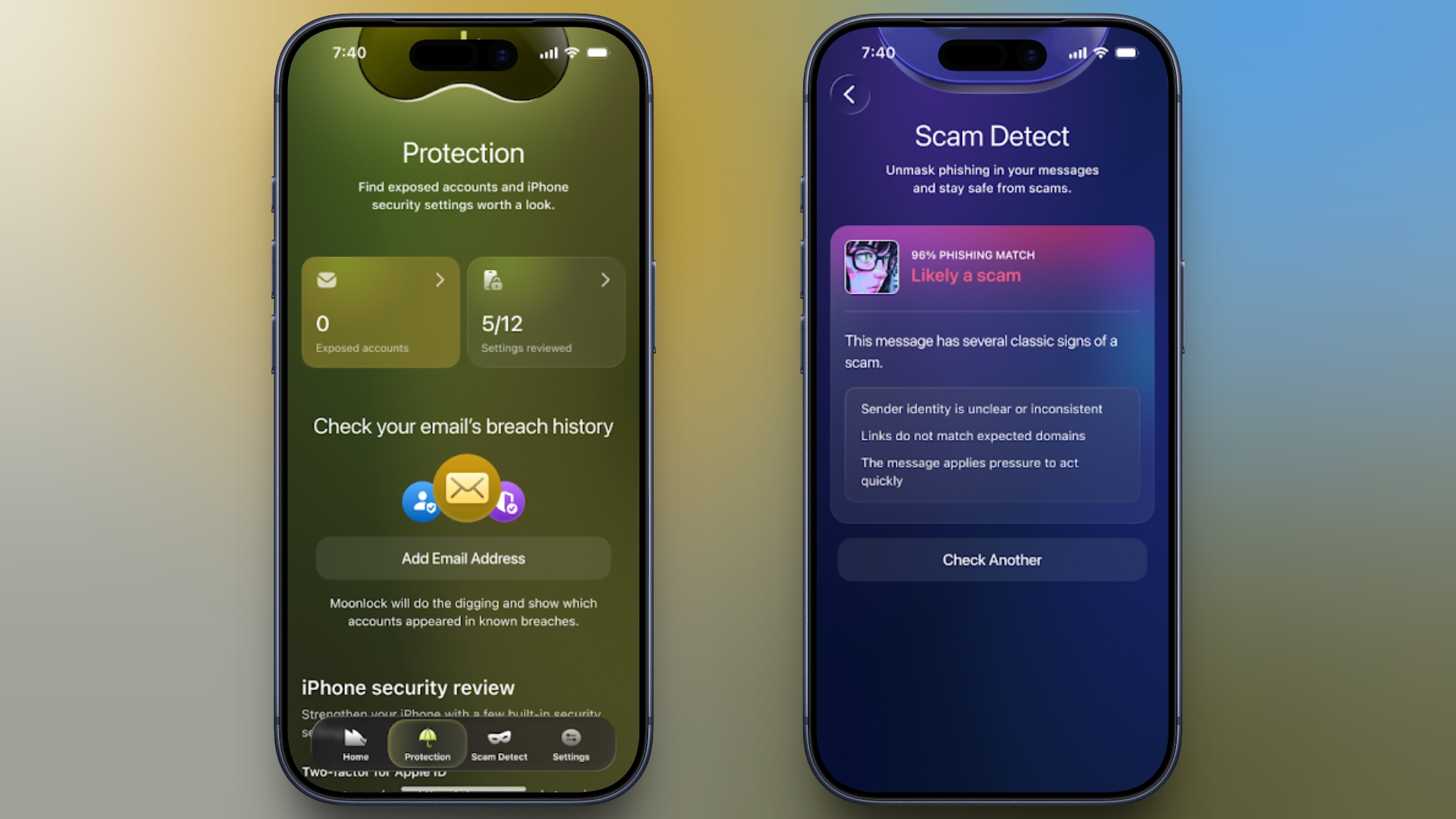
MacPaw's Moonlock Cybersecurity App Launches for iPhone

MacPaw today launched its Moonlock cybersecurity app for the iPhone, bringing the company's consumer-focused security features to mobile for the first time.


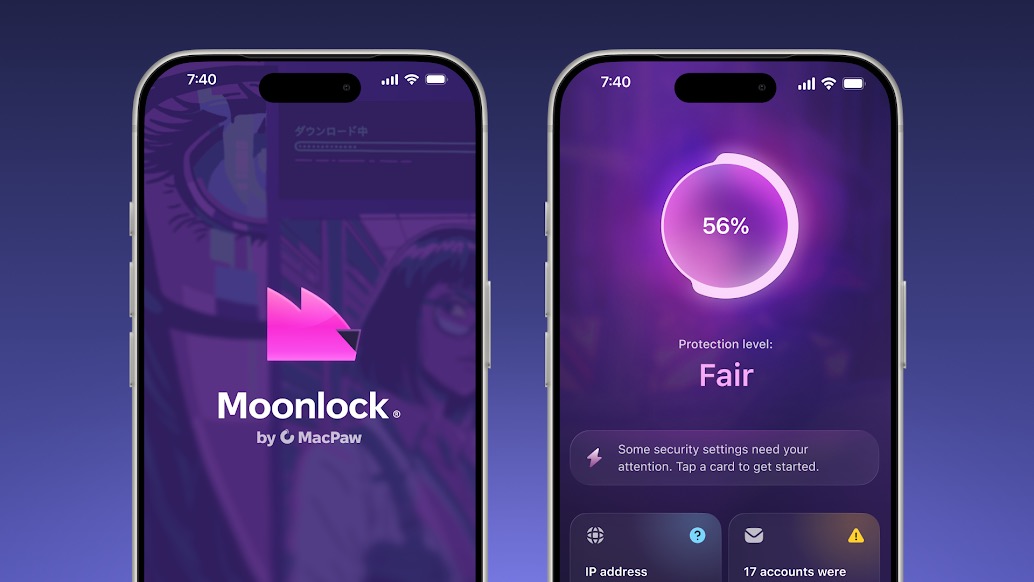
Moonlock is designed to help iPhone users recognize and avoid phishing scams and other online threats, according to the company. For example, one of its key features is Scam Detect, which can check suspicious messages and their contents – like screenshots, links, and QR codes – for signs of phishing.

Users just paste, scan, or share the content directly with Scam Detect, and the Moonlock app will analyze it and provide an assessment explaining why it may be suspicious.

Moonlock includes a number of other security features specific to the iPhone. Safe SMS is an opt-in feature that automatically filters out scam texts, with a record of what was caught and why. Meanwhile, Security Score provides a score from 0 to 100 that reflects the iPhone's security setup, and gives users recommendations on how they can improve it.

With Email Breach History, users can check whether their email address has turned up in a data breach. If so, the feature can reveal the source of the breach, when and what was exposed, and then walk the user through the steps required to secure each affected account.

Moonlock also includes a number of device and network checks, and the app aims to help users review things like their Wi-Fi security, passcode protection, iOS updates, and more, with checklists of recommended one-time actions and step-by-step instructions.

"When we launched Moonlock, our goal was to make cybersecurity something anyone could understand and use. But so much of what people do today, from banking to everyday conversations, happens on their phones. Bringing Moonlock to iPhone felt like the natural next step. We want to help people spot a scam before they tap, see where their security stands, and know exactly what to do next," said Oleg Stukalenko, head of product management at Moonlock by MacPaw.
Moonlock is available to download from the App Store or via Setapp, MacPaw's third-party app marketplace.

Moonlock is offered based on a customizable monthly plan with different rates depending on the number of devices covered. For example, a single-device plan costs $13.50 per month, with yearly billing working out at $4.50 per month. Each plan also has a one-time purchase option. With a Setapp subscription, Moonlock is included for both Mac and iPhone, so no separate iPhone purchase or additional account is required.
This article, "MacPaw's Moonlock Cybersecurity App Launches for iPhone" first appeared on MacRumors.com

Discuss this article in our forums

  •  

Apple Reportedly Developing Two Designs for 20th Anniversary iPhone

Apple is currently developing four models with two different designs for the iPhone's 20th anniversary, according to the leaker known as "Ice Universe."


In a new post on Weibo, the leaker outlined the two designs. Two are said to feature flat glass covers and two have glass that curves along all four edges.

One plausible explanation for this is that Apple is developing two sizes (Pro and Pro Max models) with alternative designs, potentially retaining the flatter versions as fallbacks for the more ambitious curved design, rather than planning to launch four models. Another explanation is that the models with flat front glass are standard "iPhone 20" models set to launch after the iPhone 20 Pro.

The curved versions reportedly have bezels measuring around 1mm, but the shape of the surrounding glass makes them almost invisible when viewed head-on, creating an almost borderless appearance. Ice Universe suggested the effect would be particularly striking in person.

Apple has apparently been prototyping the four-sided curved glass design for three years, making several revisions during that time. The design choice is said to remain under consideration, with the earliest versions featuring substantially more pronounced curves that were later reduced.

The report is plausible since it echoes Bloomberg's Mark Gurman's report from August, which said that Apple had scrapped an earlier, more ambitious anniversary design that used even more glass in place of metal. Gurman said the design planned for 2027 still features curved front and rear glass separated by a thin metal band. Both reports suggest Apple has moderated elements of its original design.

The latest claims follow a series of design details about the rumored "iPhone 20 Pro" that have emerged in recent days. Screen protector samples circulating online show rounded edges with curves along all four sides and very narrow display borders. According to Ice Universe, the screen protectors seen in recent days reflects an early version with greater curvature.

Earlier this week, the leaker "Fixed Focus Digital" said the devices would use the same glass material as the iPhone Air, but with greater curvature along all four sides. An accompanying illustration depicted rounded front and rear glass meeting a narrow, polished metal frame.

Ice Universe added that industry sources are enthusiastic about the curved glass design, with some expressing greater anticipation for the anniversary model than for a foldable iPhone.

Apple's 20th-anniversary iPhone models are expected to launch in the fall of 2027. While leakers have referred to the devices as the "iPhone 20 Pro," Apple's naming plans remain unclear.

This article, "Apple Reportedly Developing Two Designs for 20th Anniversary iPhone" first appeared on MacRumors.com

Discuss this article in our forums

  •  

Apple Blames Internal Update for Outage, Says It Wasn't a Cyberattack

Apple has largely resolved outages affecting iCloud accounts, retail stores, and more, the company said in a statement to Bloomberg. Apple said the outages were due to an unspecified "internal update" and were not caused by a cyberattack. The company is working to get remaining systems online "as soon as possible."


Issues started around 11:45 a.m. ET, with social media reports suggesting users were unable to access their Apple Accounts or sign in to services. Apple retail store systems were also offline, and customers in stores were not able to complete purchases.

The System Status page is still listing issues with ‌iCloud‌ Accounts and Sign In, AppleCare on Device, Apple Business, Apple School Manager, Schoolwork, ‌iCloud‌ Mail, and ‌iCloud‌ Web Apps. Services are listed as slow or unavailable.

The Apple outage follows other major outages over the last few days that caused an FAA nationwide ground stop and impacted Microsoft 365 services worldwide.
This article, "Apple Blames Internal Update for Outage, Says It Wasn't a Cyberattack" first appeared on MacRumors.com

Discuss this article in our forums

  •  

Apple Accounts, App Store and Apple Music Experiencing Issues

Apple Accounts and iCloud sign-ins appear to be experiencing issues, according to multiple social media reports and Apple's System Status page.


Apple says ‌iCloud‌ Account and Sign In may be slow or experiencing issues, but there are no other outages listed on the site.

There are also reports on social media about Apple retail stores and other services like Apple Music and Apple Pay experiencing issues. Anything related to an Apple Account seems to be malfunctioning, with users unable to sign in.

Update 1:10 p.m. ET: Apple's System Status page is listing outages for App Store, ‌Apple Music‌, and AppleCare on Device, along with the ‌iCloud‌ account issue.

The developer status page lists outages for Accounts, ‌App Store‌ Connect, the ‌Apple Music‌ API, ‌Apple Music‌ Connect, and Apple Podcasts Connect.
This article, "Apple Accounts, App Store and Apple Music Experiencing Issues" first appeared on MacRumors.com

Discuss this article in our forums

  •  

iPhone 20 Pro Screen Protectors Show Rumored Curved Design

Screen protector samples circulating online offer an early look at how Apple's rumored iPhone 20 Pro redesign could look, with rounded edges that could help create the appearance of a nearly borderless display.


Sharing a video of the purported screen protector on X yesterday, the leaker known as "Ice Universe" described next year's anticipated iPhone redesign as a "milestone." In a follow-up post on Weibo today, Ice Universe added, in translation, that "the era of easy screen protector application is coming to an end. The era of a comfortable grip is approaching."

The glass illustrates several elements repeatedly described in rumors about the anniversary iPhone, including shallow curves along all four edges, rounded corners, and an extremely narrow border.

The Apple iPhone 20 Pro is going to feature a milestone design - let's take a look first https://t.co/n8uNrZgh0S

— Ice Universe (@UniverseIce) November 16, 2026


The post follows a separate handheld video shared by Ice Universe on November 14, with text identifying it as an approved "3D quad-curved cover glass" sample. Similar glass pieces have been circulating since early October on Weibo and X. On October 7, Weibo blogger "体验more" shared photographs of samples in two sizes, suggesting that they looked like concept designs based on leaked information.

The screen protectors likely represent early manufacturing tests based on rumors, rather than parts made to Apple's actual specifications. Experimental pieces allow manufacturers to explore new manufacturing techniques ahead of having access to the finished device's dimensions.

The samples also show a Dynamic Island that appears comparable to the narrower version introduced on the iPhone 18 Pro. That would suggest no further substantial reduction for the anniversary model, in line with display analyst Ross Young's prediction that the smaller ‌Dynamic Island‌ would remain through 2027.

The glass offers a physical depiction of the design direction described in earlier rumors. Ice Universe previously suggested that the anniversary iPhone would use shallow curves alongside optical refraction and other visual effects to make the display borders less visible.

That shape could also complicate screen protector designs. A protector covering the curved edges would need to follow their contours closely, making its fit dependent on the final glass geometry. Ice Universe's latest comments point to that potential tradeoff between a more rounded feel and the convenience of applying a flat protector.

The footage arrives amid an increasingly detailed picture of the 20th anniversary iPhone. Yesterday, the leaker "Fixed Focus Digital" claimed that the models would use glass similar to the iPhone Air, but with greater curvature on all four sides. Apple's 20th-anniversary iPhone models are expected in the fall of 2027, although the "iPhone 20 Pro" name remains speculative.
This article, "iPhone 20 Pro Screen Protectors Show Rumored Curved Design" first appeared on MacRumors.com

Discuss this article in our forums

  •  

Apple Plans to Release These 18 New Products Next Year

Following a jam-packed couple of months in which it unveiled the iPhone Duo, HomeView, MacBook Pro with PROLED XDR display, and so much more, Apple has likely cleared through its slate of remaining major product announcements this year.


As always, the holiday season should be a relatively quiet time for Apple, and then things will pick back up again in 2027. Already, the company is expected to release at least 18 new products next year, including 20th-anniversary iPhone 20 Pro and iPhone 20 Pro Max models, all-new smart glasses, a larger HomeView, AirPods Pro with cameras, and more.

Below, we have outlined new Apple products that are rumored to launch in 2027, according to Bloomberg's Mark Gurman and rumors from other sources.

iPhone


  • iPhone 18e: A20 chip, 9GB of RAM, and longer battery life.

  • iPhone 18: A20 chip, 9GB of RAM, and longer battery life.

  • iPhone Air 2: A20 Pro chip, Ultra Wide camera, a smaller Dynamic Island, longer battery life, and Apple's C2 modem with mmWave support in the U.S. and "meaningfully faster" upload speeds compared to the current model's C1X modem.

  • iPhone 20 Pro: A21 Pro chip and new design with "curved glass around all corners and edges" and thinner bezels around the screen.

  • iPhone 20 Pro Max: A21 Pro chip and new design with "curved glass around all corners and edges" and thinner bezels around the screen.

  • iPhone Duo 2: Face ID has apparently been tested, but it is unclear if the feature will be finalized in time for the iPhone Duo 2. And based on a recent rumor, the Camera Control button could eventually double as an Action button.


iPad


  • iPad Pro: M6 chip or M7 chip and a vapor chamber cooling system.

  • iPad Air: M5 chip, OLED display, thinner and lighter design, and potentially the Acoustic Display feature that debuted on the iPad mini.

  • iPad: A19 chip with Apple Intelligence support, N1 chip with Wi-Fi 7 support, and Apple's power-efficient C1X modem in cellular models.


Apple Watch


  • Apple Watch Series 13: A leaker claimed the Apple Watch will be receiving a major redesign next year, and this will apparently include a new way of attaching bands. If so, the Apple Watch Series 13 could have significant changes.

  • Apple Watch Ultra 5: While an Apple Watch Ultra 5 has yet to be firmly rumored, a new Ultra model has arrived in four out of the past five years.


Mac


  • MacBook Neo: A19 Pro chip, 12GB of RAM, and potentially new color options.

  • MacBook Air: M6 chip.

  • MacBook Pro: An updated 14-inch MacBook Pro base model with an M7 chip and potentially a Dynamic Island and an illuminated Apple logo.

  • MacBook Pro (PROLED XDR): M7 Pro and M7 Max chips.


Other


  • AirPods Pro: Built-in cameras for Siri AI and Visual Intelligence.

  • Apple Glasses: iPhone-connected smart glasses with cameras, microphones, and speakers. Software features: Siri AI, Visual Intelligence, calling and messaging, notification announcements, music playback, and more. Apple is apparently targeting a WWDC 2027 unveiling and late 2027 availability.

  • HomeView Max: A larger HomeView with a 9-inch screen that can swivel a full 360 degrees on a robotic arm. In the U.S., pricing may start at $999.

Of course, these are only the products rumored so far, with 2027 likely to have more in store.
This article, "Apple Plans to Release These 18 New Products Next Year" first appeared on MacRumors.com

Discuss this article in our forums

  •  

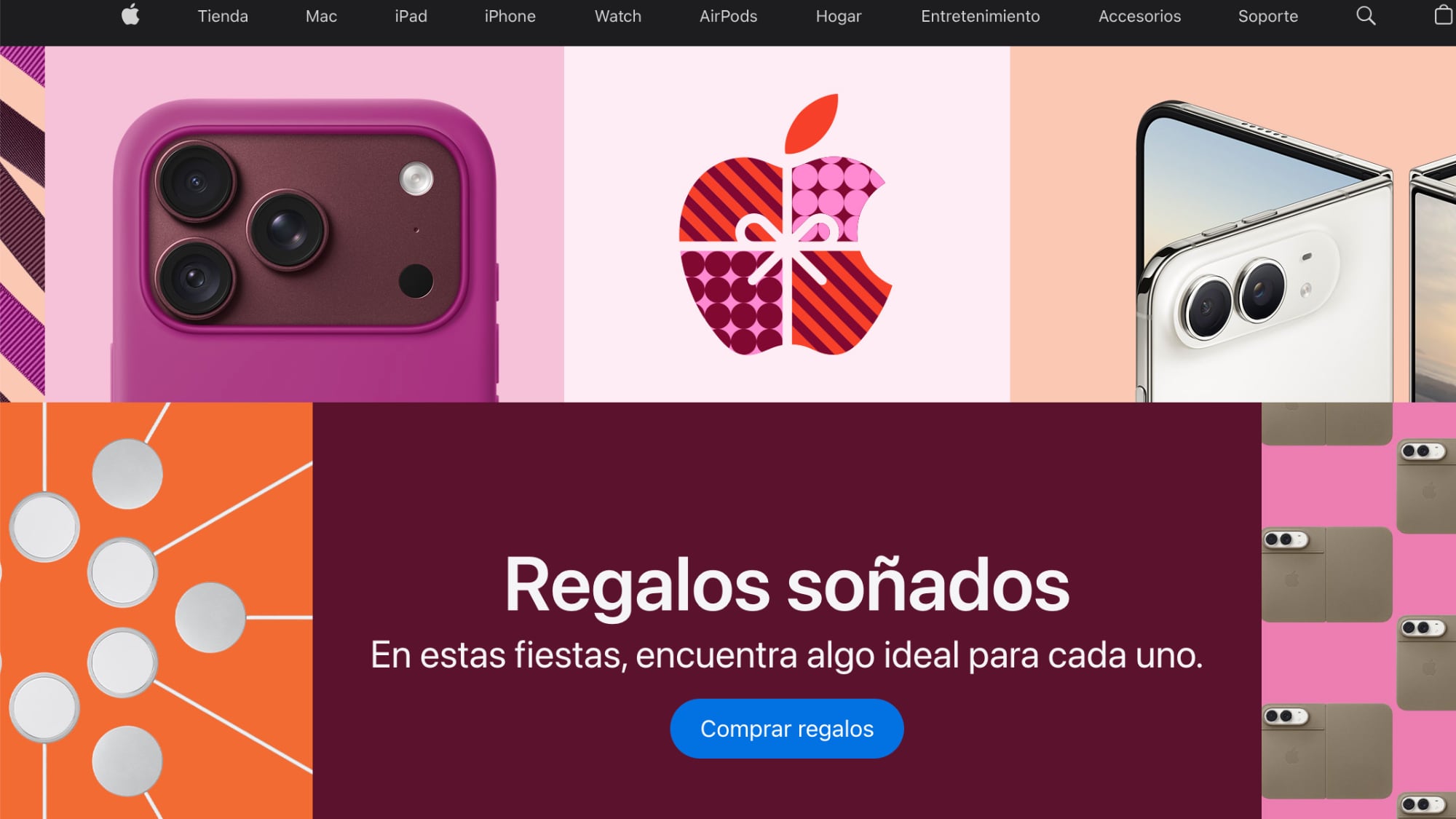
Apple Launches Spanish Version of Its U.S. Website

Starting today, Apple is making its U.S. website available in Spanish. Customers who have Spanish set as their language will be able to browse apple.com/us-es by default, and anyone will be able to choose Spanish from the country and language selector at the bottom of the website.


While most of the site will be available in Spanish, the Apple Online Store and Financial Services will be in English only. Customers who visit the Apple Online Store can shop in Spanish by contacting an Apple Specialist by phone.

There's already a U.S. Spanish version of the Apple Support site, so the change to the main website brings it in line with support options.
This article, "Apple Launches Spanish Version of Its U.S. Website" first appeared on MacRumors.com

Discuss this article in our forums

  •  

'iPhone 20 Pro' Rumored to Be Based on iPhone Air

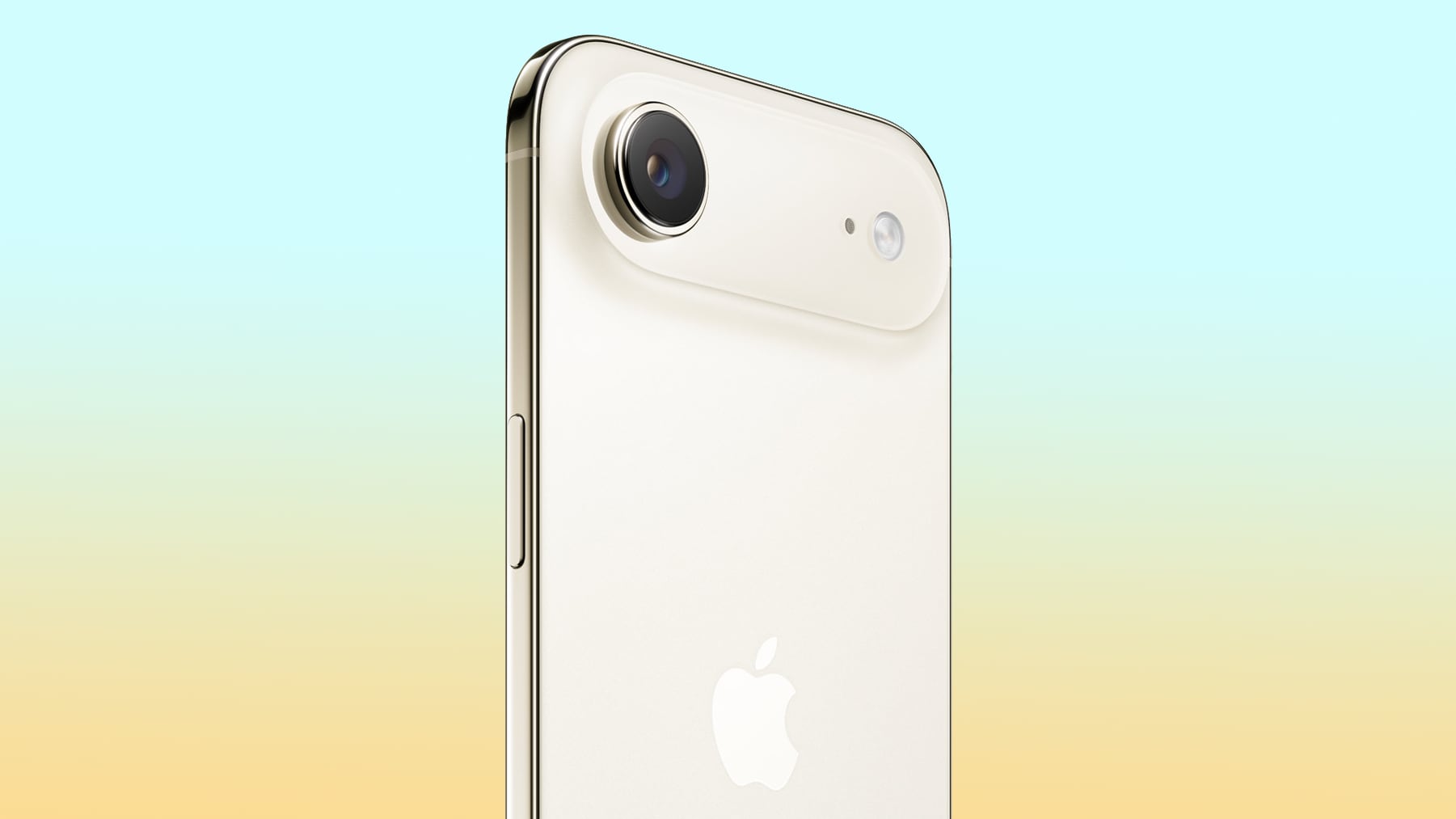
Next year's "iPhone 20 Pro" models will use the same glass design as the iPhone Air, but with more pronounced curvature along all four sides, according to the leaker known as "Fixed Focus Digital."


In a new post on Weibo, the leaker said the device would use the same glass material as the ‌iPhone Air‌, adjusted to have greater curvature and produce a four-sided curved effect. The accompanying hashtag refers specifically to an "iPhone 20 Pro" with a four-sided curved, "all-glass" design.

An illustration shared with the post depicts rounded front and rear glass meeting a narrow, polished, gold-colored metallic frame. Physical side buttons, antenna lines, and a protruding rear camera assembly remain visible.

Taken together with earlier rumors and the post's accompanying illustration, the repeated comparisons suggest a design somewhere between the iPhone X and ‌iPhone Air‌. The ‌iPhone Air‌ provides a reference for the slim profile and a more modern iPhone design, while the more pronounced glass curvature recalls the rounded edges of the iPhone X. Both feature a polished frame.

The latest claim builds on Fixed Focus Digital's previous report that Apple had modified ‌iPhone Air‌ manufacturing equipment to produce more rounded glass components for the 20th anniversary models. The leaker said the changes had helped reduce manufacturing costs, while substantially improving thinness and heat dissipation.

In a still-earlier report, the same leaker also claimed that a supply chain facility had completed renovations ahead of "iPhone 20" production, with manufacturing quality expected to be roughly comparable to the first-generation ‌iPhone Air‌. The ‌iPhone Air‌ features Ceramic Shield 2 on the front and Ceramic Shield on the back.

The broader design picture aligns with Bloomberg's Mark Gurman's reporting that Apple's anniversary Pro models will feature glass that curves into the sides from both the front and rear, with a thin metal band between the two panels. Gurman has also described thinner display bezels and curved glass around all corners and edges, in what he expects to be the biggest overhaul of the Pro line since the iPhone X.

Apple's 20th-anniversary iPhone models are expected to launch in the fall of 2027. While leakers have variably referred to the device as the "iPhone 20 Pro," Apple's naming plans remain unclear. It seems plausible that the company could skip the iPhone 19 name to emphasize the anniversary, similar to its introduction of the iPhone X in 2017.
Related Roundup: iPhone Air
Buyer's Guide: iPhone Air (Neutral)

This article, "'iPhone 20 Pro' Rumored to Be Based on iPhone Air" first appeared on MacRumors.com

Discuss this article in our forums

  •  

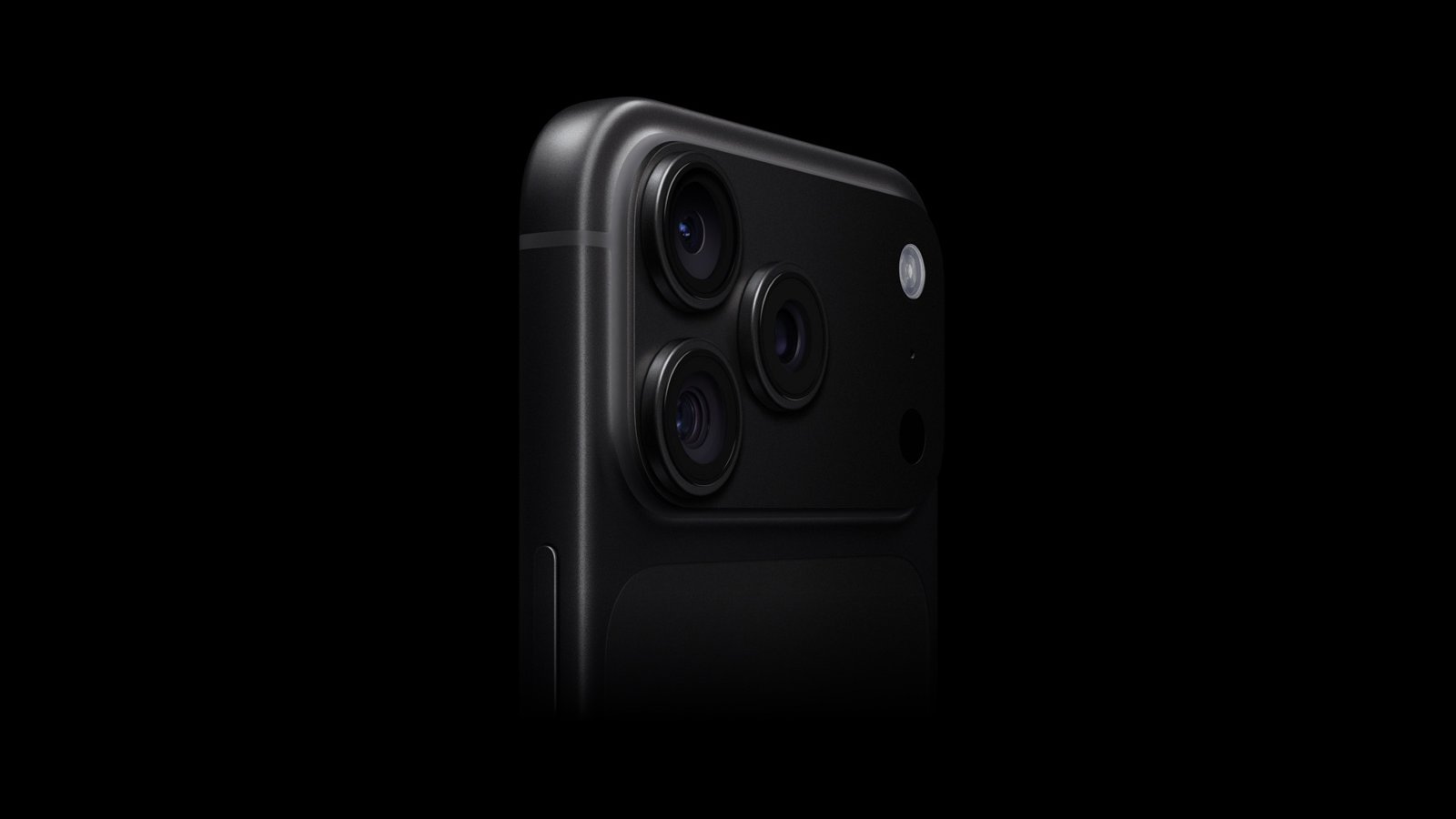
iPhone 20 Pro Rumored to Feature New 17nm Camera Sensor

Next year's iPhone 20 Pro could feature a main camera sensor with logic circuitry manufactured using a new 17-nanometer process, according to Weibo-based leaker Ice Universe.


Modern stacked camera sensors separate their light-sensitive pixels from the logic circuitry responsible for reading out and processing image data. A more advanced manufacturing process for the logic layer could potentially enable faster readout speeds, improved power efficiency, and more sophisticated image processing.

The leaker provided no further details about the sensor, which would reportedly debut in Apple's 20th-anniversary iPhone in 2027. Apple is expected to skip the "iPhone 19" moniker next year, just like it did with the iPhone 9 prior to the release of the iPhone X in 2017 to celebrate the 10th anniversary of the original iPhone.

Interestingly, Samsung has already been developing a 17nm Low Power Value (17LPV) process specifically for CMOS image sensor signal processing circuitry, according to a 2024 Omdia report.

Apple is also working with Samsung to produce advanced image sensors at its Austin, Texas facility. Previous reports suggest the partnership involves a three-layer stacked sensor design, but there's currently no clear link between that project and the claimed 17nm component.

Separately, Apple is rumored to be developing its own image sensor incorporating LOFIC technology, which could substantially improve dynamic range and preserve more detail in highlights and shadows. Again though, it's not clear whether the latest claim relates to that sensor.

Apple is rumoured to be a developing a radical new design for its second commemorative iPhone, featuring a new quad-curved OLED display that wraps around the edges of the device, and a screen with potentially no cutouts at all. Apple is expected to debut the device in or around September 2027.
This article, "iPhone 20 Pro Rumored to Feature New 17nm Camera Sensor" first appeared on MacRumors.com

Discuss this article in our forums

  •  

Apple Seeks 200,000 People for AI Health Study

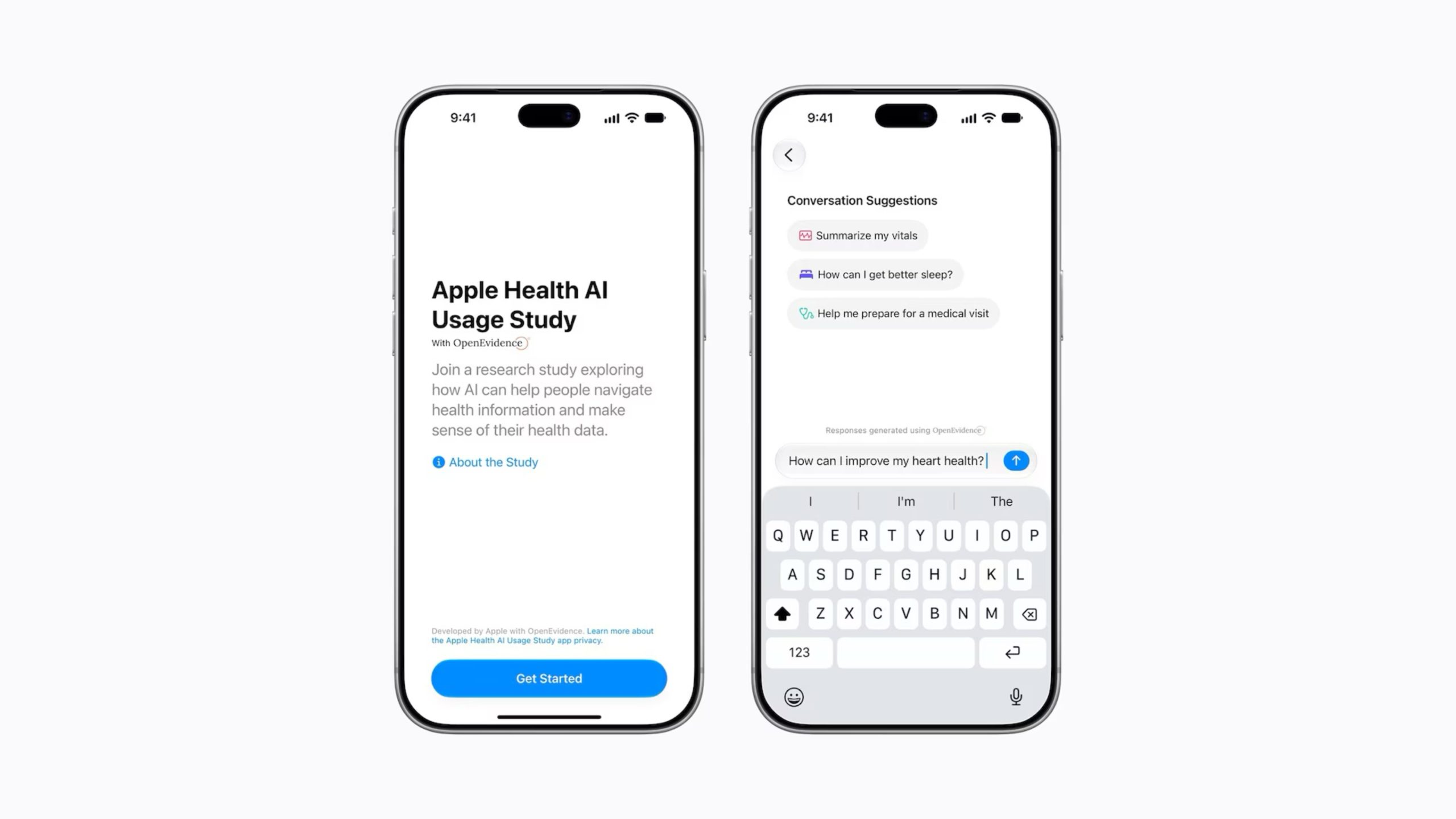
Apple on Sunday announced the launch of an Apple Health AI Usage Study that gives participants access to a dedicated iPhone app that answers everyday health questions using medical research and, optionally, their own Health app data.


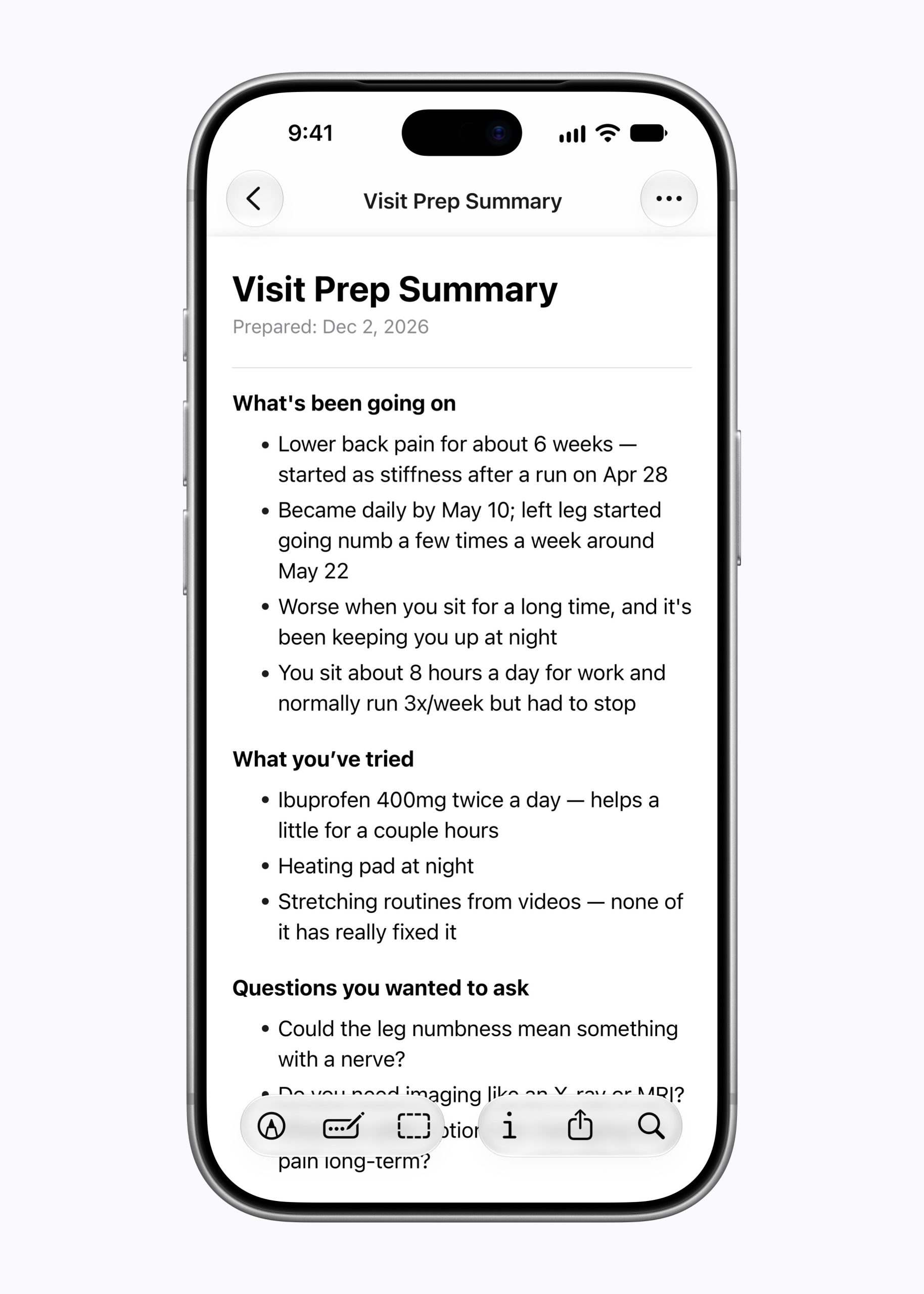
Conducted in collaboration with clinical AI company OpenEvidence, the U.S.-only study will examine how people understand and evaluate AI-generated health information, what makes them trust it, and whether it can help them prepare for appointments with their doctors.
"At Apple, we believe responsible innovation starts with scientific rigor and clinical grounding. Health is deeply personal, and conducting a dedicated research study is the most thoughtful way to understand how people engage with, comprehend, and evaluate health AI in everyday life," said Sumbul Desai, M.D., Apple's vice president of Health and Fitness. "Insights from this study will help advance the broader scientific conversation and ensure that as technology evolves, we continue building trusted tools that genuinely support people wherever they are on their health journey."
The app combines OpenEvidence's technology with an Apple-designed research experience, where responses include links to peer-reviewed clinical sources, with information drawn from publications like The New England Journal of Medicine, JAMA, and Nature. Apple says the app presents complex medical information in approachable language.


Participants can choose to share data such as their resting heart rate, activity, sleep, and lab results through HealthKit. The idea is for it to allow researchers to explore whether incorporating personal health information makes answers more relevant and easier to understand. Apple says the app can also help users put Health data in context, understand symptoms or conditions, and build personalized exercise or meal plans.

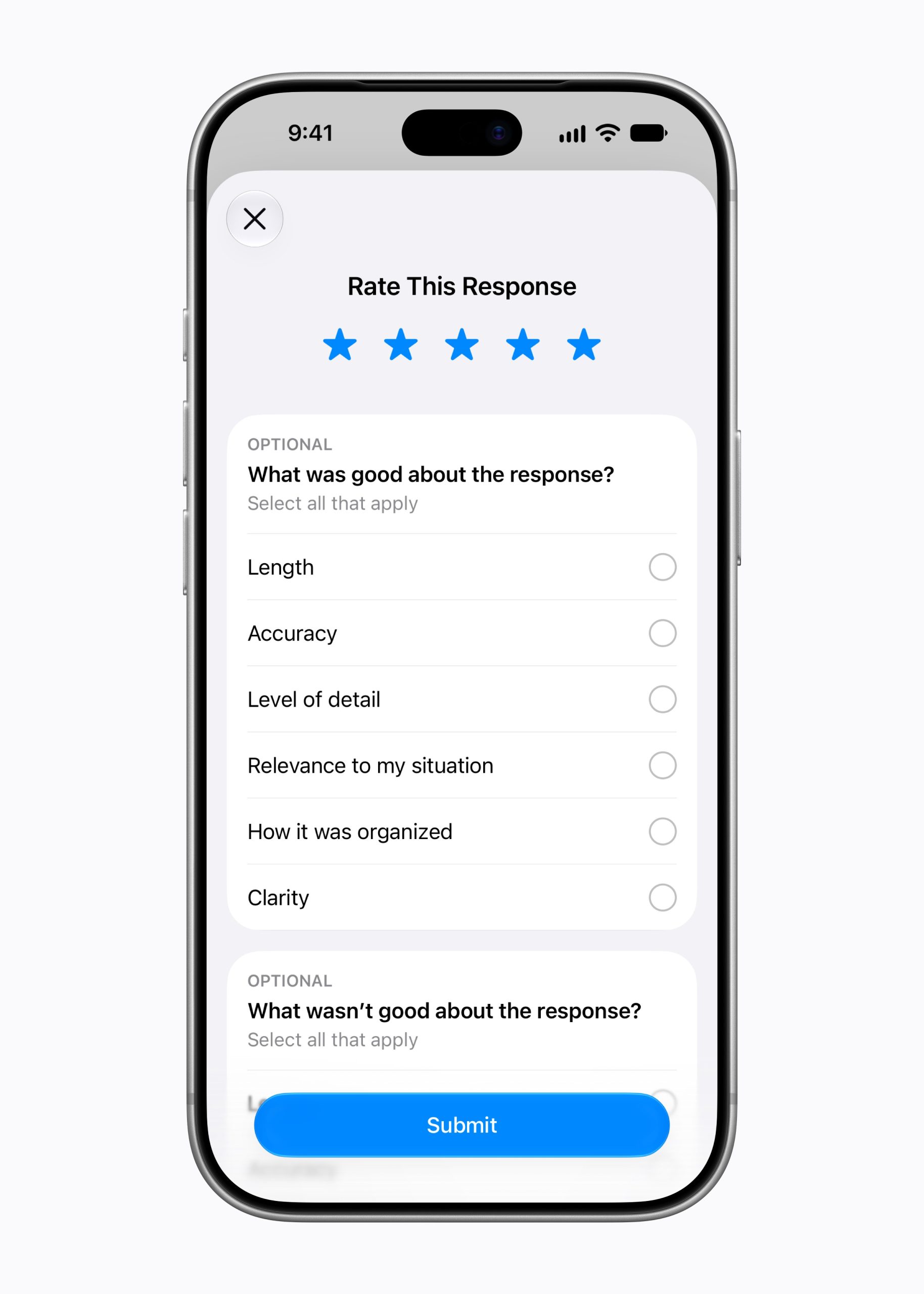
Users can rate responses and complete occasional surveys about their experience, and all questions undergo processing designed to remove identifying information before reaching OpenEvidence, which deletes question-and-response data within 24 hours. Apple says study data will not be used to train AI models, and participants control whether they share HealthKit metrics or survey responses.
"Patients and clinicians are both turning to AI, but the tools they use are being built and tested in separate worlds," said Robert M. Wachter, M.D., UCSF's professor and chair of the Department of Medicine. "When patients and doctors draw on versions of the same trustworthy tools, patients arrive prepared, conversations improve, and next steps happen seamlessly. Connecting these tools, and rigorously studying what works, is how we'll get there."
Apple is keen to stress that health tools powered by large language models can give incomplete or unclear answers, and the app includes safeguards that are meant to detect certain concerning questions and direct users toward a healthcare provider or other resources. The study isn't intended to diagnose or treat conditions, or replace advice from medical professionals.


The study is open to up to 200,000 eligible U.S. residents aged 21 and older with an Apple Intelligence-enabled iPhone running iOS 26 or later. If you're eligible and interested, download the Apple Health AI Study App from the App Store to learn more.
This article, "Apple Seeks 200,000 People for AI Health Study" first appeared on MacRumors.com

Discuss this article in our forums

  •  

Kalenderwoche 46: von Schnürsenkelschleifen bis Schach

Podcast cover collage showing a close-up of a black shoe with a yellow shoelace tied in a bow, portraits of two men with different backgrounds, a chessboard with pieces set for a game, a tall structure against a glowing yellow-orange sky, and a person in a shiny outfit mid-shout in a street scene, all overlaid with a w The square cover is centered on a warm-white background with a soft shadow. Large embossed "PREVIEW" lettering runs diagonally across the cover, marking a teaser.

Zeug aus KW46, das ich gelesen, geschaut, gehört und insgesamt genossen habe …

iPhoneBlog #one kann man abonnieren. Alle Abonnent:innen bekommen jede Woche ein neues „Gewusst-wie”-Video, einen wöchentlichen Mini-Podcast, den Zugriff auf alle bereits veröffentlichten Episoden sowie die Einladung zu einer ganz besonderen Community im privaten Slack-Kanal.

iPhoneBlog #one ist ausschließlich von Lesern und Leserinnen finanziert und unterstützt direkt das iPhoneBlog.

Weiterlesen

  •  

„Breakfast – understand your running“

Ohne das Thema zu groß aufzuziehen, aber was ist der Preis von Software dieser Tage?

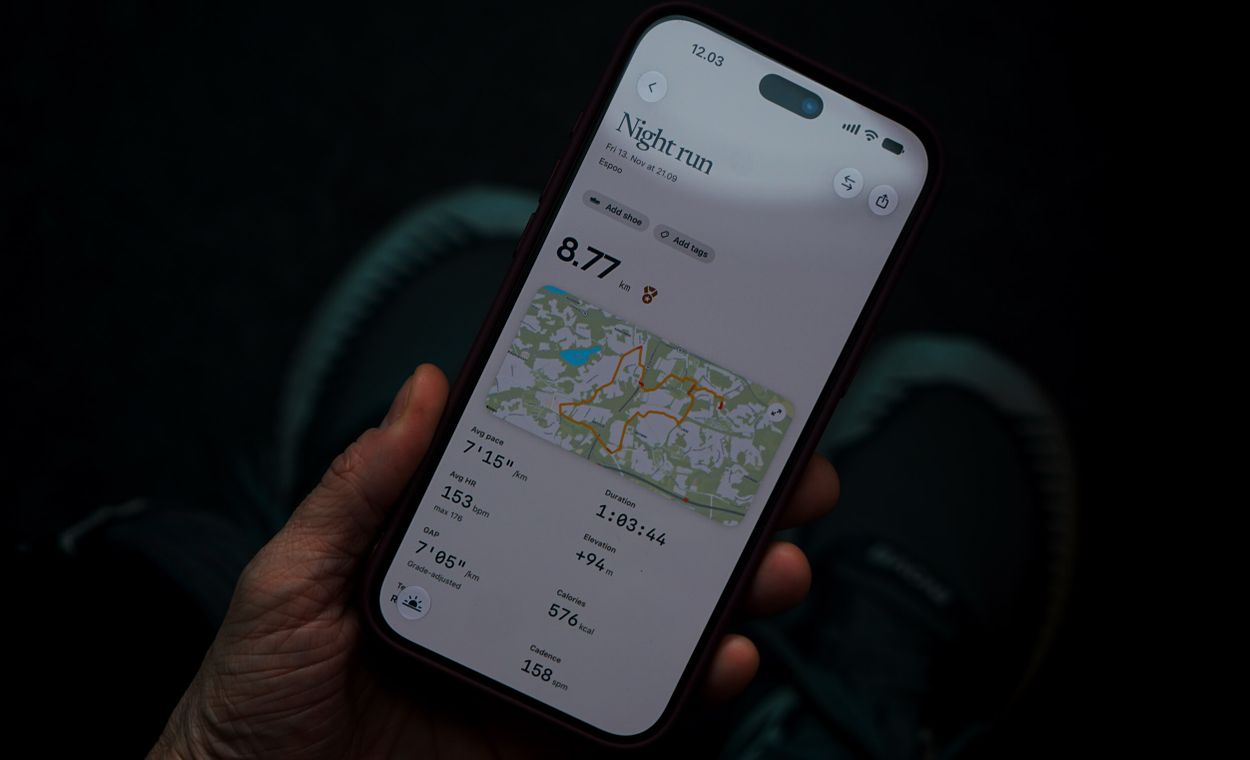
A hand is holding a smartphone displaying a running activity summary for a night run, showing distance covered as 8.77 km, pace, heart rate, duration, elevation, calories burned, and cadence, along with a mapped route of the run. The background shows a pair of running shoes.

Breakfast is made for runners who like to look at their training more closely. You can see how your pace and mileage change over time, track your gear and key metrics, and you can challenge yourself to improve.

Breakfast is developed by Matt Alexander, as part of 137 Ventures, in London.

breakfastrunning.club

Im Fall von Breakfast ist die Antwort sehr eindeutig: Null Euro – trotz exzellenter Aufbereitung der Apple-Health-Laufdaten.

Ich schätze den Fokus, den „Apps für einen selbst“ an den Tag legen. Lässt man Software für den Eigenbedarf schreiben, wovon ich hier ausgehe, bleiben Funktionen für die breiteste Zielgruppe schlicht außen vor. Kein Kaum „Share to social“, nur Features, die einem persönlich wichtig sind. Das ist nicht nur „gut genug“, sondern oft besser, weil fokussierter.

Bei Breakfast sind’s die Daten meiner Runs, die auch mir wichtig sind – von Trend-Prognosen über eine direkte Gegenüberstellung vorheriger Läufe bis zu persönlichen Bestzeiten sowie Zielen.

  •  

Apple Launches Two Products Today

Apple is releasing two new products today, Friday, November 13: the all-new Apple HomeView and the fourth-generation Apple TV 4K, both of which have been available to pre-order since mid-October.

  • Apple HomeView: Apple's new smart home display, powered by Apple Intelligence with Siri AI, for entertainment and managing the home. Available in tabletop and wall-mounted models, it can recognize up to six users by face, each with a personalized Home Screen. The HomeView is priced at $299.

  • Apple TV 4K: adds Siri AI, the A19 chip, an updated Siri Remote with Find My, and support for four-speaker surround sound with HomePod mini 2. The Apple TV 4K comes with 128GB of storage and is priced at $299.
Both products were announced on October 13 alongside the HomePod mini 2, which launched October 30.

As things stand, HomeView is not sold in the European Union because Siri AI is currently unavailable on iOS in the region due to regulatory constraints. Apple has said it is "working constructively with the EU in an attempt to find a path forward," but has provided no timeline for EU availability.
This article, "Apple Launches Two Products Today" first appeared on MacRumors.com

Discuss this article in our forums

  •  

Apple Support Community Deserved a Proper Goodbye

Apple on Tuesday abruptly placed the Apple Support Community into a read-only state and announced that the forums will be permanently closing on Friday, November 20. Those who contributed to the site — some for more than two decades — were blindsided by this decision and had no chance to post farewell messages.


Even if you felt the Apple Support Community contained too many generic or unhelpful answers from users trying to boost their post counts and earn points, the people volunteering their time to the site still deserved a proper goodbye.

Below, we have highlighted some of those people and their experiences.

Jeff Donald from Florida was a member of the Apple Support Community since November 2000, when the forums were still known as Apple Discussions. This past year, Apple recognized his efforts by inviting him to the Apple Community+ program, which launched in 2022 and provided members with a few extra perks and experiences.

Leroy Douglas was a member since July 2009. He said he was a bit shocked to see Apple's sudden announcement, but he saw the writing on the wall.

Here is a fun fact that you might not have known: In addition to English, Tobias Steen in Germany said there were also Apple Support Communities in Chinese, French, German, Japanese, Korean, Portuguese, and Spanish. For some reason, the French and German versions do not have closure notices, but we are told they will meet the same fate.

The forums brought together people of all ages, from 16-year-old Evan Bato Rousseau in France to 83-year-old Nobel Prize winner Sir Tim Hunt in England, who told us he found it to be a helpful resource, even if some of the answers were wonky.

John Daniel, the Canadian developer of macOS diagnostic tool EtreCheck, said he was active in the Apple Support Community for more than two decades. Users like him who reached "Level 6" or higher based on their contributions received access to The Lounge, a private category of forums where Apple employees sometimes participated.

Prior to 2020, John said Apple occasionally hosted in-person meetups for Support Community members, including a special visit to Apple Park.

"I don't agree with comments that so many are making about the Apple Support Community right now," he said, in response to those who described it as useless. "We regularly solved problems, identified significant issues with Apple projects, traced the cause of bugs and fixed them, and always learned new things. That's what I'm going to miss."

Elías Rojano Núñez of Chile participated in the Spanish forums. He told us that he found it deeply satisfying when he was able to help others, and he was saddened that the Spanish forums were shuttered without any advanced notice, but he is grateful for the opportunity that he had and will always value the interactions he had with fellow contributors.

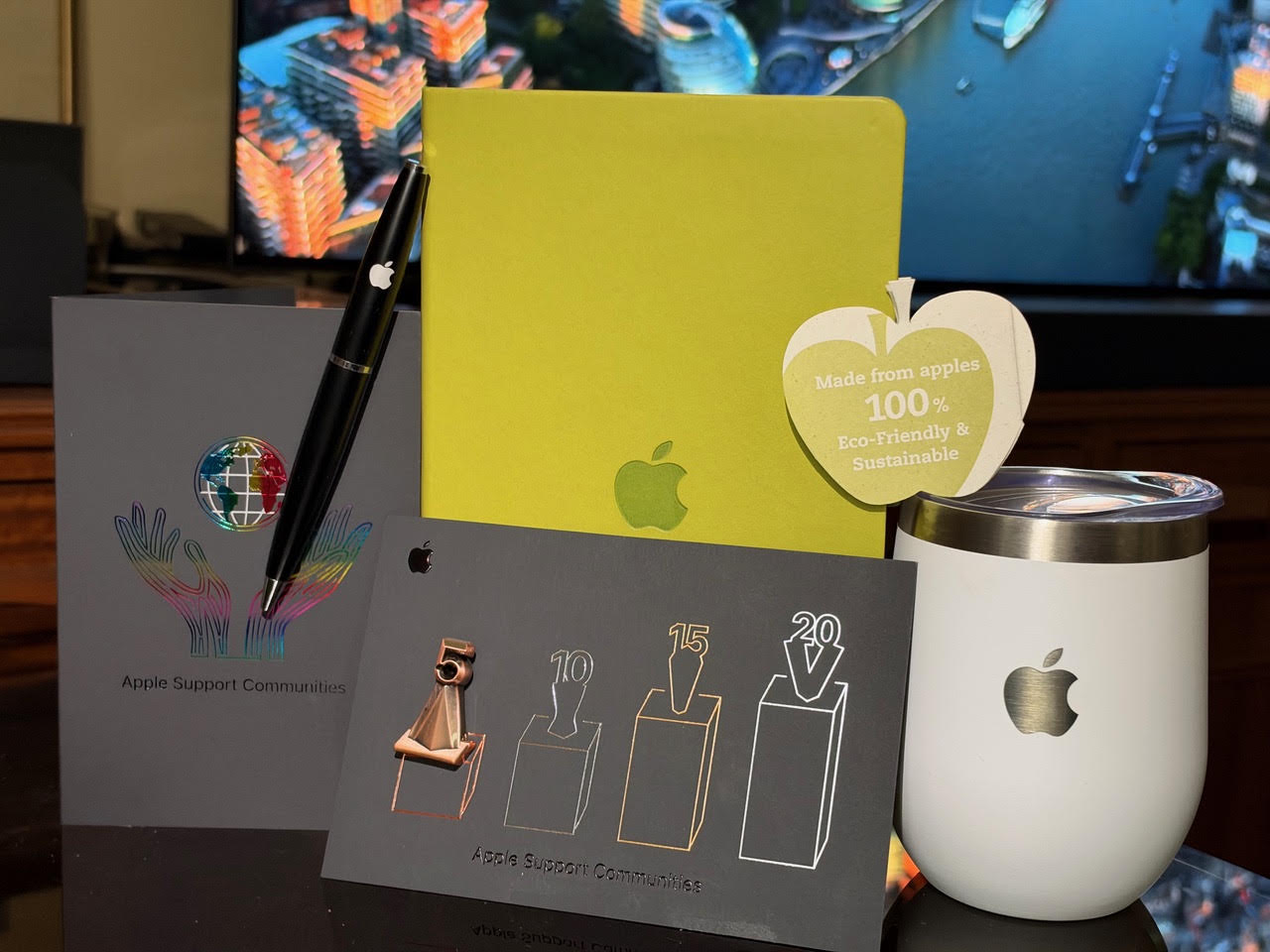
Rojano Núñez shared a photo of some of the items he received from Apple over the years, including a 5-year Apple Support Community anniversary pin. There were also 10-year, 15-year, and 20-year pins. Over the years, merchandise given out included Apple-branded hats, shirts, tote bags, and even umbrellas once.


Whatever its shortcomings, the Apple Support Community was more than just a place to ask questions. For some, it was a place to belong.

To that, we say goodbye and thank you, not good riddance.
This article, "Apple Support Community Deserved a Proper Goodbye" first appeared on MacRumors.com

Discuss this article in our forums

  •  

#531 – ein Dutzend neue iOS-Apps

Der Spielplatz „App Store“ – mit mehr Ideen als Geschäftsmodellen. Vielleicht muss sich auch nicht jede Idee rechnen; der Wandel ist aber unausweichlich.

Keine Bestenliste, keine Pflichtdownloads: Ein paar Fundstücke habe ich aus einer App-Szene zusammengetragen, die gerade ganz viel ausprobiert.

Hier das Intro der Episode:

Weiterlesen

  •  

Apple's Claris Testing 'Harbor' App for Local AI on Macs

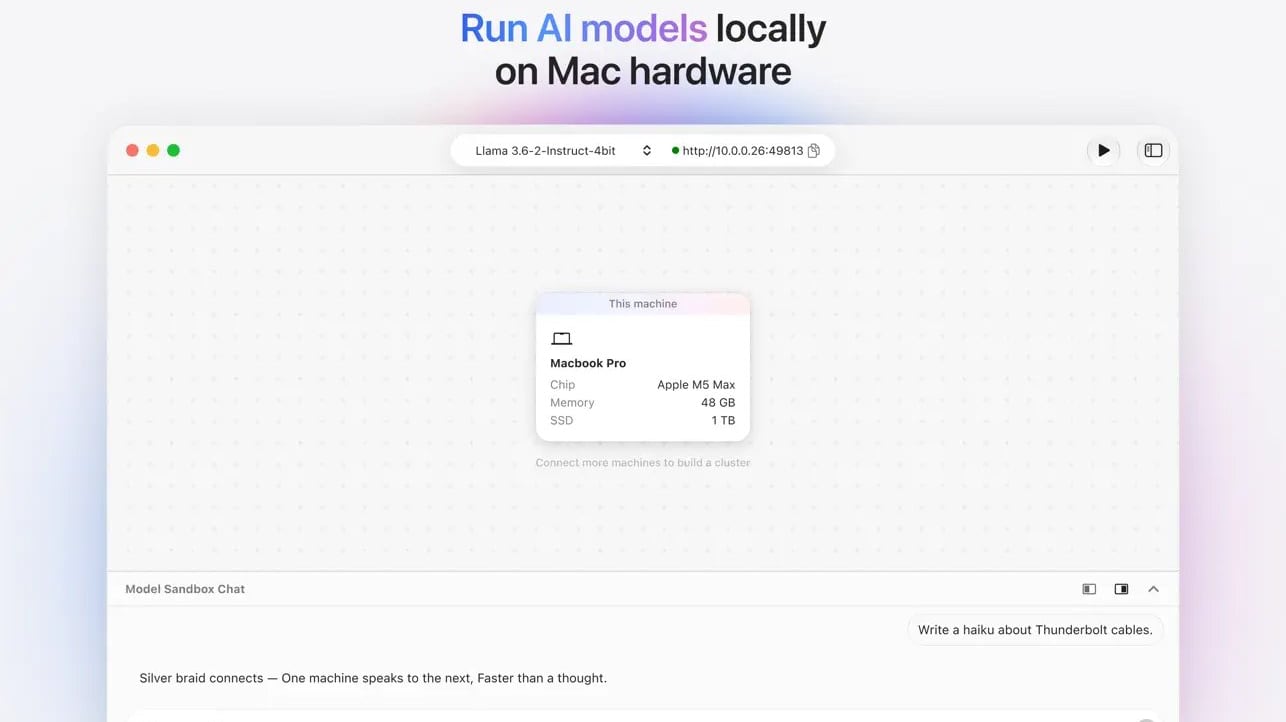
Apple's Claris subsidiary is testing an app called Harbor, which turns Apple silicon Macs into a private AI server.


Harbor works with a single Apple silicon Mac, but it also supports connecting multiple Mac computers over Thunderbolt 5 to pool unified memory for larger models. Apple added RDMA over Thunderbolt 5 with macOS Tahoe 26.2, making clustering faster.

Harbor detects devices connected over Thunderbolt 5 and lets users browse for, download, and load open-weight models. It's described as an easy-to-use app with no manual configuration required.
Harbor turns your Mac into a private AI inference server. Run open-weight models locally on Apple silicon—your data never leaves your hardware, and nothing reaches the cloud. Connect multiple Mac computers over Thunderbolt 5 to pool unified memory, enabling large models and higher concurrency than a single computer can handle alone.

Set up in minutes, not hours. Harbor automatically detects your devices over Thunderbolt 5 to form a cluster. Plug in, start, and you're running—no manual configuration, no command line, no infrastructure expertise required.


Download and run models directly. Browse, download, and load open-weight models from within the app. Harbor handles model management so you can focus on the work, not the setup.

Cluster for scale. Connect two or more Thunderbolt 5-capable Mac computers and Harbor pools their unified memory into a single inference resource. Run models that exceed any single computer's capacity, or serve more concurrent requests across your cluster.

Harbor is in early access and is not publicly available. There was an App Store listing, but it has now been removed.

Claris is known for its database platform FileMaker, which is aimed at businesses, so it isn't clear how Apple will market the Harbor app or whether it will be free. The sign-up page for Harbor asks for a company name, which suggests more of a business focus.

There are already well-known, free alternatives for Mac users who want to run a local AI server. Exo is an open-source tool for clustering Macs, and LM Studio is available for single-Mac use, but Apple's Harbor app appears to combine LM Studio's simple interface with clustering.
This article, "Apple's Claris Testing 'Harbor' App for Local AI on Macs" first appeared on MacRumors.com

Discuss this article in our forums

  •  
❌