❌

Lese-Ansicht

Apple Launches Spanish Version of Its U.S. Website

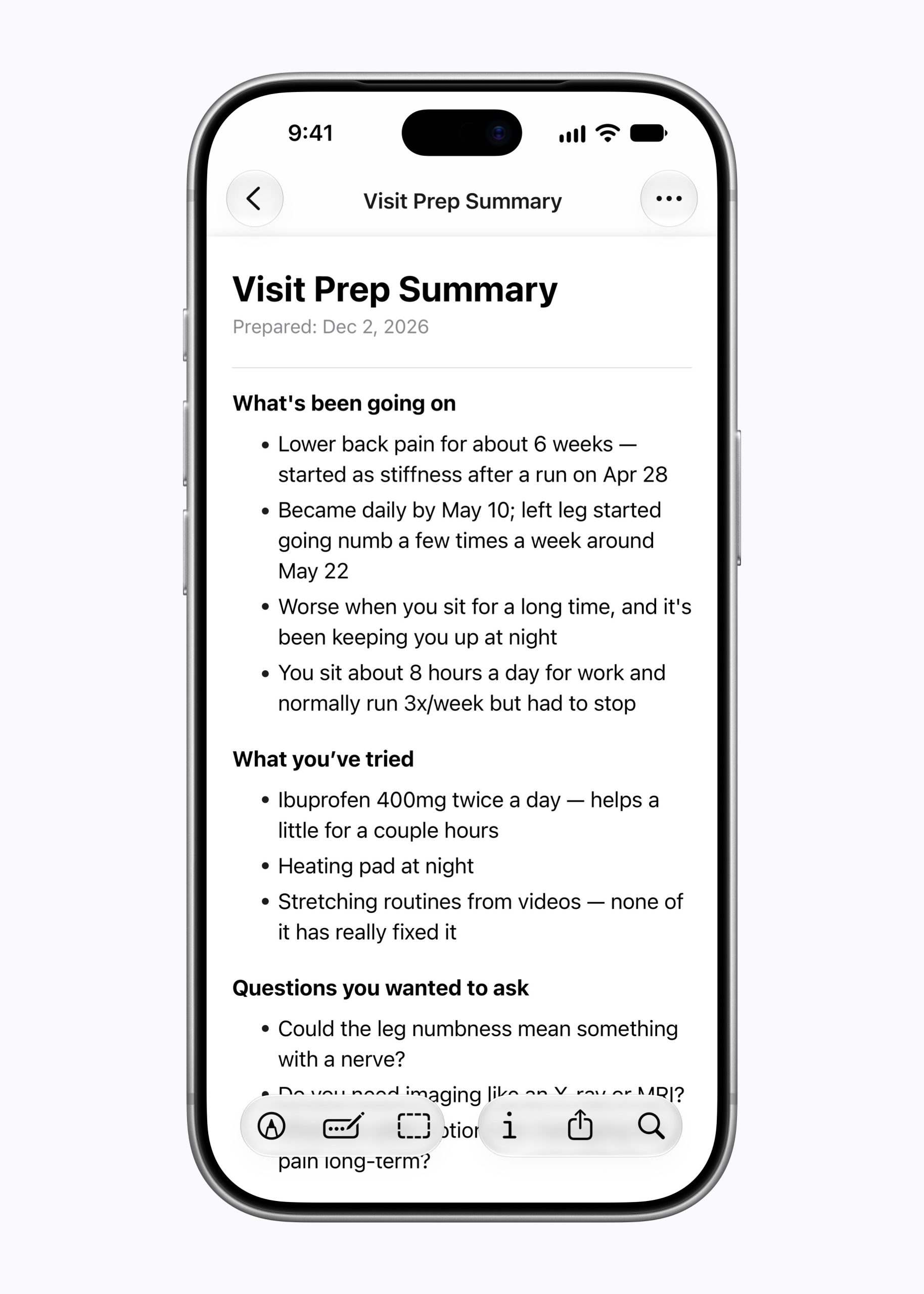
Starting today, Apple is making its U.S. website available in Spanish. Customers who have Spanish set as their language will be able to browse apple.com/us-es by default, and anyone will be able to choose Spanish from the country and language selector at the bottom of the website.


While most of the site will be available in Spanish, the Apple Online Store and Financial Services will be in English only. Customers who visit the Apple Online Store can shop in Spanish by contacting an Apple Specialist by phone.

There's already a U.S. Spanish version of the Apple Support site, so the change to the main website brings it in line with support options.
This article, "Apple Launches Spanish Version of Its U.S. Website" first appeared on MacRumors.com

Discuss this article in our forums
  •  

'iPhone 20 Pro' Rumored to Be Based on iPhone Air

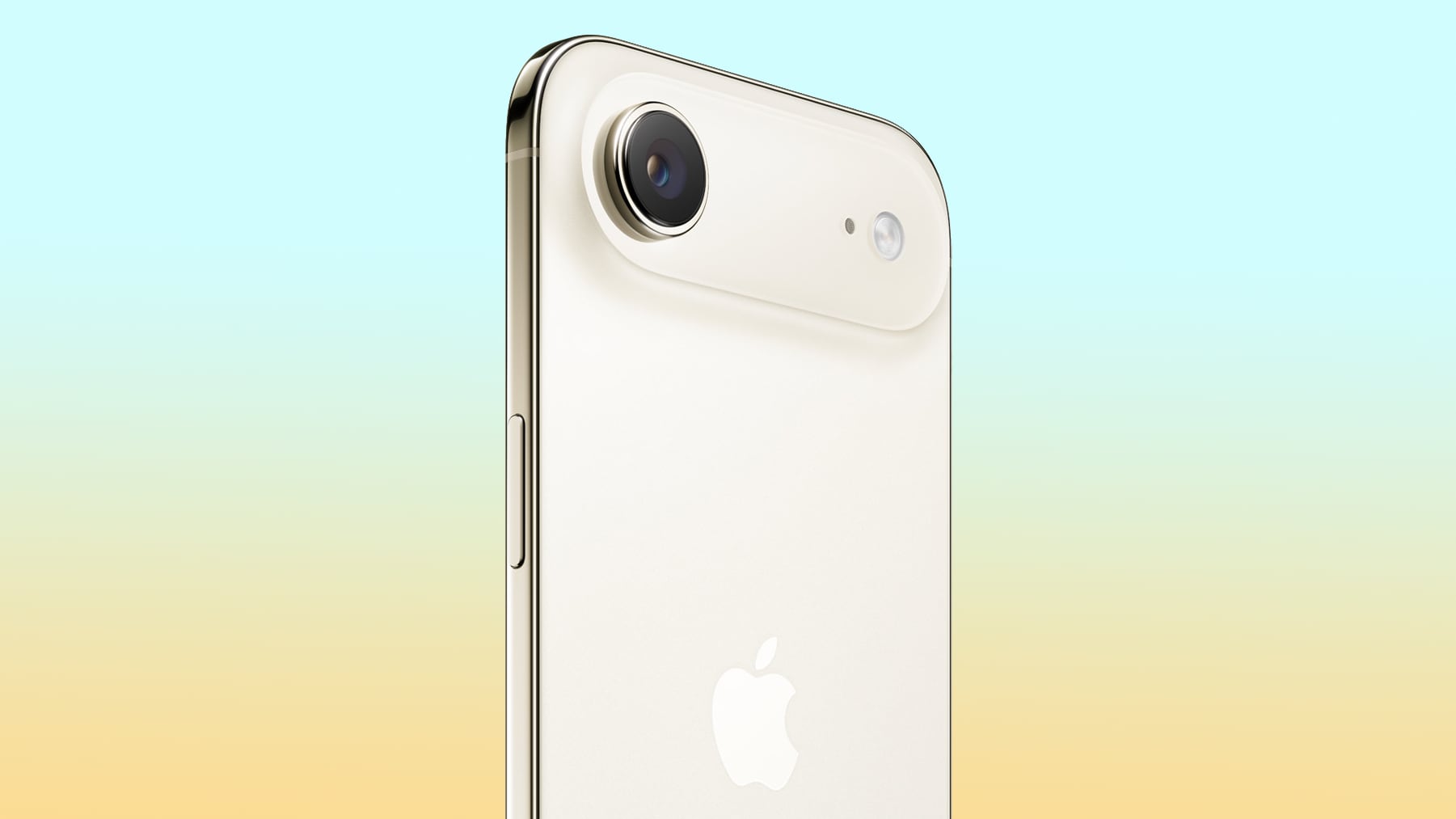
Next year's "iPhone 20 Pro" models will use the same glass design as the iPhone Air, but with more pronounced curvature along all four sides, according to the leaker known as "Fixed Focus Digital."


In a new post on Weibo, the leaker said the device would use the same glass material as the ‌iPhone Air‌, adjusted to have greater curvature and produce a four-sided curved effect. The accompanying hashtag refers specifically to an "iPhone 20 Pro" with a four-sided curved, "all-glass" design.

An illustration shared with the post depicts rounded front and rear glass meeting a narrow, polished, gold-colored metallic frame. Physical side buttons, antenna lines, and a protruding rear camera assembly remain visible.

Taken together with earlier rumors and the post's accompanying illustration, the repeated comparisons suggest a design somewhere between the iPhone X and ‌iPhone Air‌. The ‌iPhone Air‌ provides a reference for the slim profile and a more modern iPhone design, while the more pronounced glass curvature recalls the rounded edges of the iPhone X. Both feature a polished frame.

The latest claim builds on Fixed Focus Digital's previous report that Apple had modified ‌iPhone Air‌ manufacturing equipment to produce more rounded glass components for the 20th anniversary models. The leaker said the changes had helped reduce manufacturing costs, while substantially improving thinness and heat dissipation.

In a still-earlier report, the same leaker also claimed that a supply chain facility had completed renovations ahead of "iPhone 20" production, with manufacturing quality expected to be roughly comparable to the first-generation ‌iPhone Air‌. The ‌iPhone Air‌ features Ceramic Shield 2 on the front and Ceramic Shield on the back.

The broader design picture aligns with Bloomberg's Mark Gurman's reporting that Apple's anniversary Pro models will feature glass that curves into the sides from both the front and rear, with a thin metal band between the two panels. Gurman has also described thinner display bezels and curved glass around all corners and edges, in what he expects to be the biggest overhaul of the Pro line since the iPhone X.

Apple's 20th-anniversary iPhone models are expected to launch in the fall of 2027. While leakers have variably referred to the device as the "iPhone 20 Pro," Apple's naming plans remain unclear. It seems plausible that the company could skip the iPhone 19 name to emphasize the anniversary, similar to its introduction of the iPhone X in 2017.
Related Roundup: iPhone Air
Buyer's Guide: iPhone Air (Neutral)

This article, "'iPhone 20 Pro' Rumored to Be Based on iPhone Air" first appeared on MacRumors.com

Discuss this article in our forums
  •  

iPhone 20 Pro Rumored to Feature New 17nm Camera Sensor

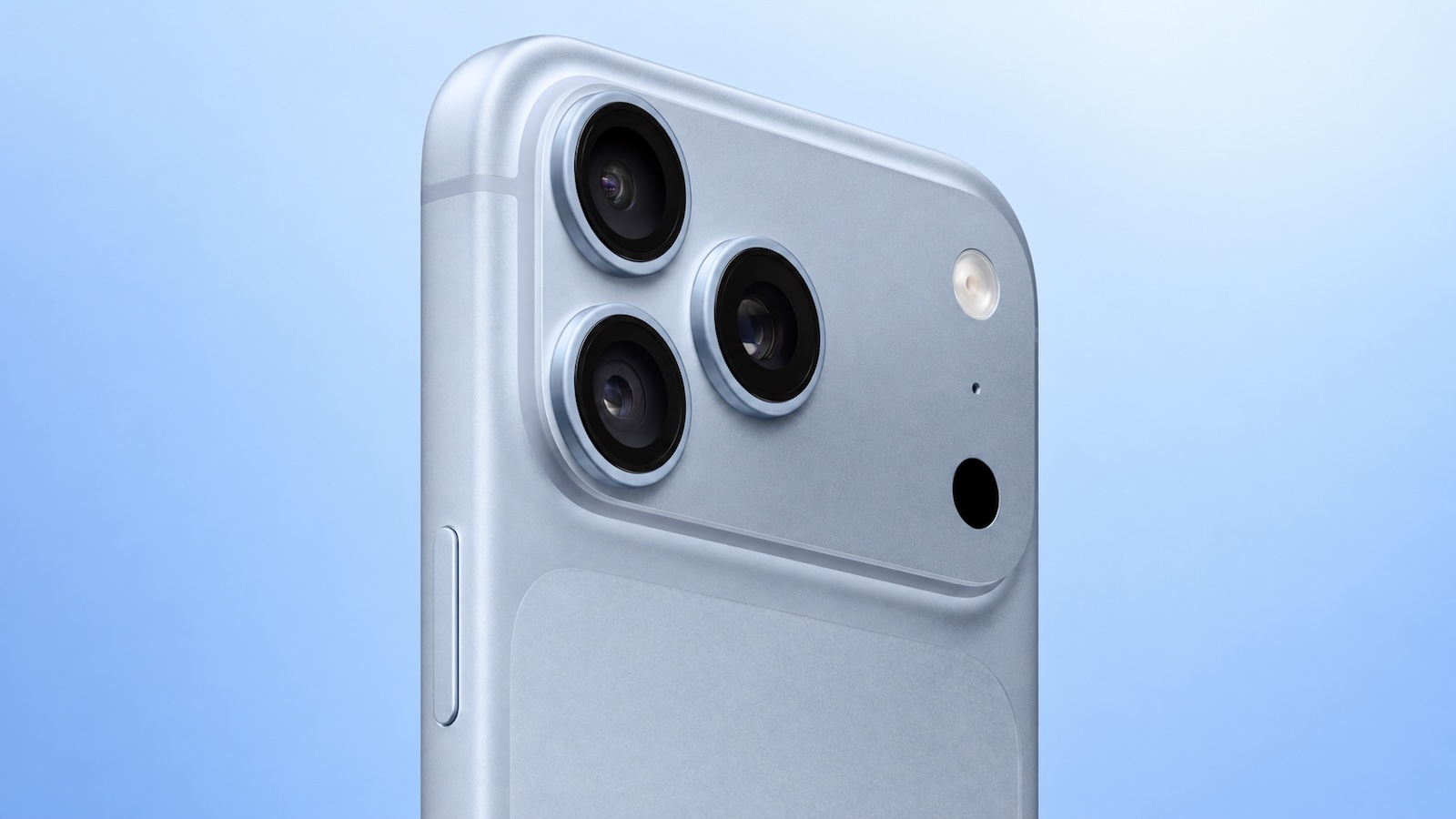
Next year's iPhone 20 Pro could feature a main camera sensor with logic circuitry manufactured using a new 17-nanometer process, according to Weibo-based leaker Ice Universe.


Modern stacked camera sensors separate their light-sensitive pixels from the logic circuitry responsible for reading out and processing image data. A more advanced manufacturing process for the logic layer could potentially enable faster readout speeds, improved power efficiency, and more sophisticated image processing.

The leaker provided no further details about the sensor, which would reportedly debut in Apple's 20th-anniversary iPhone in 2027. Apple is expected to skip the "iPhone 19" moniker next year, just like it did with the iPhone 9 prior to the release of the iPhone X in 2017 to celebrate the 10th anniversary of the original iPhone.

Interestingly, Samsung has already been developing a 17nm Low Power Value (17LPV) process specifically for CMOS image sensor signal processing circuitry, according to a 2024 Omdia report.

Apple is also working with Samsung to produce advanced image sensors at its Austin, Texas facility. Previous reports suggest the partnership involves a three-layer stacked sensor design, but there's currently no clear link between that project and the claimed 17nm component.

Separately, Apple is rumored to be developing its own image sensor incorporating LOFIC technology, which could substantially improve dynamic range and preserve more detail in highlights and shadows. Again though, it's not clear whether the latest claim relates to that sensor.

Apple is rumoured to be a developing a radical new design for its second commemorative iPhone, featuring a new quad-curved OLED display that wraps around the edges of the device, and a screen with potentially no cutouts at all. Apple is expected to debut the device in or around September 2027.
This article, "iPhone 20 Pro Rumored to Feature New 17nm Camera Sensor" first appeared on MacRumors.com

Discuss this article in our forums
  •  

Apple Seeks 200,000 People for AI Health Study

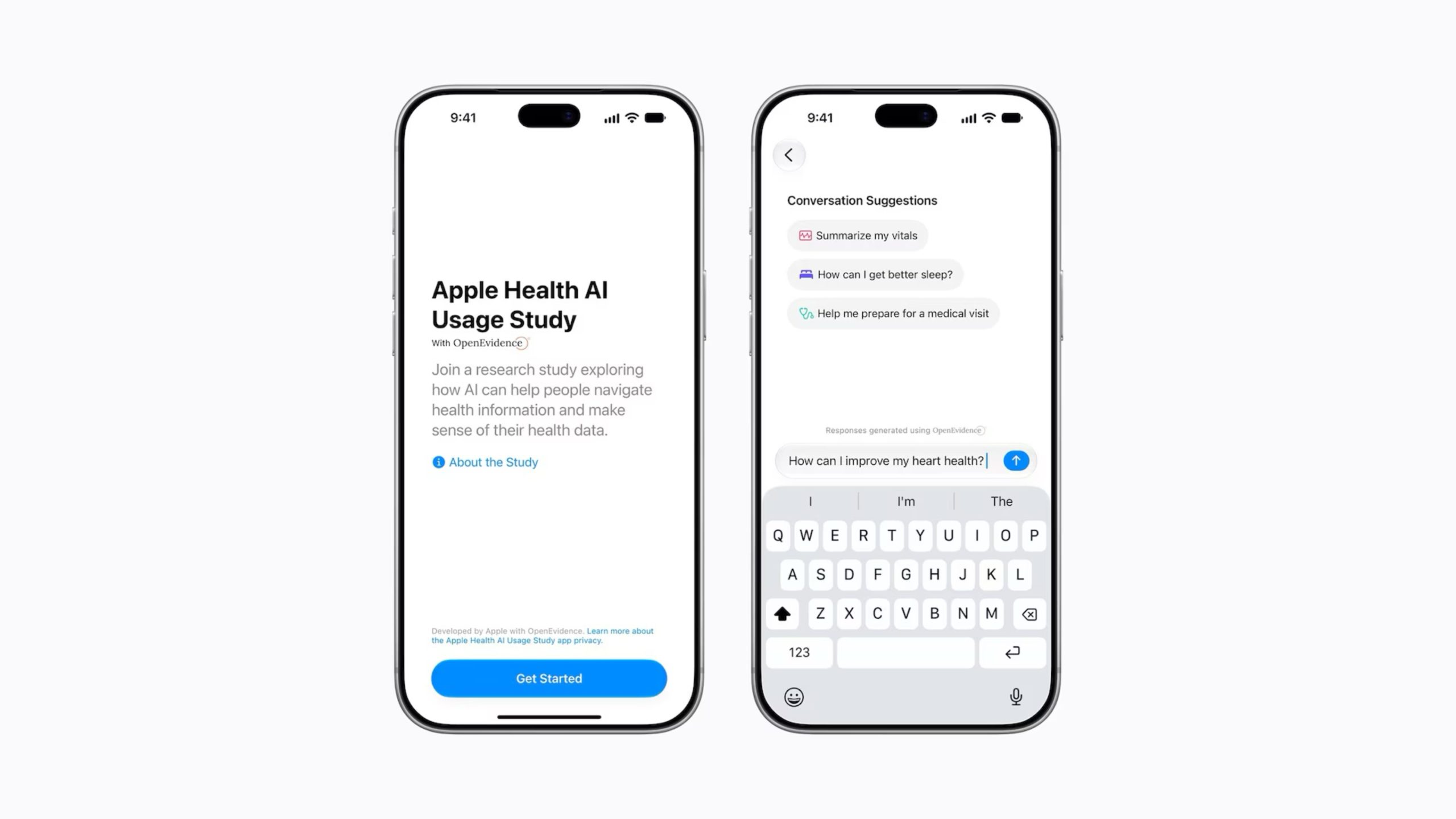
Apple on Sunday announced the launch of an Apple Health AI Usage Study that gives participants access to a dedicated iPhone app that answers everyday health questions using medical research and, optionally, their own Health app data.


Conducted in collaboration with clinical AI company OpenEvidence, the U.S.-only study will examine how people understand and evaluate AI-generated health information, what makes them trust it, and whether it can help them prepare for appointments with their doctors.
"At Apple, we believe responsible innovation starts with scientific rigor and clinical grounding. Health is deeply personal, and conducting a dedicated research study is the most thoughtful way to understand how people engage with, comprehend, and evaluate health AI in everyday life," said Sumbul Desai, M.D., Apple's vice president of Health and Fitness. "Insights from this study will help advance the broader scientific conversation and ensure that as technology evolves, we continue building trusted tools that genuinely support people wherever they are on their health journey."
The app combines OpenEvidence's technology with an Apple-designed research experience, where responses include links to peer-reviewed clinical sources, with information drawn from publications like The New England Journal of Medicine, JAMA, and Nature. Apple says the app presents complex medical information in approachable language.


Participants can choose to share data such as their resting heart rate, activity, sleep, and lab results through HealthKit. The idea is for it to allow researchers to explore whether incorporating personal health information makes answers more relevant and easier to understand. Apple says the app can also help users put Health data in context, understand symptoms or conditions, and build personalized exercise or meal plans.

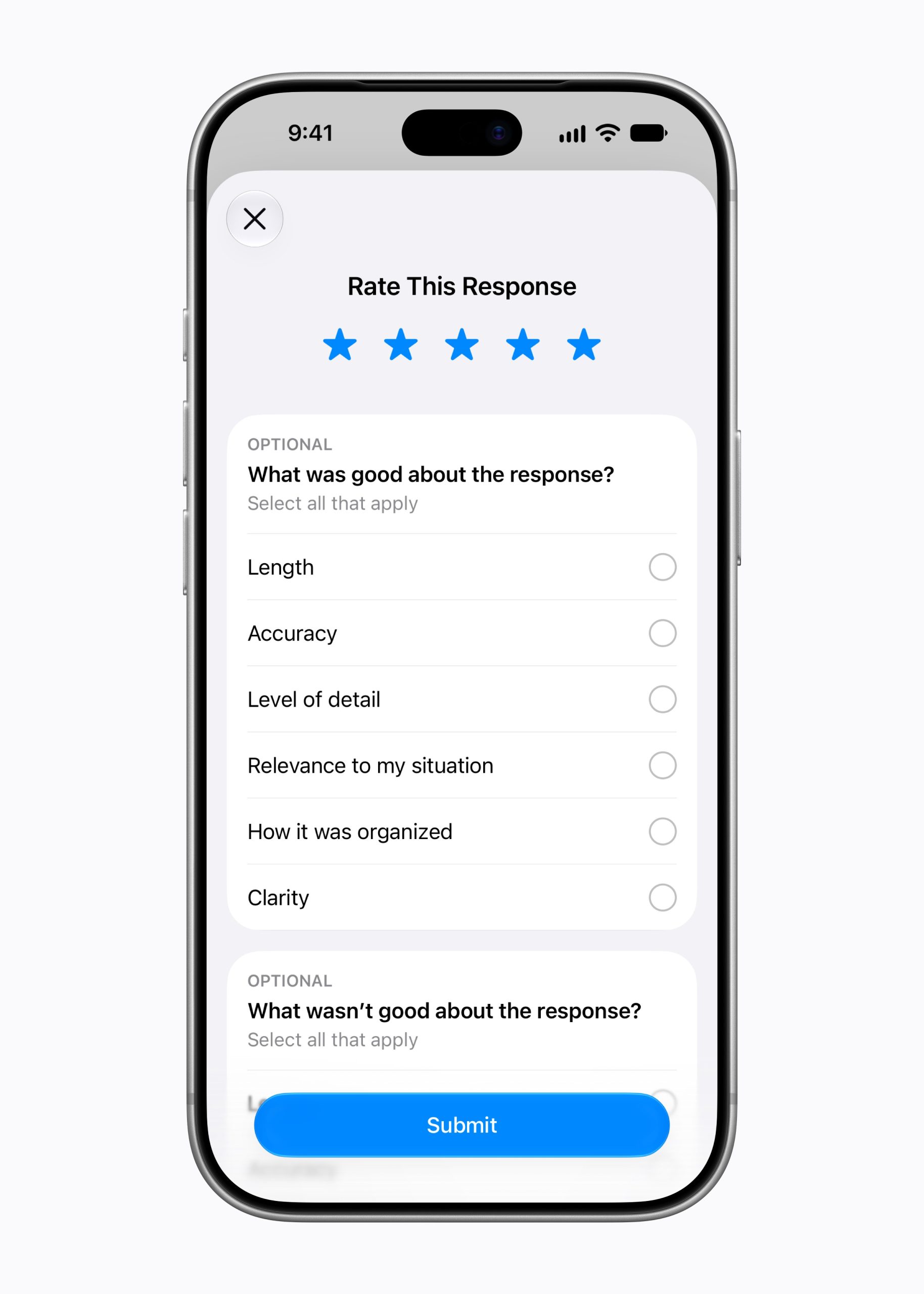
Users can rate responses and complete occasional surveys about their experience, and all questions undergo processing designed to remove identifying information before reaching OpenEvidence, which deletes question-and-response data within 24 hours. Apple says study data will not be used to train AI models, and participants control whether they share HealthKit metrics or survey responses.
"Patients and clinicians are both turning to AI, but the tools they use are being built and tested in separate worlds," said Robert M. Wachter, M.D., UCSF's professor and chair of the Department of Medicine. "When patients and doctors draw on versions of the same trustworthy tools, patients arrive prepared, conversations improve, and next steps happen seamlessly. Connecting these tools, and rigorously studying what works, is how we'll get there."
Apple is keen to stress that health tools powered by large language models can give incomplete or unclear answers, and the app includes safeguards that are meant to detect certain concerning questions and direct users toward a healthcare provider or other resources. The study isn't intended to diagnose or treat conditions, or replace advice from medical professionals.


The study is open to up to 200,000 eligible U.S. residents aged 21 and older with an Apple Intelligence-enabled iPhone running iOS 26 or later. If you're eligible and interested, download the Apple Health AI Study App from the App Store to learn more.
This article, "Apple Seeks 200,000 People for AI Health Study" first appeared on MacRumors.com

Discuss this article in our forums
  •  
❌