Anmelden

iPad Mini 2021 vs. 2026 Buyer's Guide: Is It Worth Upgrading?
10. November 2026 um 18:11
Apple's eighth-generation iPad mini went on sale earlier this month with a larger OLED display, a thinner and lighter design, the A20 Pro chip, and water and dust resistance. If you still use the sixth-generation iPad mini from 2021, the upgrade also brings changes that debuted on the 2024 model, including Apple Intelligence, Apple Pencil Pro support, and twice the USB-C transfer speed.
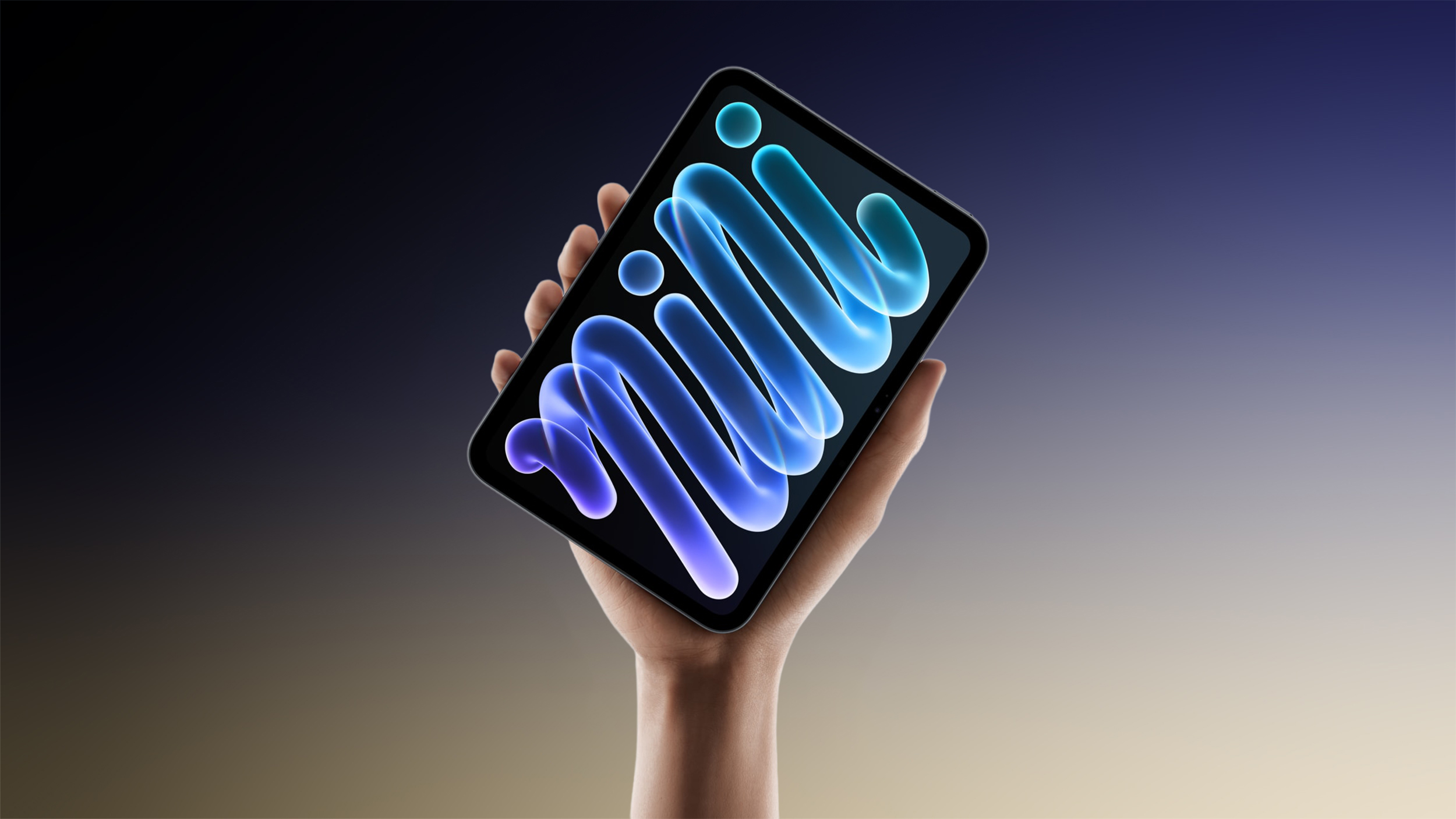
The new iPad mini starts at $699 for 128GB with Wi-Fi or $849 with cellular in the United States. The discontinued 2021 model started at $499 and $649, respectively, with 64GB of storage. Both support iPadOS 27.2, have Touch ID in the top button, and are rated for up to 10 hours of web browsing over Wi-Fi or watching video. Both displays also run at 60Hz.
The 2026 model is about 14% thinner and 13% lighter in its Wi-Fi configuration. The cellular model is about 11% lighter.
Apple claims up to 2.2 times the CPU performance and up to four times the GPU performance of the 2021 iPad mini in its tests. Against the 2024 A17 Pro model, Apple says it delivers more than twice the unified memory bandwidth and up to 4.5 times the speed in large language model token generation.
Both the 2021 and 2026 models are rated for up to nine hours of web browsing over cellular. Apple claims up to 50% faster cellular data speeds with the C2 modem compared with the 2024 iPad mini.
If your 2021 model still feels responsive and lasts long enough for reading, browsing, and taking notes, keeping it makes sense for now, and if battery life is your only complaint, a battery service may be enough.
However, for many 2021 iPad mini owners, the 2026 model is a worthwhile upgrade. If you've had yours since launch, its battery has had five years to wear down, and 64GB can feel cramped if you keep games or downloaded video on it. The new model gives you a fresh battery and twice the storage if you're coming from the 64GB version. Apple still rates both models for up to 10 hours when new, but the 2026 model can charge to 50% in around 30 minutes with a 35W or higher adapter.
The OLED display and lighter design are the changes you're most likely to notice every day. The screen can get dimmer for reading in bed and brighter for HDR video, and the lower weight makes the iPad mini easier to hold one-handed for long stretches. Both displays run at 60Hz, with no ProMotion. The A20 Pro and extra memory matter more if you play demanding games, edit photos or video, or often find that apps reload when you switch back to them.
Some of the smaller changes matter more depending on where you use your iPad mini. IP67 water and dust resistance is useful if you take it outdoors, read by the pool, or use it in the kitchen. The landscape front camera is better positioned for calls when the iPad is propped up horizontally, and extended display support lets you use a monitor as a separate workspace.
The discontinued 2024 iPad mini is a good middle ground if your 2021 model is showing its age and you're happy with its display. It gives you more base storage, Apple Intelligence, faster USB-C transfers, and Apple Pencil Pro support, and you can reuse your existing Smart Folio. Apple lists the 128GB Wi-Fi model for $509 through its Certified Refurbished store when available, with a new battery and a one-year warranty. Remaining new stock from third-party retailers is also worth considering at a low enough price.
If prices are close at the same storage capacity, buy the 2026 model. At $699, it makes the most sense if you specifically want the OLED display, lighter body, or water resistance. If you use a Smart Folio, factor in $79 for the redesigned version. The USB-C Apple Pencil works with either newer model, while the second-generation Apple Pencil needs replacing. Both newer cellular models use eSIM, so check with your carrier if you currently use a physical SIM.
A used 2021 iPad mini is still a reasonable buy at around $300 or lower if you want a second device for reading, notes, or streaming and 64GB is enough. Battery condition matters more than cosmetic wear; if the price of a 256GB unit or the cost of a battery service brings it close to a refurbished 2024 model, the newer device is still the better buy.
If you're buying the 2026 model, 128GB at $699 is enough for most buyers. If you're already close to filling 128GB on your current iPad, the $799 256GB model gives you room to grow. Nano-texture glass brings that configuration to $899 and is worth considering if you regularly contend with glare. The $999 512GB model makes the most sense if you need the extra space for games, media, or projects. It also gets an additional CPU core and a second Neural Engine, which are worth weighing if you use apps that can take advantage of them.
This article, "iPad Mini 2021 vs. 2026 Buyer's Guide: Is It Worth Upgrading?" first appeared on MacRumors.com
Discuss this article in our forums
The new iPad mini starts at $699 for 128GB with Wi-Fi or $849 with cellular in the United States. The discontinued 2021 model started at $499 and $649, respectively, with 64GB of storage. Both support iPadOS 27.2, have Touch ID in the top button, and are rated for up to 10 hours of web browsing over Wi-Fi or watching video. Both displays also run at 60Hz.
Display, Design, and Accessories
| iPad mini (sixth generation, 2021) | iPad mini (eighth generation, 2026) |
|---|---|
| 8.3-inch display | 8.5-inch display |
| Liquid Retina display with LED backlighting and IPS technology | Super Retina XDR OLED display with 2,000,000:1 contrast ratio |
| 2266-by-1488 resolution at 326 ppi | 2316-by-1512 resolution at 326 ppi |
| Wider display borders | 24% thinner display borders |
| 500 nits maximum brightness | 600 nits maximum SDR and full-screen HDR brightness, with up to 1,200 nits peak HDR brightness and 1-nit minimum brightness |
| Standard antireflective glass | Standard antireflective glass or optional nano-texture glass on 256GB and 512GB models for $100, with a polishing cloth included |
| IP67 water and dust resistance, rated for a maximum depth of 1 meter for up to 30 minutes | |
| Available in Space Gray, Starlight, Pink, and Purple | Available in Midnight and Starlight |
| Supports Apple Pencil (second generation) and Apple Pencil (USB-C) | Supports Apple Pencil Pro and Apple Pencil (USB-C) |
| Apple Pencil hover and Apple Pencil Pro features including squeeze, barrel roll, haptic feedback, and Find My | |
| Polyurethane Smart Folio, also compatible with the 2024 iPad mini | Two-panel TechWoven Smart Folio with adjustable viewing angles, available separately in Navy Blue and Taupe for $79 |
| 94% fiber-based packaging | 100% fiber-based packaging and 35% recycled content overall |
Dimensions and Weight
| iPad mini (2021) | iPad mini (2026) | |
|---|---|---|
| Height | 7.69 inches (195.4 mm) | 7.69 inches (195.3 mm) |
| Width | 5.3 inches (134.8 mm) | 5.22 inches (132.6 mm) |
| Thickness | 0.25 inch (6.3 mm) | 0.21 inch (5.4 mm) |
| Weight (Wi-Fi) | 0.65 pound (293 grams) | 0.56 pound (255 grams) |
| Weight (Wi-Fi + Cellular) | 0.66 pound (297 grams) | 0.58 pound (263 grams) |
The 2026 model is about 14% thinner and 13% lighter in its Wi-Fi configuration. The cellular model is about 11% lighter.
A15 Bionic vs. A20 Pro
| iPad mini (2021) | iPad mini (2026) | |
|---|---|---|
| Chip | A15 Bionic | A20 Pro |
| Manufacturing process | 5-nanometer (TSMC N5P) | 2-nanometer (TSMC N2) |
| CPU | 6 cores (2 performance cores and 4 efficiency cores) | 128GB and 256GB: 5 cores (2 super cores and 3 efficiency cores)
512GB: 6 cores (2 super cores and 4 efficiency cores) |
| GPU | 5 cores | 7 cores |
| Graphics features | Dynamic Caching, hardware-accelerated mesh shading, and hardware-accelerated ray tracing | |
| Neural Accelerators | Dedicated Neural Accelerators in each GPU core | |
| Neural Engine | 16 cores | 128GB and 256GB: 16 cores
512GB: Dual 16-core Neural Engine (32 cores total) |
| Memory | 4GB | 12GB |
| Apple Intelligence | Apple Intelligence and Siri AI, with support for Apple's larger on-device model for more expressive Siri voices and improved dictation | |
| Storage | 64GB or 256GB | 128GB, 256GB, or 512GB |
Apple claims up to 2.2 times the CPU performance and up to four times the GPU performance of the 2021 iPad mini in its tests. Against the 2024 A17 Pro model, Apple says it delivers more than twice the unified memory bandwidth and up to 4.5 times the speed in large language model token generation.
Cameras and Audio
| iPad mini (2021) | iPad mini (2026) |
|---|---|
| Front camera on the portrait edge | Front camera on the landscape edge |
| 12MP front camera with Center Stage and an ƒ/2.4 aperture | 12MP front camera with Center Stage and an ƒ/2.0 aperture |
| Smart HDR 3 on the front and rear cameras | Smart HDR 4 on the front and rear cameras |
| Retina Flash for the front camera | Retina Flash with True Tone for the front camera |
| Quad-LED True Tone rear flash | Adaptive True Tone rear flash |
| Automatic document detection and scanning in the Camera app, with adaptive flash to reduce shadows | |
| Landscape stereo speakers with external speaker holes | Acoustic Display stereo audio with display-coupled woofers and concealed tweeters, without external speaker holes |
| Dual microphones | Updated dual microphones for clearer calls and recordings |
| HEVC, H.264, and ProRes playback, with Dolby Vision and HDR10 support | Apple also lists AV1 playback and HDR10+ and HLG support |
Connectivity, Charging, and Price
| iPad mini (2021) | iPad mini (2026) |
|---|---|
| Third-party wireless networking chip | Apple N1 wireless networking chip |
| Wi-Fi 6 | Wi-Fi 7 |
| Bluetooth 5.0 | Bluetooth 6 |
| Thread | |
| Third-party 5G modem (cellular models) | Apple C2 5G modem (cellular models) |
| U.S. cellular model A2568 supports LTE band 46 | U.S. cellular model A3596 adds 5G bands n14, n26, n70, and n75 and LTE band 106, and drops LTE band 46 |
| UMTS/HSPA/HSPA+/DC-HSDPA support | UMTS/HSPA/HSPA+ support |
| Nano-SIM or eSIM (cellular models) | eSIM only (cellular models) |
| USB-C with USB 3 speeds up to 5Gb/s | USB-C with USB 3 speeds up to 10Gb/s |
| External display output up to 4K at 30Hz | External display output up to 4K at 60Hz |
| Extended external display mode with iPadOS 27.2 | |
| 19.3Wh battery | 18.9Wh battery |
| Fast charging up to 50% in around 30 minutes with a 35W or higher USB-C power adapter, sold separately | |
| Now discontinued | Starts at $699 (Wi-Fi) or $849 (Wi-Fi + Cellular) |
Both the 2021 and 2026 models are rated for up to nine hours of web browsing over cellular. Apple claims up to 50% faster cellular data speeds with the C2 modem compared with the 2024 iPad mini.
Should You Upgrade?
If your 2021 model still feels responsive and lasts long enough for reading, browsing, and taking notes, keeping it makes sense for now, and if battery life is your only complaint, a battery service may be enough.
However, for many 2021 iPad mini owners, the 2026 model is a worthwhile upgrade. If you've had yours since launch, its battery has had five years to wear down, and 64GB can feel cramped if you keep games or downloaded video on it. The new model gives you a fresh battery and twice the storage if you're coming from the 64GB version. Apple still rates both models for up to 10 hours when new, but the 2026 model can charge to 50% in around 30 minutes with a 35W or higher adapter.
The OLED display and lighter design are the changes you're most likely to notice every day. The screen can get dimmer for reading in bed and brighter for HDR video, and the lower weight makes the iPad mini easier to hold one-handed for long stretches. Both displays run at 60Hz, with no ProMotion. The A20 Pro and extra memory matter more if you play demanding games, edit photos or video, or often find that apps reload when you switch back to them.
Some of the smaller changes matter more depending on where you use your iPad mini. IP67 water and dust resistance is useful if you take it outdoors, read by the pool, or use it in the kitchen. The landscape front camera is better positioned for calls when the iPad is propped up horizontally, and extended display support lets you use a monitor as a separate workspace.
Which Model Should You Buy?
The discontinued 2024 iPad mini is a good middle ground if your 2021 model is showing its age and you're happy with its display. It gives you more base storage, Apple Intelligence, faster USB-C transfers, and Apple Pencil Pro support, and you can reuse your existing Smart Folio. Apple lists the 128GB Wi-Fi model for $509 through its Certified Refurbished store when available, with a new battery and a one-year warranty. Remaining new stock from third-party retailers is also worth considering at a low enough price.
If prices are close at the same storage capacity, buy the 2026 model. At $699, it makes the most sense if you specifically want the OLED display, lighter body, or water resistance. If you use a Smart Folio, factor in $79 for the redesigned version. The USB-C Apple Pencil works with either newer model, while the second-generation Apple Pencil needs replacing. Both newer cellular models use eSIM, so check with your carrier if you currently use a physical SIM.
A used 2021 iPad mini is still a reasonable buy at around $300 or lower if you want a second device for reading, notes, or streaming and 64GB is enough. Battery condition matters more than cosmetic wear; if the price of a 256GB unit or the cost of a battery service brings it close to a refurbished 2024 model, the newer device is still the better buy.
If you're buying the 2026 model, 128GB at $699 is enough for most buyers. If you're already close to filling 128GB on your current iPad, the $799 256GB model gives you room to grow. Nano-texture glass brings that configuration to $899 and is worth considering if you regularly contend with glare. The $999 512GB model makes the most sense if you need the extra space for games, media, or projects. It also gets an additional CPU core and a second Neural Engine, which are worth weighing if you use apps that can take advantage of them.
Related Roundup: iPad mini
Buyer's Guide: iPad Mini (Buy Now)
Related Forum: iPad
This article, "iPad Mini 2021 vs. 2026 Buyer's Guide: Is It Worth Upgrading?" first appeared on MacRumors.com
Discuss this article in our forums