
❌

Normale Ansicht

Is It Worth Buying a Ceramic Apple Watch?

The Apple Watch Series 12's ceramic casing option is its most luxurious, offering a distinctive finish and highly scratch-resistant material at a price above both aluminum and titanium. Is it worth choosing?
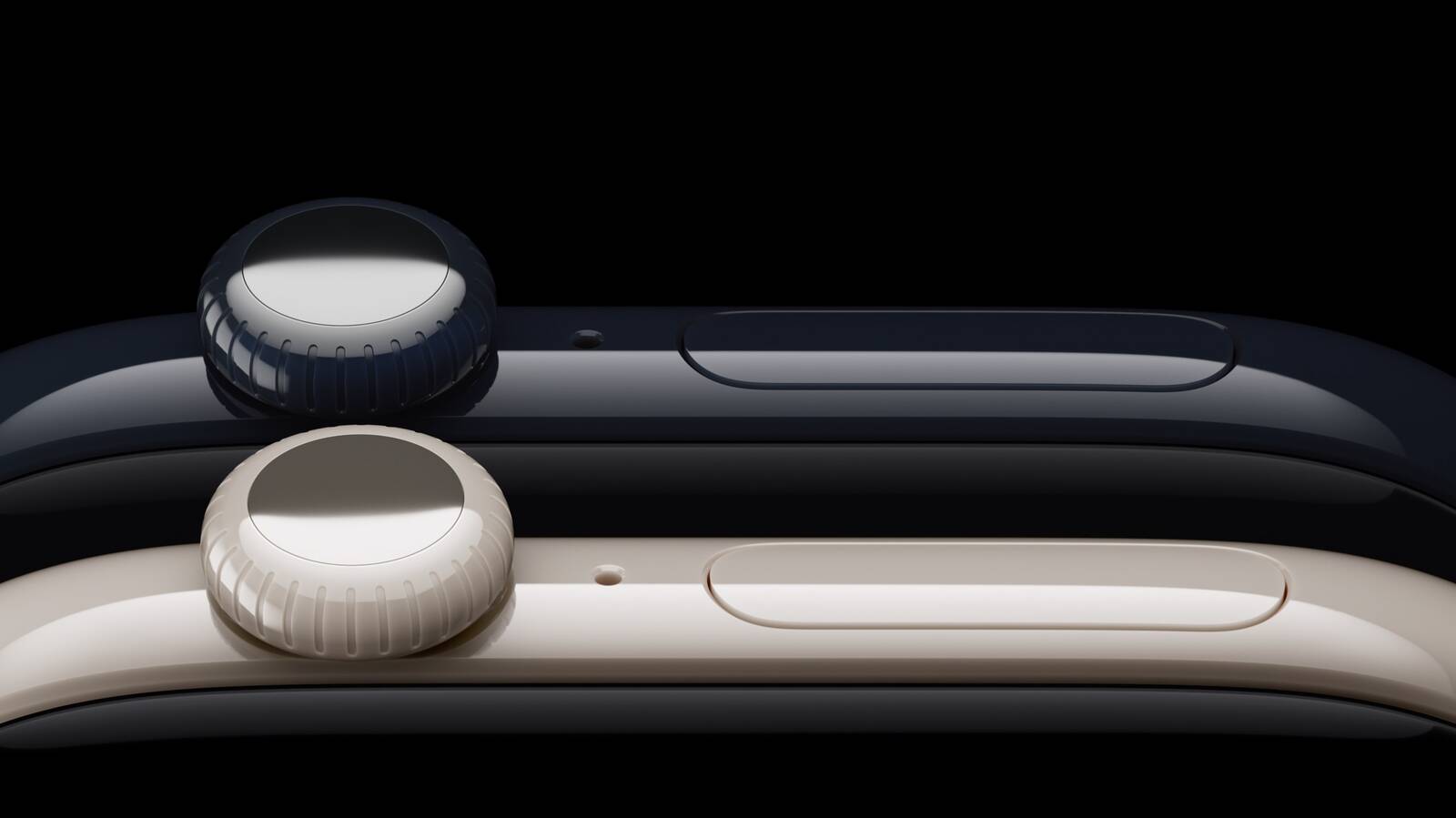

The ceramic Apple Watch starts at $899, compared to $399 for aluminum and $699 for titanium. Available in Pearl White and Night Blue, it brings ceramic back to the lineup for the first time since the Series 5. It is aimed at buyers who want a more unusual and special Apple Watch, and are willing to pay for the material and appearance rather than additional features.

Pearl White is particularly distinctive, with a lustrous, nonmetallic finish unlike anything offered in aluminum or titanium. For earlier ceramic Apple Watch models, Apple described a manufacturing process that combined zirconia powder with alumina before molding the case, heating it to form a dense solid, and polishing it with a diamond slurry. That process produced the smooth surface and rich white appearance that helped make the ceramic Apple Watch Edition so distinctive.

The included band is part of that appeal. Apple pairs the ceramic watches with exclusive Sand and Navy Blue Sport Bands featuring ceramic pin-and-tuck closures that match their respective cases. The Sand band gives the Pearl White model a distinctive overall appearance, with the matching ceramic closure providing a detail absent from ordinary Sport Bands.

Ceramic also offers a different look when paired with other bands. Pearl White creates a striking contrast with darker rubber or woven bands, while Night Blue offers a more understated combination. Metal bracelets remain an option, although their connectors will contrast with the ceramic case; buyers who prefer a coordinated metallic appearance may favor titanium with a Link Bracelet or Milanese Loop.

Ceramic also offers a practical benefit beyond its appearance: resistance to cosmetic wear. Earlier ceramic Apple Watch models were known for cases that were exceptionally difficult to scratch, helping preserve their finish throughout years of use. Polished titanium can pick up visible surface scratches, so buyers concerned about their watch retaining its original appearance have a good reason to consider ceramic.

Ceramic can still chip or crack under forceful impact, even though it resists scratches very well. It is a luxury case material with useful durability characteristics, rather than a substitute for the Apple Watch Ultra's rugged design.

Like titanium, the ceramic Series 12 features a sapphire front crystal that is highly resistant to scratches. Aluminum models instead feature Ceramic Shield 2, which refers to the front cover rather than a ceramic case. Titanium provides sapphire for $200 less, but it does not replicate the ceramic casing's distinctive finish or material qualities.

The ceramic models also include cellular connectivity as standard, while aluminum models offer a choice of GPS or GPS and Cellular. The $500 difference between their starting prices therefore covers more than the case material and front crystal, although ceramic remains a substantial premium even when comparing equivalent configurations.

There is a compromise in weight and proportions. Ceramic models are larger and heavier than their aluminum and titanium counterparts, without providing a larger display. The larger ceramic model weighs 51.3 grams in Pearl White and 52.9 grams in Night Blue, compared to 44.9 grams for titanium.

Internally, the ceramic Apple Watch Series 12 offers the exact same chip, sensors, display technology, and battery life as the aluminum and titanium versions. It also starts at $100 more than the Apple Watch Ultra 4, despite the Ultra offering longer battery life and additional capabilities.

Aluminum remains the stronger choice for buyers focused on features and value, while titanium offers a premium metallic finish and sapphire crystal at a lower price. Ceramic is for buyers who place greater importance on the material, finish, and sense of wearing something more unusual. If Pearl White is the Apple Watch you particularly want, neither titanium nor the Apple Watch Ultra offers a comparable substitute, regardless of their practical advantages.

Do you think the ceramic Apple Watch models are worth buying? Let us know in the comments.
Related Roundup: Apple Watch 12
Buyer's Guide: Apple Watch (Buy Now)
Related Forum: Apple Watch

This article, "Is It Worth Buying a Ceramic Apple Watch?" first appeared on MacRumors.com

Discuss this article in our forums
  •  

iPad Mini 2021 vs. 2026 Buyer's Guide: Is It Worth Upgrading?

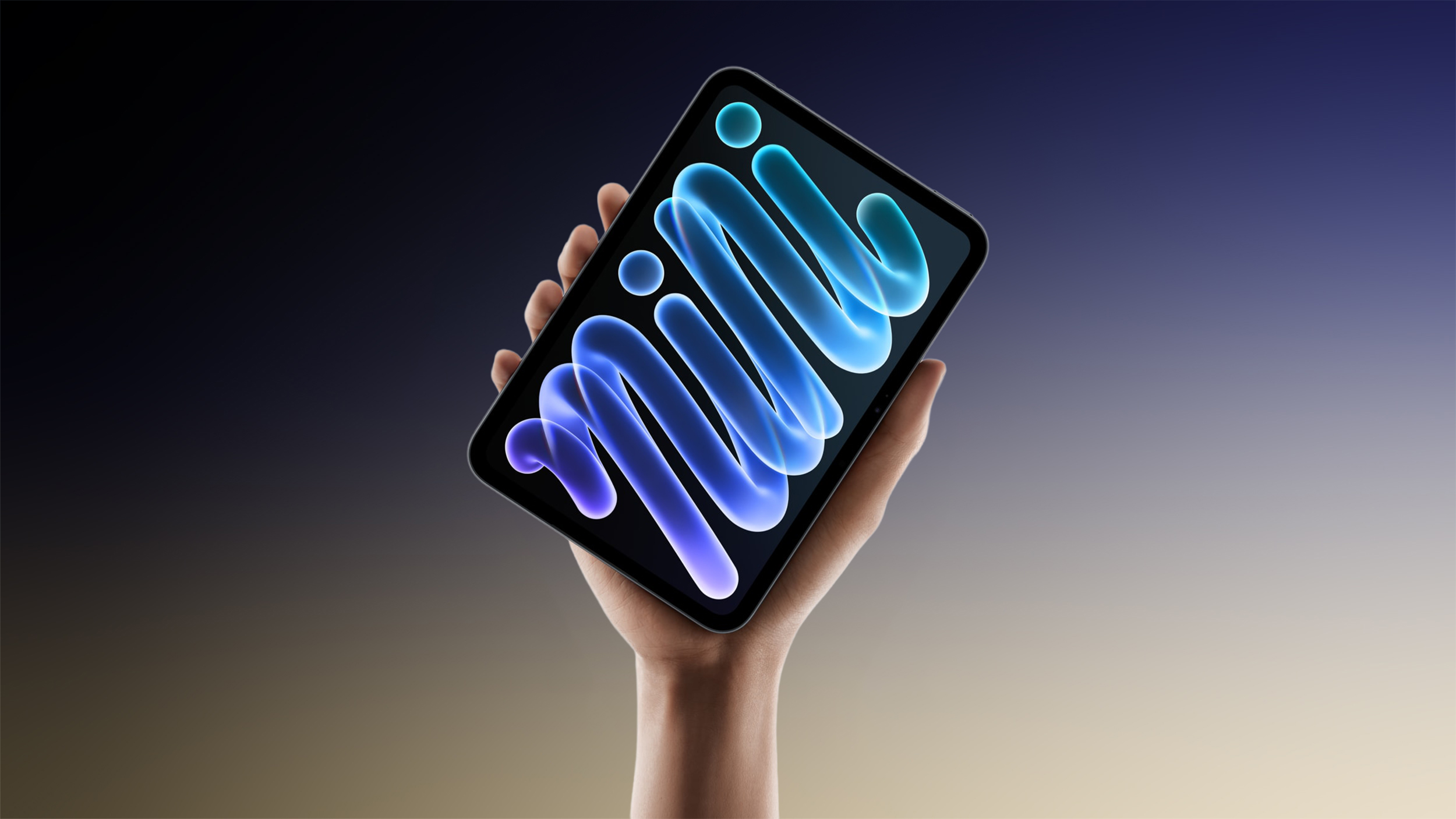
Apple's eighth-generation iPad mini went on sale earlier this month with a larger OLED display, a thinner and lighter design, the A20 Pro chip, and water and dust resistance. If you still use the sixth-generation ‌iPad mini‌ from 2021, the upgrade also brings changes that debuted on the 2024 model, including Apple Intelligence, Apple Pencil Pro support, and twice the USB-C transfer speed.


The new ‌iPad mini‌ starts at $699 for 128GB with Wi-Fi or $849 with cellular in the United States. The discontinued 2021 model started at $499 and $649, respectively, with 64GB of storage. Both support iPadOS 27.2, have Touch ID in the top button, and are rated for up to 10 hours of web browsing over Wi-Fi or watching video. Both displays also run at 60Hz.

Display, Design, and Accessories


‌iPad mini‌ (sixth generation, 2021) ‌iPad mini‌ (eighth generation, 2026)
8.3-inch display 8.5-inch display
Liquid Retina display with LED backlighting and IPS technology Super Retina XDR ‌OLED‌ display with 2,000,000:1 contrast ratio
2266-by-1488 resolution at 326 ppi 2316-by-1512 resolution at 326 ppi
Wider display borders 24% thinner display borders
500 nits maximum brightness 600 nits maximum SDR and full-screen HDR brightness, with up to 1,200 nits peak HDR brightness and 1-nit minimum brightness
Standard antireflective glass Standard antireflective glass or optional nano-texture glass on 256GB and 512GB models for $100, with a polishing cloth included
IP67 water and dust resistance, rated for a maximum depth of 1 meter for up to 30 minutes
Available in Space Gray, Starlight, Pink, and Purple Available in Midnight and Starlight
Supports ‌Apple Pencil‌ (second generation) and ‌Apple Pencil‌ (USB-C) Supports ‌Apple Pencil‌ Pro and ‌Apple Pencil‌ (USB-C)
‌Apple Pencil‌ hover and ‌Apple Pencil‌ Pro features including squeeze, barrel roll, haptic feedback, and Find My
Polyurethane Smart Folio, also compatible with the 2024 ‌iPad mini‌ Two-panel TechWoven Smart Folio with adjustable viewing angles, available separately in Navy Blue and Taupe for $79
94% fiber-based packaging 100% fiber-based packaging and 35% recycled content overall


Dimensions and Weight


‌iPad mini‌ (2021) ‌iPad mini‌ (2026)
Height 7.69 inches (195.4 mm) 7.69 inches (195.3 mm)
Width 5.3 inches (134.8 mm) 5.22 inches (132.6 mm)
Thickness 0.25 inch (6.3 mm) 0.21 inch (5.4 mm)
Weight (Wi-Fi) 0.65 pound (293 grams) 0.56 pound (255 grams)
Weight (Wi-Fi + Cellular) 0.66 pound (297 grams) 0.58 pound (263 grams)


The 2026 model is about 14% thinner and 13% lighter in its Wi-Fi configuration. The cellular model is about 11% lighter.

A15 Bionic vs. A20 Pro


‌iPad mini‌ (2021) ‌iPad mini‌ (2026)
Chip A15 Bionic A20 Pro
Manufacturing process 5-nanometer (TSMC N5P) 2-nanometer (TSMC N2)
CPU 6 cores (2 performance cores and 4 efficiency cores) 128GB and 256GB: 5 cores (2 super cores and 3 efficiency cores)
512GB: 6 cores (2 super cores and 4 efficiency cores)
GPU 5 cores 7 cores
Graphics features Dynamic Caching, hardware-accelerated mesh shading, and hardware-accelerated ray tracing
Neural Accelerators Dedicated Neural Accelerators in each GPU core
Neural Engine 16 cores 128GB and 256GB: 16 cores
512GB: Dual 16-core Neural Engine (32 cores total)
Memory 4GB 12GB
‌Apple Intelligence‌ ‌Apple Intelligence‌ and Siri AI, with support for Apple's larger on-device model for more expressive ‌Siri‌ voices and improved dictation
Storage 64GB or 256GB 128GB, 256GB, or 512GB


Apple claims up to 2.2 times the CPU performance and up to four times the GPU performance of the 2021 ‌iPad mini‌ in its tests. Against the 2024 A17 Pro model, Apple says it delivers more than twice the unified memory bandwidth and up to 4.5 times the speed in large language model token generation.

Cameras and Audio


‌iPad mini‌ (2021) ‌iPad mini‌ (2026)
Front camera on the portrait edge Front camera on the landscape edge
12MP front camera with Center Stage and an ƒ/2.4 aperture 12MP front camera with Center Stage and an ƒ/2.0 aperture
Smart HDR 3 on the front and rear cameras Smart HDR 4 on the front and rear cameras
Retina Flash for the front camera Retina Flash with True Tone for the front camera
Quad-LED True Tone rear flash Adaptive True Tone rear flash
Automatic document detection and scanning in the Camera app, with adaptive flash to reduce shadows
Landscape stereo speakers with external speaker holes Acoustic Display stereo audio with display-coupled woofers and concealed tweeters, without external speaker holes
Dual microphones Updated dual microphones for clearer calls and recordings
HEVC, H.264, and ProRes playback, with Dolby Vision and HDR10 support Apple also lists AV1 playback and HDR10+ and HLG support


Connectivity, Charging, and Price


‌iPad mini‌ (2021) ‌iPad mini‌ (2026)
Third-party wireless networking chip Apple N1 wireless networking chip
Wi-Fi 6 Wi-Fi 7
Bluetooth 5.0 Bluetooth 6
Thread
Third-party 5G modem (cellular models) Apple C2 5G modem (cellular models)
U.S. cellular model A2568 supports LTE band 46 U.S. cellular model A3596 adds 5G bands n14, n26, n70, and n75 and LTE band 106, and drops LTE band 46
UMTS/HSPA/HSPA+/DC-HSDPA support UMTS/HSPA/HSPA+ support
Nano-SIM or eSIM (cellular models) eSIM only (cellular models)
USB-C with USB 3 speeds up to 5Gb/s USB-C with USB 3 speeds up to 10Gb/s
External display output up to 4K at 30Hz External display output up to 4K at 60Hz
Extended external display mode with iPadOS 27.2
19.3Wh battery 18.9Wh battery
Fast charging up to 50% in around 30 minutes with a 35W or higher USB-C power adapter, sold separately
Now discontinued Starts at $699 (Wi-Fi) or $849 (Wi-Fi + Cellular)


Both the 2021 and 2026 models are rated for up to nine hours of web browsing over cellular. Apple claims up to 50% faster cellular data speeds with the C2 modem compared with the 2024 ‌iPad mini‌.

Should You Upgrade?


If your 2021 model still feels responsive and lasts long enough for reading, browsing, and taking notes, keeping it makes sense for now, and if battery life is your only complaint, a battery service may be enough.

However, for many 2021 ‌iPad mini‌ owners, the 2026 model is a worthwhile upgrade. If you've had yours since launch, its battery has had five years to wear down, and 64GB can feel cramped if you keep games or downloaded video on it. The new model gives you a fresh battery and twice the storage if you're coming from the 64GB version. Apple still rates both models for up to 10 hours when new, but the 2026 model can charge to 50% in around 30 minutes with a 35W or higher adapter.

The ‌OLED‌ display and lighter design are the changes you're most likely to notice every day. The screen can get dimmer for reading in bed and brighter for HDR video, and the lower weight makes the ‌iPad mini‌ easier to hold one-handed for long stretches. Both displays run at 60Hz, with no ProMotion. The A20 Pro and extra memory matter more if you play demanding games, edit photos or video, or often find that apps reload when you switch back to them.

Some of the smaller changes matter more depending on where you use your ‌iPad mini‌. IP67 water and dust resistance is useful if you take it outdoors, read by the pool, or use it in the kitchen. The landscape front camera is better positioned for calls when the iPad is propped up horizontally, and extended display support lets you use a monitor as a separate workspace.

Which Model Should You Buy?


The discontinued 2024 iPad mini is a good middle ground if your 2021 model is showing its age and you're happy with its display. It gives you more base storage, ‌Apple Intelligence‌, faster USB-C transfers, and ‌Apple Pencil‌ Pro support, and you can reuse your existing Smart Folio. Apple lists the 128GB Wi-Fi model for $509 through its Certified Refurbished store when available, with a new battery and a one-year warranty. Remaining new stock from third-party retailers is also worth considering at a low enough price.

If prices are close at the same storage capacity, buy the 2026 model. At $699, it makes the most sense if you specifically want the ‌OLED‌ display, lighter body, or water resistance. If you use a Smart Folio, factor in $79 for the redesigned version. The USB-C ‌Apple Pencil‌ works with either newer model, while the second-generation ‌Apple Pencil‌ needs replacing. Both newer cellular models use eSIM, so check with your carrier if you currently use a physical SIM.

A used 2021 ‌iPad mini‌ is still a reasonable buy at around $300 or lower if you want a second device for reading, notes, or streaming and 64GB is enough. Battery condition matters more than cosmetic wear; if the price of a 256GB unit or the cost of a battery service brings it close to a refurbished 2024 model, the newer device is still the better buy.

If you're buying the 2026 model, 128GB at $699 is enough for most buyers. If you're already close to filling 128GB on your current ‌iPad‌, the $799 256GB model gives you room to grow. Nano-texture glass brings that configuration to $899 and is worth considering if you regularly contend with glare. The $999 512GB model makes the most sense if you need the extra space for games, media, or projects. It also gets an additional CPU core and a second Neural Engine, which are worth weighing if you use apps that can take advantage of them.
Related Roundup: iPad mini
Buyer's Guide: iPad Mini (Buy Now)
Related Forum: iPad

This article, "iPad Mini 2021 vs. 2026 Buyer's Guide: Is It Worth Upgrading?" first appeared on MacRumors.com

Discuss this article in our forums
  •  

iPad Mini vs. iPad Air Buyer's Guide: Now Just $50 Apart

Apple refreshed both the iPad mini and iPad Air this year, but the choice is now less straightforward and there is just a $50 price difference between them, so which should you choose?


The eighth-generation ‌iPad Air‌ arrived in March with the M4 chip, 12GB of unified memory, Apple's N1 wireless chip, and the C1X modem on cellular models. It remains available in 11-inch and 13-inch sizes. Following Apple's June price increases, the two size options now start at $749 and $949, respectively.

In October, Apple announced the eighth-generation ‌iPad mini‌, introducing a larger 8.5-inch display with OLED technology, a thinner and lighter design, the A20 chip, an optional nano-texture finish, a landscape front camera, and more. The changes give Apple's smallest tablet several advantages over the ‌iPad Air‌, even as the Air retains a larger screen and support for Apple's Magic Keyboard.

Both devices offer Touch ID in the top button, Apple Pencil Pro and ‌Apple Pencil‌ (USB-C) support, ‌Apple Pencil‌ hover, landscape 12MP Center Stage front cameras with ƒ/2.0 apertures, Apple's N1 wireless chip, Wi-Fi 7, Bluetooth 6, Thread networking technology, and USB-C ports with transfer speeds of up to 10Gb/s. The new ‌iPad mini‌ also features 12GB of unified memory, matching the Air. Advertised battery life is the same, with up to 10 hours of web browsing over Wi-Fi or watching video, or up to nine hours of web browsing over cellular. Despite the ‌iPad mini‌'s move to ‌OLED‌, neither model offers ProMotion.

Our guide helps to answer the question of how to decide which of these two iPads is best for you.


‌iPad mini‌ (eighth generation, 2026) ‌iPad Air‌ (eighth generation, 2026)
8.5-inch display 11-inch or 13-inch display
2316-by-1512 resolution 11-inch: 2360-by-1640 resolution
13-inch: 2732-by-2048 resolution
326 ppi 264 ppi
Super Retina XDR ‌OLED‌ display with 2,000,000:1 contrast ratio Liquid Retina display with LED backlighting and IPS technology
600 nits maximum SDR and full-screen HDR brightness; 1,200 nits peak HDR brightness and 1 nit minimum brightness 11-inch: 500 nits maximum SDR brightness
13-inch: 600 nits maximum SDR brightness
Optional nano-texture display glass on 256GB and 512GB models for an additional $100, supplied with a polishing cloth
A20 Pro chip M4 chip
128GB and 256GB: 5-core CPU with 2 super cores and 3 efficiency cores
512GB: 6-core CPU with 2 super cores and 4 efficiency cores
8-core CPU with 3 performance cores and 5 efficiency cores
7-core GPU with dedicated Neural Accelerators 9-core GPU
128GB and 256GB: 16-core Neural Engine
512GB: Dual 16-core Neural Engine, totaling 32 cores
16-core Neural Engine
115.2 GB/s memory bandwidth 120 GB/s memory bandwidth
Volume buttons on top Volume buttons on right side
Acoustic Display audio system with display-coupled woofers and concealed tweeters Landscape stereo speakers
IP67 water and dust resistance, rated for a maximum depth of 1 meter for up to 30 minutes
Adaptive True Tone rear flash
Apple C2 modem (cellular models) Apple C1X modem (cellular models)
U.S. cellular model (A3596) supports LTE band 106 U.S. cellular models (A3460) and (A3462) do not support LTE band 106
UMTS/HSPA/HSPA+ cellular support UMTS/HSPA/HSPA+/DC-HSDPA cellular support
Supports one external display at up to 4K resolution at 60Hz, with extended external display mode Supports one external display at up to 6K resolution at 60Hz, with extended external display mode
Compatible with Bluetooth keyboards Smart Connector for compatible keyboard accessories, including Apple's Magic Keyboard
18.9Wh battery 11-inch: 28.93Wh battery
13-inch: 36.59Wh battery
Fast charging up to 50% in around 30 minutes with a 35W or higher USB-C power adapter
128GB, 256GB, or 512GB of storage 128GB, 256GB, 512GB, or 1TB of storage
Available in Midnight and Starlight Available in Space Gray, Starlight, Purple, and Blue
Starts at $699 (Wi-Fi) or $849 (Wi-Fi + Cellular) 11-inch: Starts at $749 (Wi-Fi) or $899 (Wi-Fi + Cellular)
13-inch: Starts at $949 (Wi-Fi) or $1,099 (Wi-Fi + Cellular)


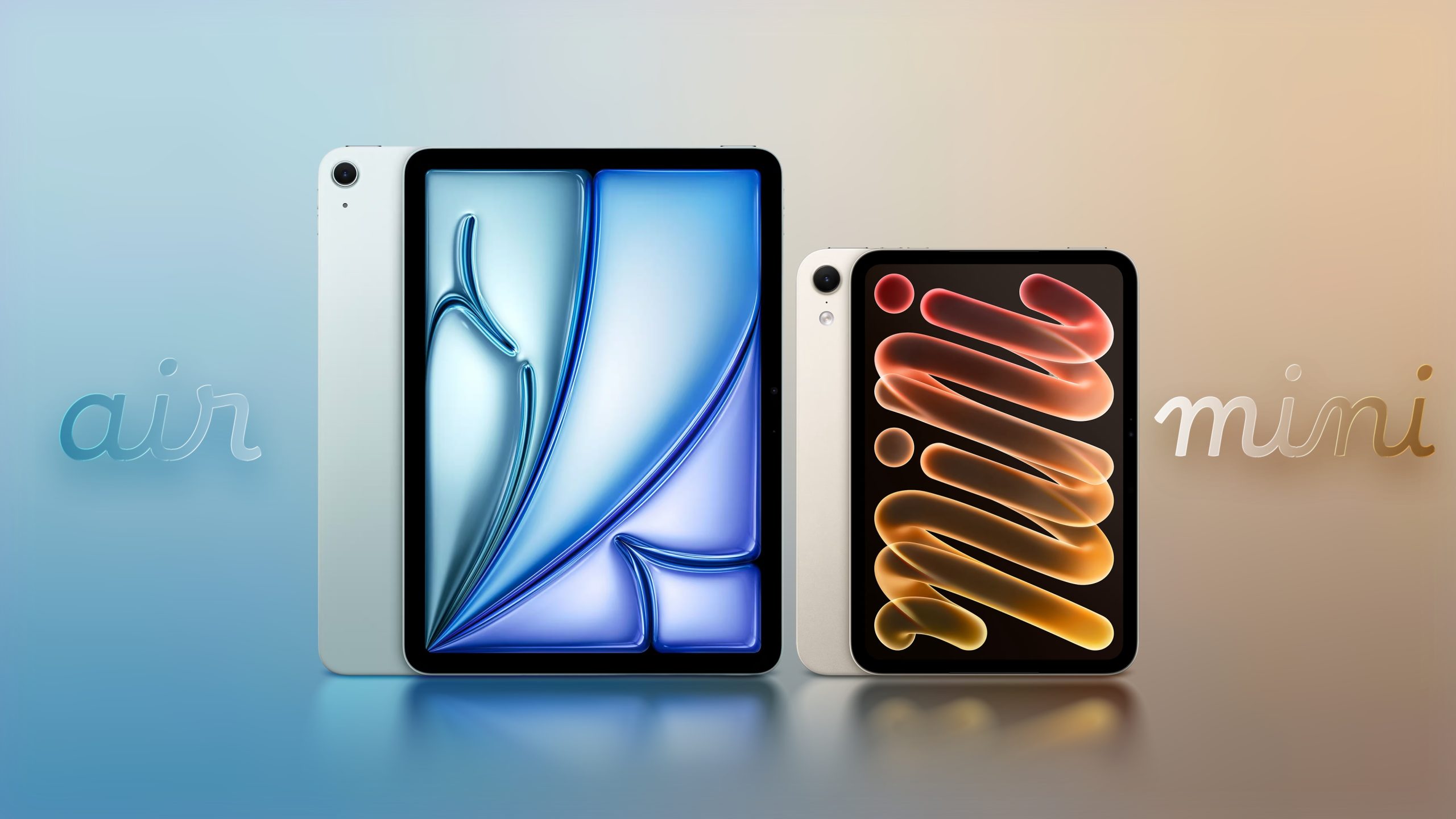
Beyond their features, the physical differences between the two devices are substantial. The ‌iPad mini‌ is thinner and weighs almost half as much as the 11-inch ‌iPad Air‌, making it easier to hold for extended periods and carry in a small bag. The ‌iPad Air‌'s larger dimensions accommodate a more spacious display, but even the smaller model represents a noticeable step up in size and weight:


‌iPad mini‌ 11-inch ‌iPad Air‌ 13-inch ‌iPad Air‌
Height 7.69 inches (195.3 mm) 9.74 inches (247.6 mm) 11.04 inches (280.6 mm)
Width 5.22 inches (132.6 mm) 7.02 inches (178.5 mm) 8.46 inches (214.9 mm)
Thickness 0.21 inch (5.4 mm) 0.24 inch (6.1 mm) 0.24 inch (6.1 mm)
Weight (Wi-Fi) 0.56 pound (255 grams) 1.02 pounds (464 grams) 1.36 pounds (616 grams)
Weight (Wi-Fi + Cellular) 0.58 pound (263 grams) 1.03 pounds (465 grams) 1.36 pounds (617 grams)


The latest ‌iPad mini‌ changes the balance between these two devices. The ‌iPad Air‌ retains the core design introduced in 2020, while the ‌iPad mini‌ has just received a substantial redesign with an ‌OLED‌ display, a thinner and lighter enclosure, and several features unavailable on the Air. With the mini also costing $50 less, the current ‌iPad Air‌ is harder to recommend unless you specifically need its larger workspace and keyboard support and cannot wait for its successor.

For most buyers looking for a handheld tablet to complement a laptop or desktop computer, the ‌iPad mini‌ is now the more compelling choice. Its portability advantage is substantial: the Wi-Fi model weighs 255 grams, compared with 464 grams for the 11-inch Air, and its smaller footprint makes it much easier to hold and carry. Combined with its ‌OLED‌ display, water and dust resistance, and fast charging, this makes it particularly well suited to reading, watching videos, playing handheld games, and taking notes on the go.

The ‌iPad Air‌ remains the better choice for productivity. Even the 11-inch model provides considerably more screen space for documents, drawing, and working across multiple apps. Support for Apple's Magic Keyboard makes the ‌iPad Air‌ a much more practical potential laptop replacement. The ‌iPad mini‌ has ample processing power for many of the same tasks and supports Bluetooth keyboards, but its smaller display and lack of an equivalent integrated keyboard accessory make it less suitable as a productivity device.

These are meaningful reasons to choose the ‌iPad Air‌ if you need a tablet immediately. The 11-inch model's $50 premium buys a larger workspace and keyboard support, although the Magic Keyboard costs extra and whether the combination can replace your laptop depends on your apps and workflows being supported by iPadOS. Its older design does not diminish that clear utility, but buying one now means accepting an LCD display and missing several of the ‌iPad mini‌'s newer features.

The 13-inch ‌iPad Air‌ provides the clearest distinction from the ‌iPad mini‌, with substantially more room for side-by-side documents, drawing, and multitasking. Its $250 premium over the base ‌iPad mini‌ is worth considering if you regularly need that added display area, although its larger dimensions and weight make it much less convenient for handheld use. The 11-inch Air offers a more portable balance for switching between tablet and keyboard use, but neither approaches the ‌iPad mini‌'s ease of carrying and holding.

For prospective ‌iPad Air‌ buyers who do not need a new device immediately, we recommend waiting. A new ‌iPad Air‌ with an ‌OLED‌ display is expected in the first half of 2027. This would address one of the current ‌iPad Air‌'s most significant disadvantages compared with the ‌iPad mini‌, likely along with other new features to bring it up to par. With the ‌iPad mini‌ newly refreshed and a consequential ‌iPad Air‌ update expected in the not-too-distant future, postponing a nonessential ‌iPad Air‌ purchase is the more sensible choice.
Related Roundups: iPad Air , iPad mini
Related Forum: iPad

This article, "iPad Mini vs. iPad Air Buyer's Guide: Now Just $50 Apart" first appeared on MacRumors.com

Discuss this article in our forums

  •  
❌