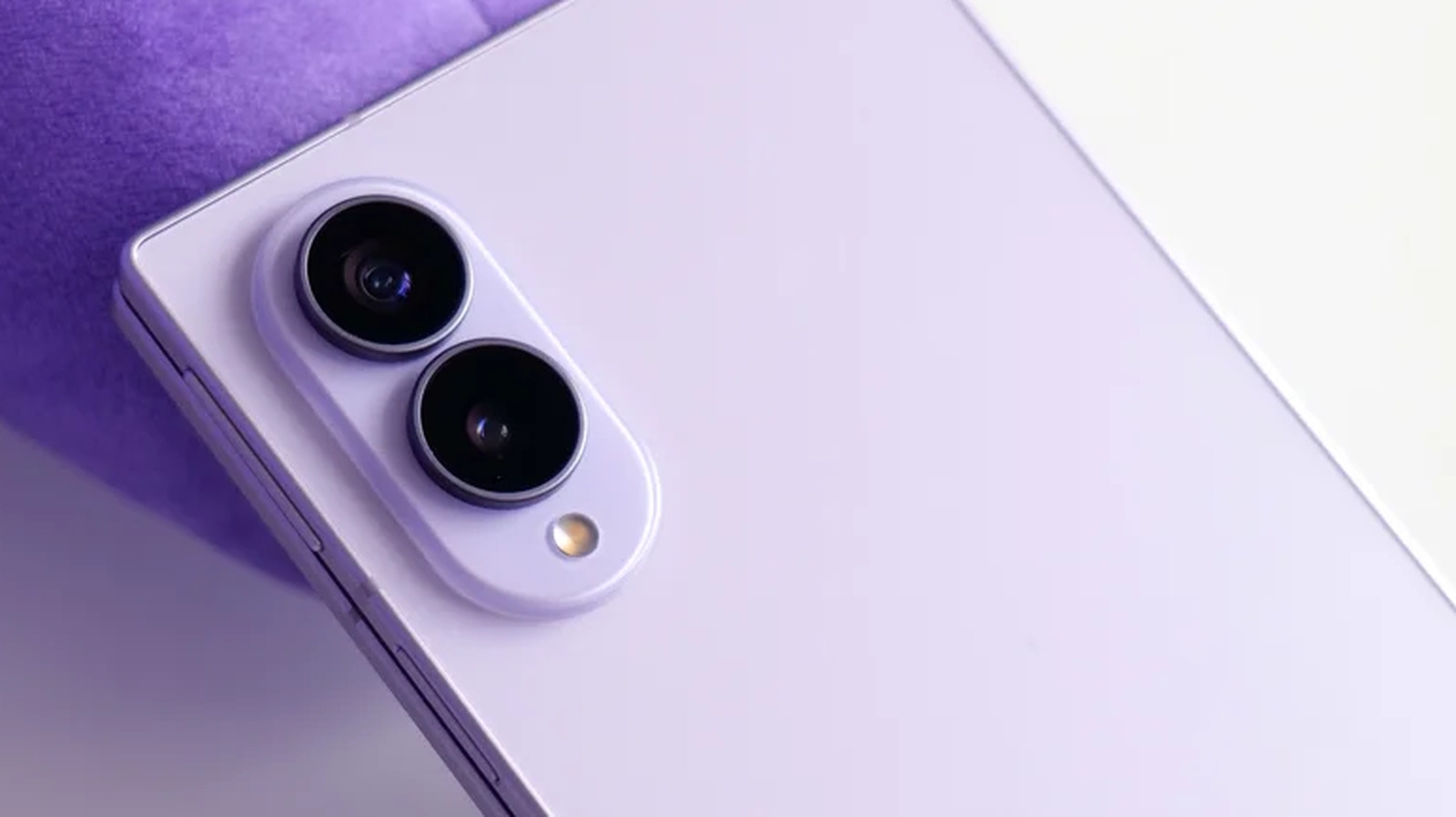
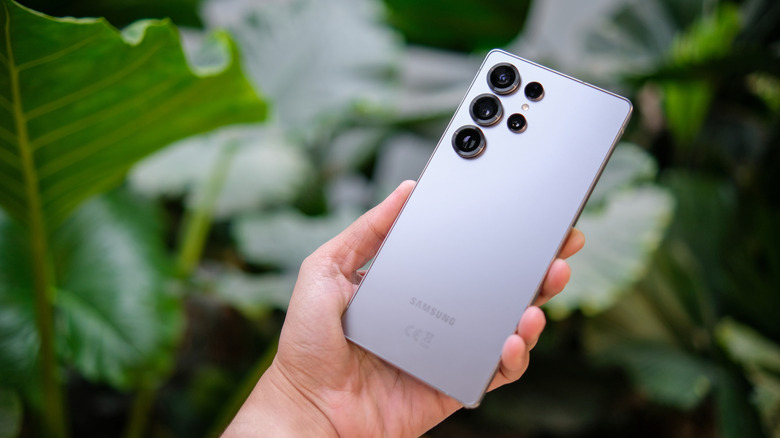
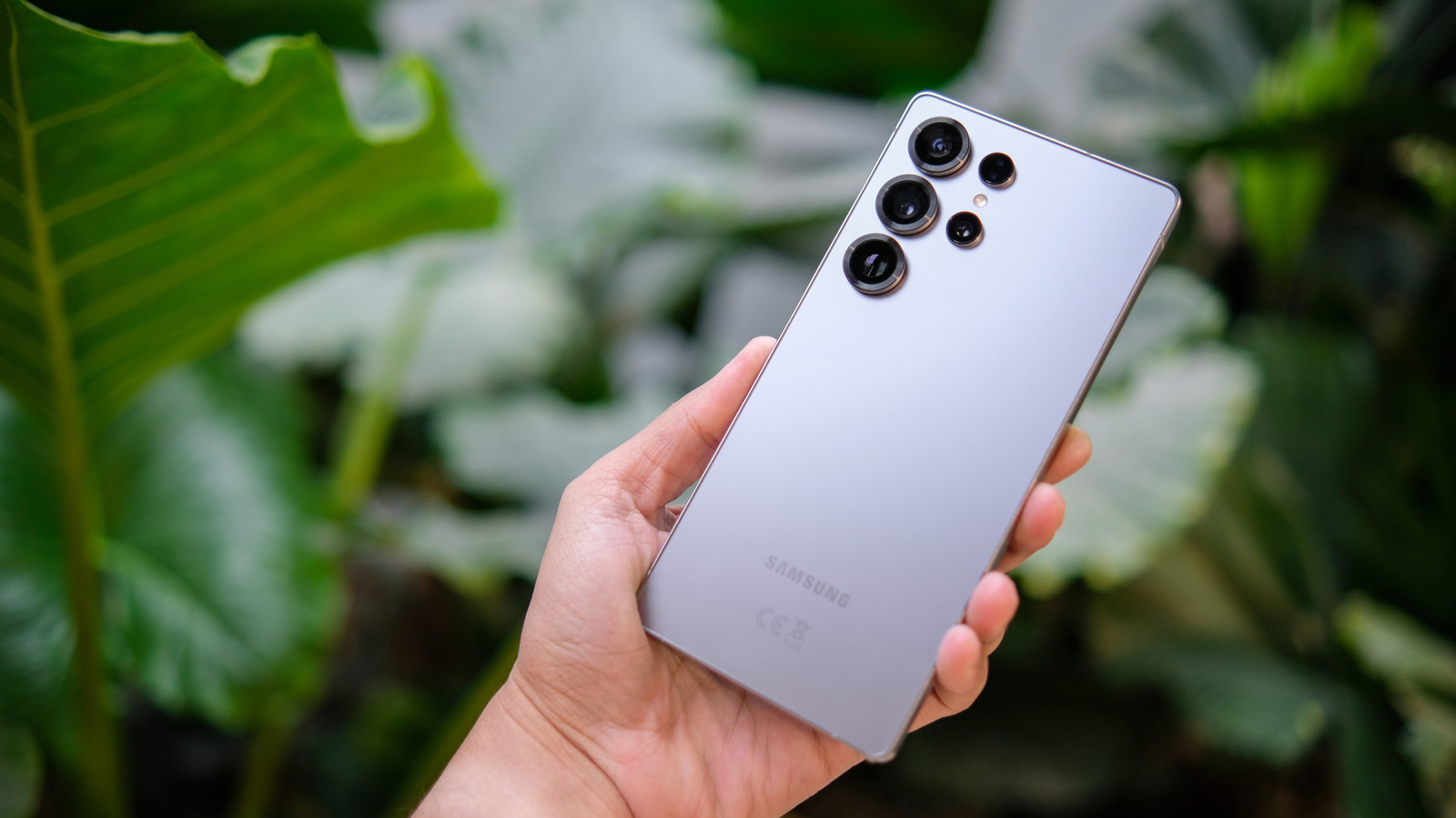
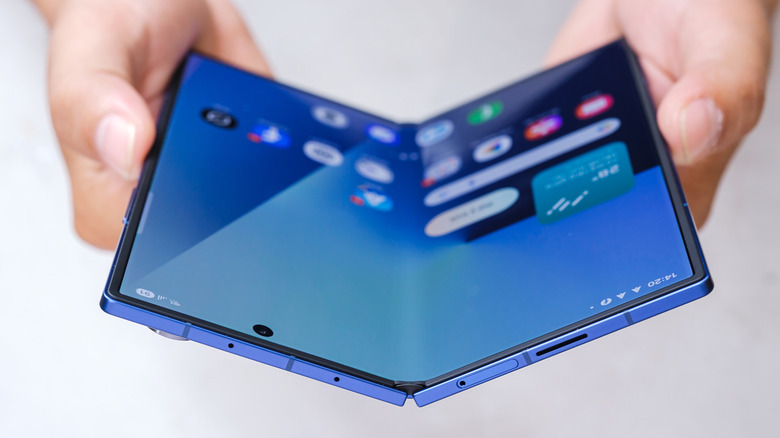
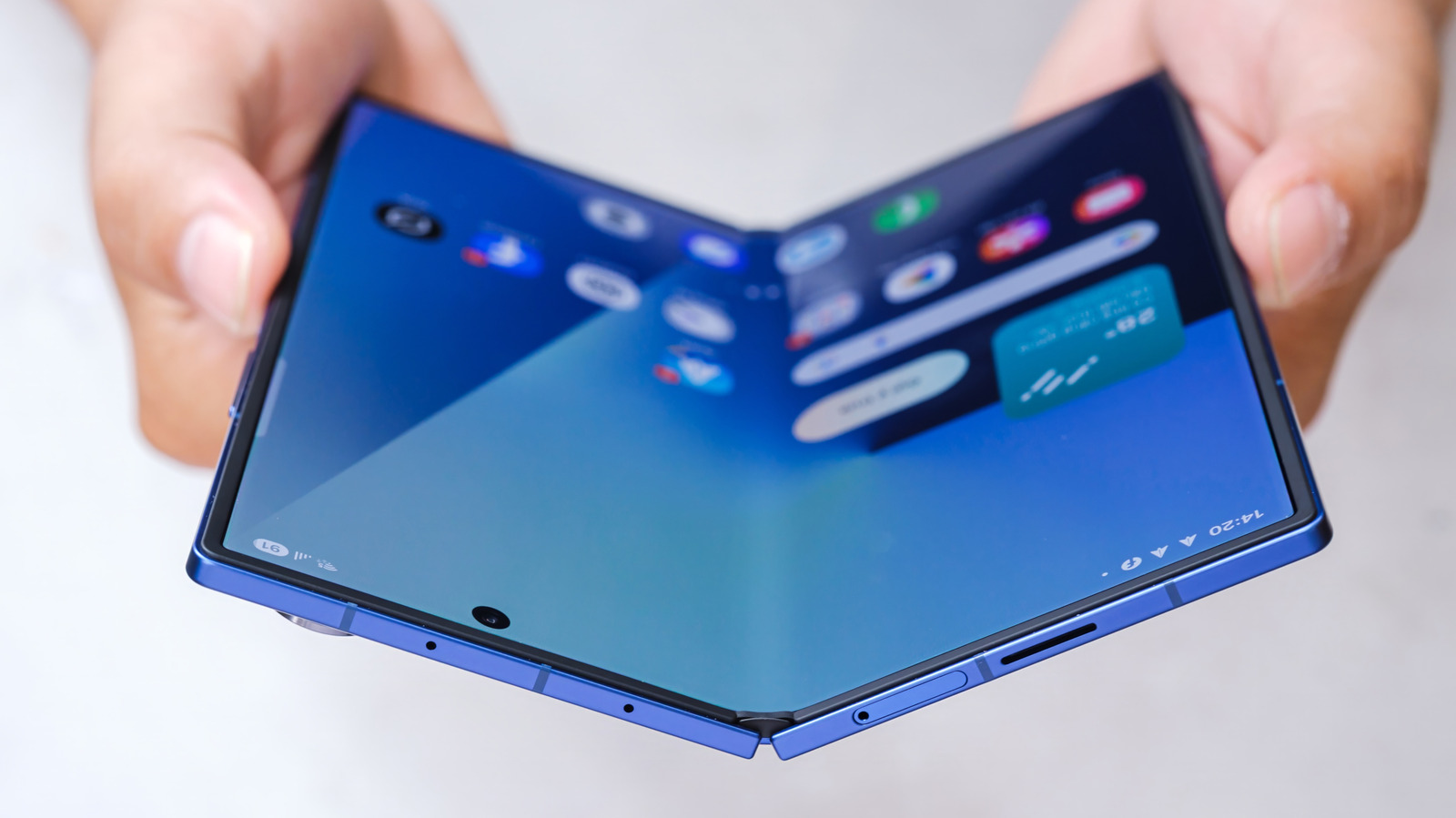
A couple of months before the iPhone Duo came out, Samsung launched the Galaxy Z Fold8. It's Samsung's widest and shortest foldable to date, with Samsung adopting an aspect ratio closer to the iPhone Duo's than its previous foldable smartphones. Since the Z Fold8 was clearly designed to compete with the iPhone Duo, we thought we'd compare the two devices.
The Galaxy Z Fold8 and iPhone Duo are similar in size, but the Fold8 is noticeably lighter. It's about 50 grams lighter than the iPhone Duo, and it makes a difference when you're holding it. It's lighter because it's thinner than the iPhone Duo when folded and unfolded. The Z Fold8 is 6mm taller and around 3mm narrower, though both have a 7.6-inch inner display.
The iPhone Duo has a heftier feel and a more premium build, plus it has rounded corners that feel nicer in the hand than the Z Fold8's sharper, rectangular corners.
Apple used a matte nano-texture display for the iPhone Duo, and that's likely something we're going to see Android smartphone makers imitate in their future foldables. The matte display goes a long way toward minimizing the visibility of the crease. Apple also put the camera on the inner display under the screen, which is something Samsung experimented with in earlier models and then abandoned.
Under-display front cameras are generally lower resolution than standard cameras, and there have been complaints about the quality of the iPhone Duo's inner front camera. The Z Fold8 has a more traditional hole-punch camera that's better quality.
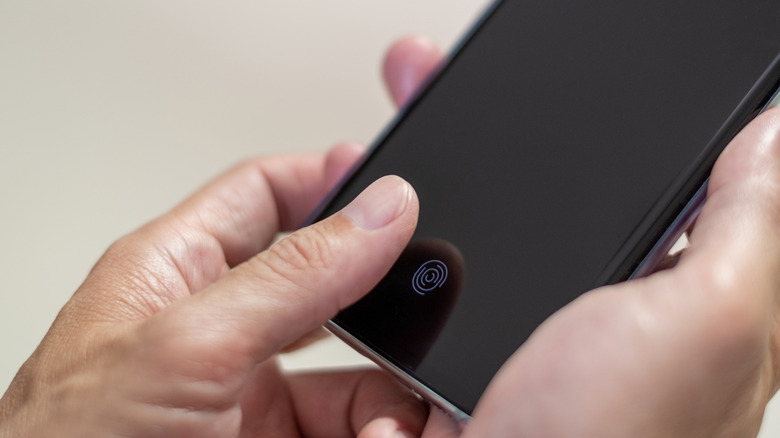
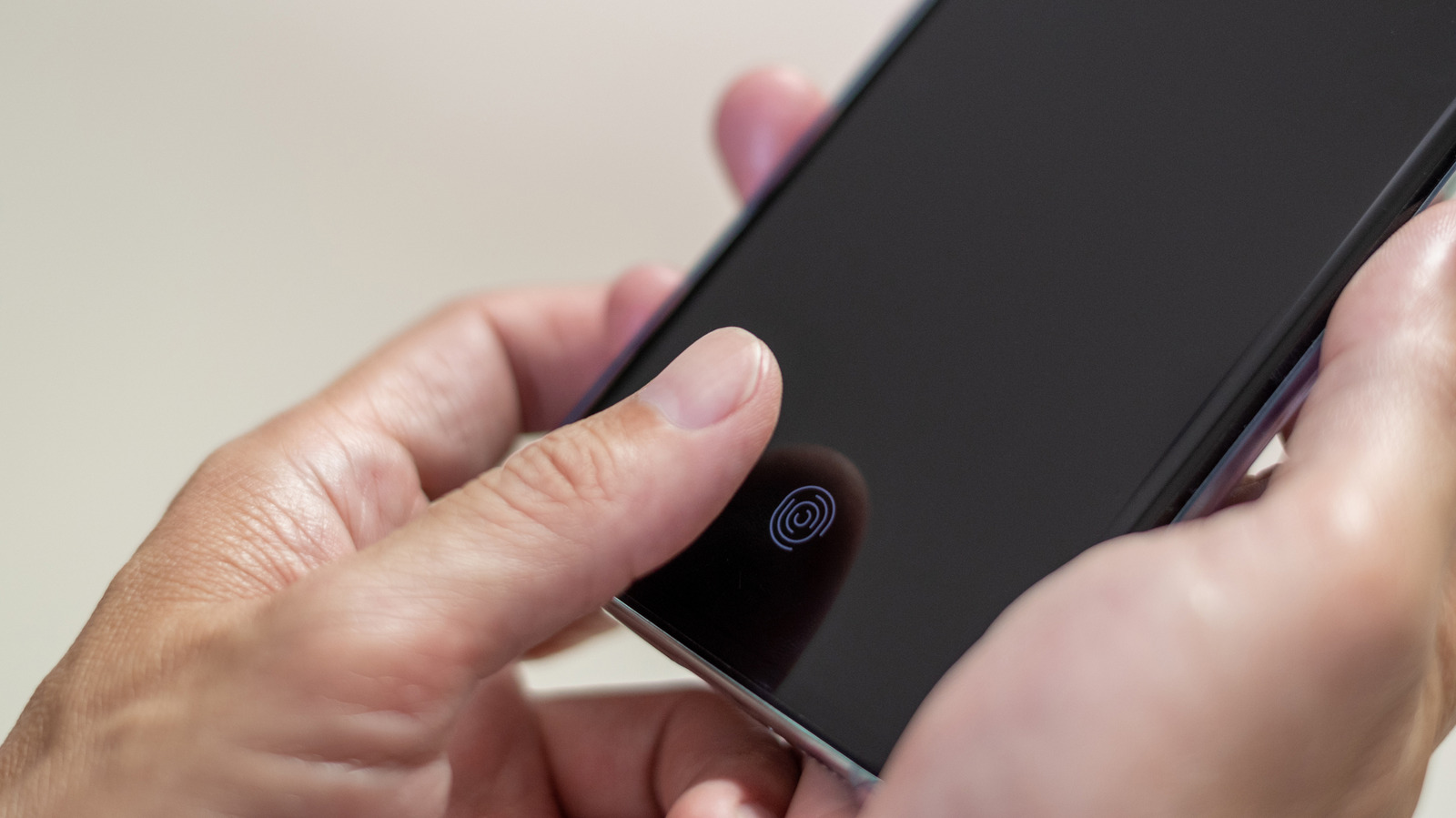
Both smartphones use fingerprint recognition rather than facial recognition, but Samsung has long offered a face unlock feature that uses the front-facing camera. Apple just this week adopted a similar face unlock option, and it's coming in iOS 27.3. Face unlock is less secure than the Face ID system used for Apple's other iPhones, but it is more convenient than Touch ID for some users.
Neither smartphone has a telephoto camera, so both Apple and Samsung compromised on camera quality. The iPhone Duo has a 48-megapixel Main camera and a 48-megapixel Ultra Wide, while the Z Fold8 has 50-megapixel wide and ultra wide cameras. The main difference in image quality is the computational processing each smartphone offers, so which one is "better" comes down to your preference for white balance, saturation, tone, and similar factors.
The Z Fold8 supports 8K video recording and reverse wireless charging for accessories, plus it has a physical SIM while the Duo only has an eSIM. Samsung's smartphone is limited to IP48 dust and water resistance, while the iPhone Duo has IP68. Samsung uses the Qualcomm Snapdragon 8 Elite Gen 5, and the iPhone Duo has Apple's A20 Pro chip. The other big difference is stylus support. The iPhone Duo works with the USB-C Apple Pencil, but the Z Fold8 doesn't work with Samsung's S Pen options.
Since Samsung has been making foldable smartphones for years, developers have had more time to update their apps for the form factor. Most Android apps already work well, while we're still waiting for many developers to update their apps for the Duo. Samsung is also ahead on multitasking, with the option to use three apps at once and support for pop-up windows and a taskbar.
Samsung's Galaxy Z Fold8 is slightly cheaper than the iPhone Duo, with pricing starting at $1,899.99 while the Duo starts at $1,999, but deciding between them will come down to your operating system preference and device ecosystem. If you're accustomed to iOS and have an Apple Watch, Mac, and other Apple devices, there's little reason to choose a Samsung smartphone. The same goes for Samsung users who have other Galaxy devices.
Do you prefer the iPhone Duo or the Galaxy Z Fold8? Let us know in the comments below.
Apple is close to signing a long-term supply agreement with Samsung for DRAM chips, according to Korea's Maeil Business Newspaper. The deal would reportedly run for four to five years from the first half of 2027, setting a minimum supply volume, with prices finalized later based on market conditions.
Apple usually favors short-term contracts and squeezes suppliers on price, so this is quite a shift for Apple, though it recently signed a similar deal with SK hynix on supplier-favorable terms as the worsening memory shortage pushes up component costs amid the AI data center buildout.
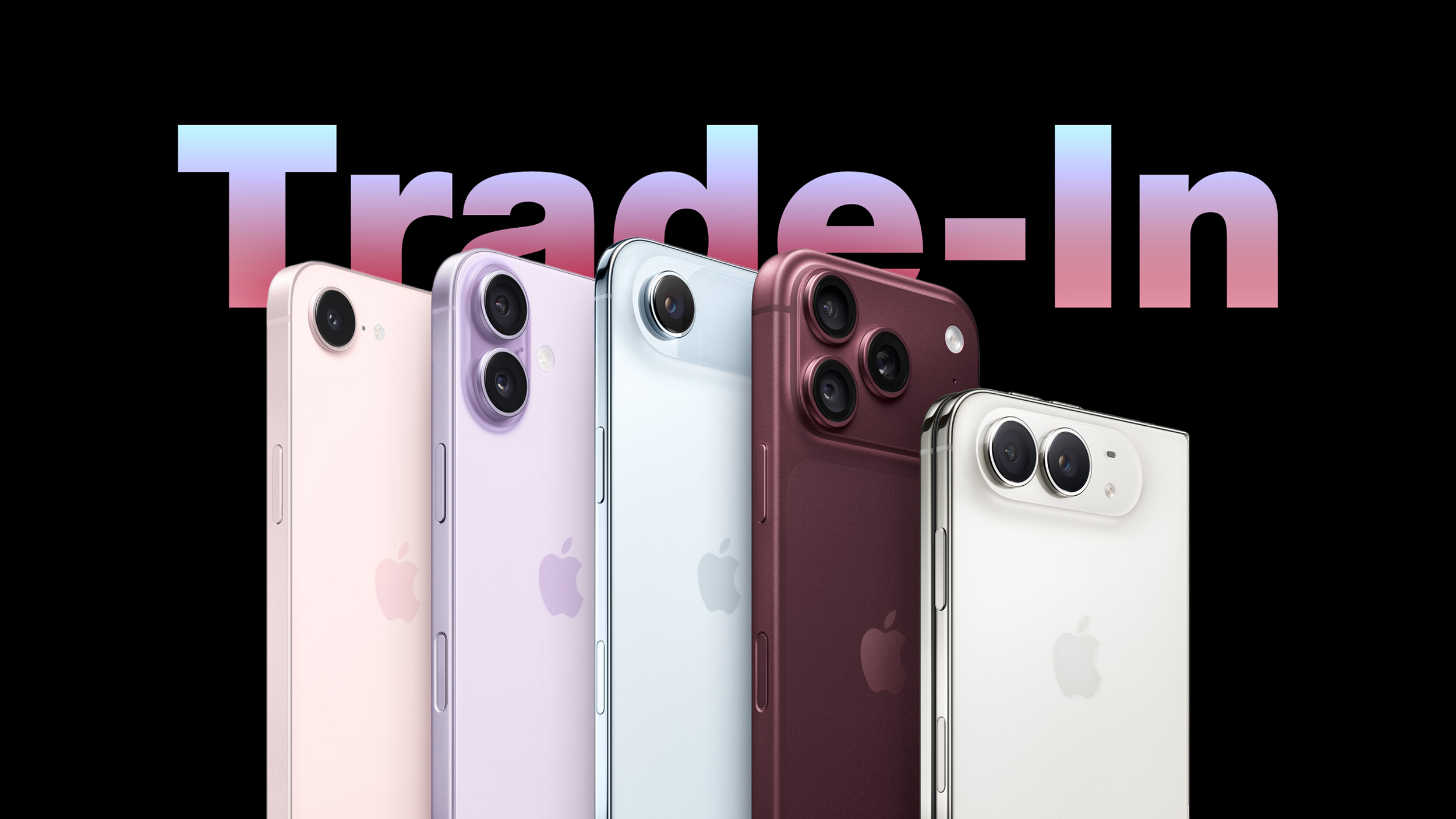
Apple today revised its U.S. trade-in estimates, with increases for many older iPhones, reductions for several Pro models, and newly listed offers for six Samsung foldables.
The iPhone 17 Pro has the largest dollar reduction among the affected iPhones, dropping $45 to a maximum of $740. The iPhone 17 Pro Max falls $30 to $855, while the iPhone Air and standard iPhone 17 each gain $30, bringing both to $615.
Many older models recover some of the value lost in September's reductions. Most remain below their pre-September maximums, although the second-generation iPhone SE returns to $45, fully reversing its $5 cut.
The following iPhone estimates have changed. Each price is the maximum available trade-in credit:
iPhone 17 Pro Max: $855 (previously $885)
iPhone 17 Pro: $740 (previously $785)
iPhone Air: $615 (previously $585)
iPhone 17: $615 (previously $585)
iPhone 16 Pro Max: $590 (previously $610)
iPhone 16 Plus: $450 (previously $430)
iPhone 16: $440 (previously $430)
iPhone 16e: $285 (previously $270)
iPhone 15 Pro Max: $445 (previously $455)
iPhone 15 Pro: $365 (previously $370)
iPhone 15 Plus: $325 (previously $315)
iPhone 14 Plus: $215 (previously $210)
iPhone 13 Pro Max: $330 (previously $320)
iPhone 13 Pro: $265 (previously $255)
iPhone 13: $180 (previously $175)
iPhone 12 Pro Max: $220 (previously $210)
iPhone 12 Pro: $180 (previously $165)
iPhone 12 mini: $85 (previously $80)
iPhone SE (2nd generation): $45 (previously $40)
iPhone 11 Pro Max: $145 (previously $140)
iPhone 11: $105 (previously $100)
iPhone XS Max: $90 (previously $85)
iPhone XS: $65 (previously $60)
iPhone XR: $80 (previously $75)
iPhone X: $55 (previously $50)
For customers switching from Android, Apple has added six Samsung foldables to its trade-in list. The Galaxy Z Fold7 receives the highest maximum offer among the additions, while the Galaxy Z Flip5 has the lowest:
Samsung Galaxy Z Fold7: $410 (newly listed)
Samsung Galaxy Z Fold6: $335 (newly listed)
Samsung Galaxy Z Fold5: $270 (newly listed)
Samsung Galaxy Z Flip7: $215 (newly listed)
Samsung Galaxy Z Flip6: $185 (newly listed)
Samsung Galaxy Z Flip5: $125 (newly listed)
Google Pixel owners generally receive lower offers under the update. The Pixel 9 loses $20, the largest dollar reduction among the affected Pixel models, while the Pixel 7 gains $5. The changed maximum estimates are as follows:
Google Pixel 9 Pro XL: $280 (previously $290)
Google Pixel 9 Pro: $265 (previously $275)
Google Pixel 9: $180 (previously $200)
Google Pixel 8 Pro: $135 (previously $150)
Google Pixel 8: $100 (previously $115)
Google Pixel 7 Pro: $80 (previously $90)
Google Pixel 7: $70 (previously $65)
The Apple Watch's adjustments are limited to six models. The Apple Watch Ultra 2 gains $10, three other watches gain $5 each, and the original Apple Watch Ultra and Series 7 each lose $5:
Apple Watch Ultra 2: $275 (previously $265)
Apple Watch Ultra: $185 (previously $190)
Apple Watch Series 10: $155 (previously $150)
Apple Watch SE (2nd generation): $65 (previously $60)
Apple Watch Series 7: $60 (previously $65)
Apple Watch Series 6: $45 (previously $40)
Mac and iPad trade-in values stay at the levels introduced in October, including maximum estimates of $2,560 for the Mac Pro and $915 for the iPad Pro.
Apple also introduced more detailed condition grading in September, improving offers for devices with minor cosmetic defects that previously received deductions similar to those applied to more serious damage.
Actual trade-in offers depend on the device's condition, year, and configuration. Through Apple Trade In, eligible devices can be exchanged for credit toward a purchase or an Apple Gift Card, while devices without trade-in value can be recycled for free.
I disagree. Trevor Noah war absolut „chill“; Trevor Noah ist nicht das Problem.
Egal ob Apple, Samsung, OpenAI oder Google: Alle produzieren inzwischen lupenreine Infomercials – lediglich unterschiedlich verpackt.
Ob man auf solchen Events oder über Influencer:innen von neuen Produkten erfährt, ist inzwischen austauschbar; eine tatsächlich kritische Auseinandersetzung folgt ohnehin erst viel später.
Ich kann Werbeveranstaltungen mit Celebrities, wie in dieser Woche bei Google, wenig abgewinnen, quäle mich aber andererseits auch nicht durch Live-Coding-Sessions auf OpenAI-Keynotes.
Apples Hochglanz-Spots fehlt inzwischen der Glanz und das Neue aus den Anfangszeiten. Mit schnellen Cuts schätze ich dort jedoch weiterhin die komprimierte Informationsvermittlung.
Eine Rückkehr zu früheren Live-Präsentationen erscheint mir für Apple weiterhin unrealistisch. Sie mögen ihr fehlerfreies Format, auch wenn sie sich die Möglichkeit offenhalten, in einem kleineren Rahmen persönlich auf Bühnen zu treten.
Verklärte Vergangenheit: Die Rufe nach Live-Präsentationen vergessen, wie zäh selbst einige Steve-Jobs-Keynotes waren – insbesondere die Demos. Andererseits fehlt genau dieser Steve Jobs, der selbst eine Werbeveranstaltung zum Samstagabendprogramm machen konnte.
Aber genau wie das Samstagabendprogramm haben auch Tech-Keynotes heute nicht mehr diesen Stellenwert.
 Anmelden


 Apple is close to signing a long-term supply agreement with Samsung for DRAM chips, according to Korea's Maeil Business Newspaper. The deal would reportedly run for four to five years from the first half of 2027, setting a minimum supply volume, with prices finalized later based on market conditions.